What does "Literacy" mean for children with multiple disabilities?
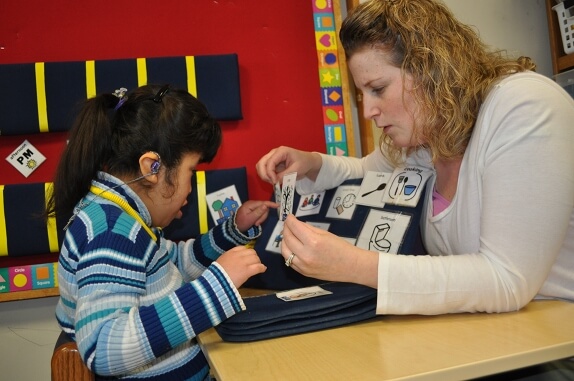
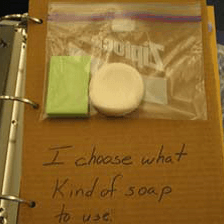
Literacy includes more than just reading and writing print or braille. According to a definition by Wright (1997), it is an integrated process, which encompasses "proficiency in understanding and using written as well as spoken language as a reader, writer, speaker, and listener." With this broader focus on language, literacy includes recognizing objects, pictures, or other symbols, and using them to communicate. Making choices, anticipating events, following simple recipes, creating or "reading" lists, and other forms of self-expression are all part of functional literacy.
It may be daunting at first to imagine how to include children with significant multiple disabilities in early literacy experiences. If they cannot see the book, and if additional challenges make it difficult for them to hear, to understand, or to help to turn the pages, parents and teachers may be at a loss how to make this experience meaningful. Not all children will learn to read print or braille, but the path toward literacy also includes the development of important cognitive skills and communication. Exposure to a variety of literacy materials, using adaptations to make them as accessible as possible to the individual student, and providing rich and meaningful experiences are strategies that benefit all children.
To learn more about literacy for individuals with multiple disabilities or deafblindness, see Literacy for Persons Who Are Deaf-Blind (pdf format) by Barbara Miles, DB-LINK, National Consortium on Deaf-Blindness (January 2005).
Meaningful and Interesting Experiences
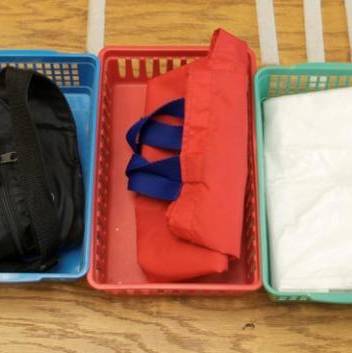
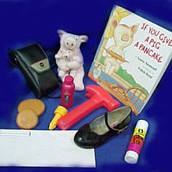
Because children with multiple disabilities often have limited experiences and may not fully understand everything that is happening around them, it is important to use meaningful and interesting experiences as the basis for developing literacy. Experiences from the child's own life that are basic and concrete are often a good place to start. This may be through memory boxes, journals, or the creation of language experience books. Vocabulary should be familiar to the child and should be presented in a way that is clear and consistent.
To learn more about Experience Stories see Experience Books from Washington Sensory Disabilities Services.
Functions of Reading and Writing—the WHY
by Barbara Miles
When we consider our reasons for reading and writing today, it is obvious that all persons require some level of literacy skills in order to function in society. Given appropriate materials and expectations, many students who are deafblind are able to gain proficiency in some (if not all) of the following areas (containing some form of symbols or print):
| Function of Reading/Writing | Example for student who is Deafblind |
| Organizing and supporting memory | calendars, lists |
| Acquiring information | newspapers, phone books |
| Instructions | recipes, directions |
| Financial negotiations | checks, bank statements |
| Entertainment: comic books, magazines, internet | |
| Identifying things or places signs, labels, packages | |
| Self-expression, dealing with emotions | |
| creating/maintaining relationships | |
| letters, journals, emails |


Click here