Tactile symbols are a literacy tool for individuals unable to read print, braille, or visual symbols. Tactile symbols are essential for developing literacy for individuals who are blind, visually impaired, or deafblind by serving as a bridge from concrete objects to abstract language.
Instead of using real objects to assist the student in learning a routine or for using in communication, these tactile symbols are smaller and more portable. The symbols act are pictures that can be felt for students not reading words. They are vital in helping them understand routines, make choices, and build meaningful communication through labeled objects, communication boards, or adapted books, ultimately supporting functional reading and writing skills.
In order to tie meaning to the symbol, it’s best to start with a real object. I typically start with a spoon as it is tied to a necessary to life activity of eating. Then I use part of the spoon to build the symbol for eating or to associate it to the mealtime that a spoon is used like breakfast.
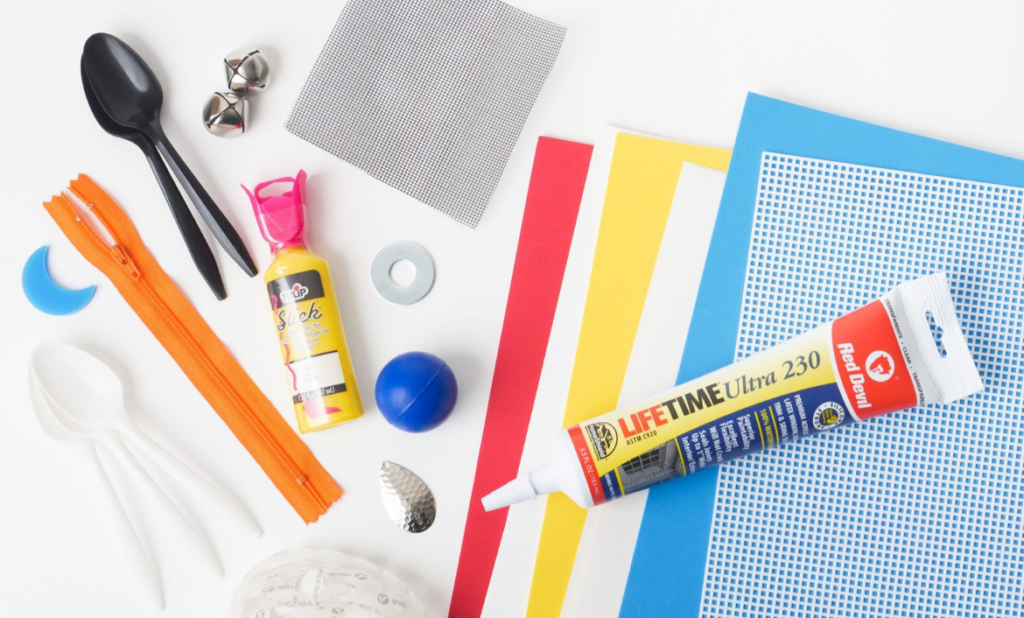
I cut a plastic spoon off at the neck right before the bowl of the spoon and glue it down to a card. Once Velcro is added, you’ve got the start to a schedule or routine for a student. I like to use Tactile Connections from American Printing House for the Blind.
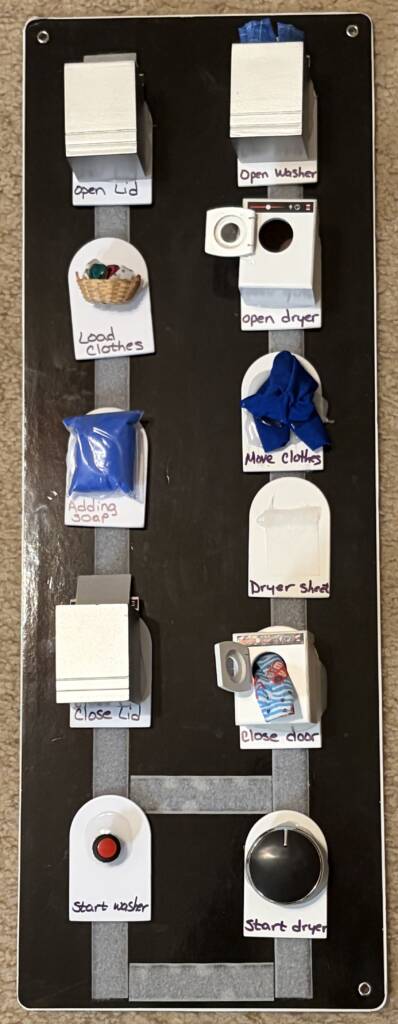
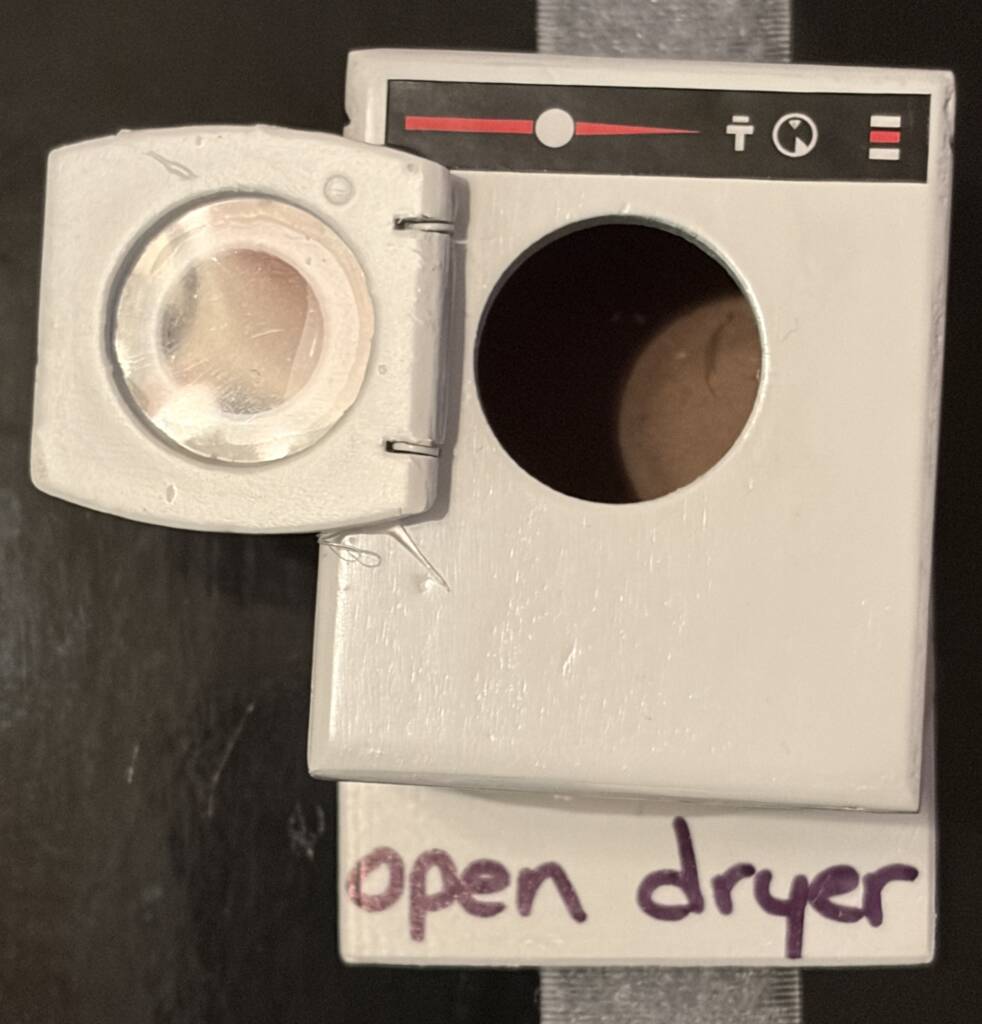
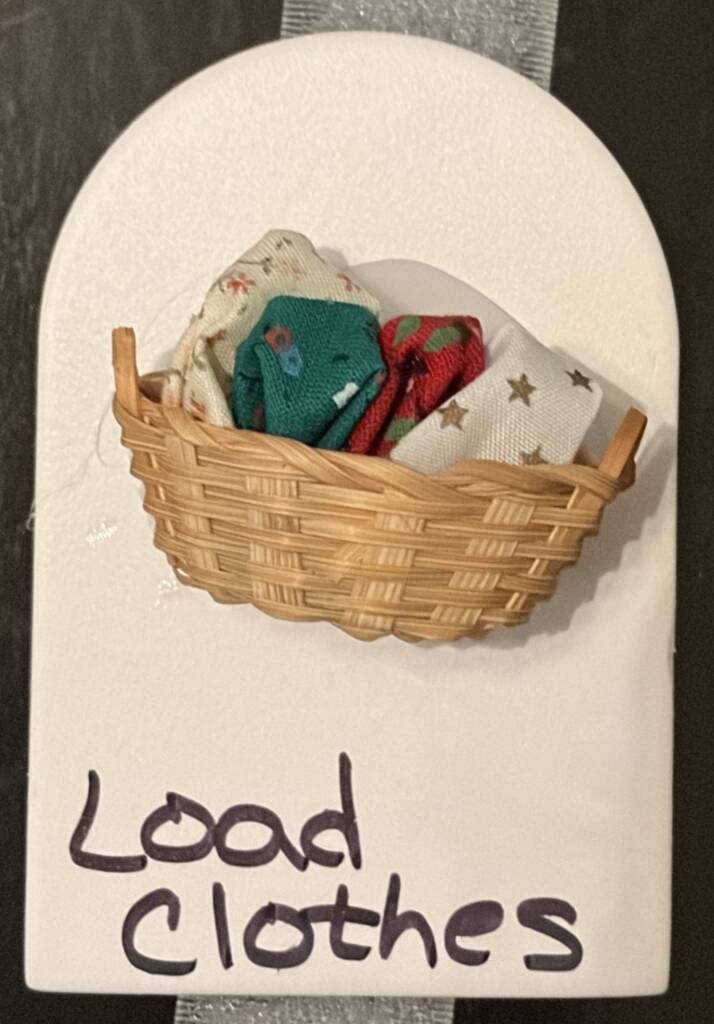
A recent activity for one of my students is to wash clothes at her 18+ program in our district. The student is to wash work shirts that her peers use in the community at their different job sites. While I did create the tactile symbols for the routine of washing clothes using the routine that her teacher gave me and the verbiage she uses, I thought why stop there? She’ll need to do the drying of those same clothes.
This is the IEP goal that this activity is based off of:
By the end of the IEP year, when provided tactile markers, a tactile schedule, and verbal prompts after wait time, the student will follow the established steps to start the washing machine (loading clothes, adding soap, closing the lid, starting the cycle) in 80% of opportunities (VI SUPPORTED).
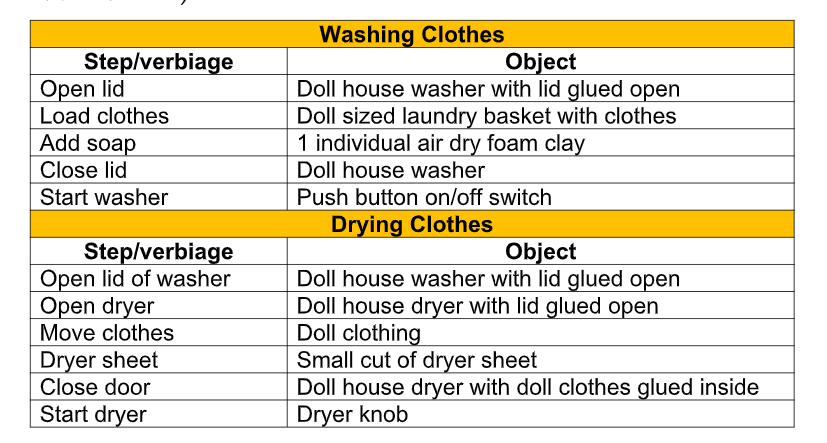
Items used
- 3 doll house washers
- 1 dollhouse miniature laundry basket
- 1 individual air dry foam clay
- 1 push button on, off switch
- 2 doll house dryers
- 2 pieces of doll clothing – used Barbie clothes from resale store
- 1 dryer knob (check with resale stores, handymen, Facebook marketplace, etc.)
- 2 ‘S’ hooks (for hanging the routine board)