Learning to add as well as number recognition can feel like a massive leap for a young student, but breaking math down into small, concrete steps builds the bridge between counting objects and understanding abstract concepts. By combining magnetic boards, high-contrast magnetic numbers, and tactile magnetic dots, educators can create an interactive learning environment where numbers aren’t just memorized – they are held, moved, and built. This hands-on approach empowers students to explore number identification, visualize quantity relationships, and confidently master addition problems up to the sum of 10.
I also used several fun books to work on learning to count. Amanda Sobotka has several books based on this theme. These are two of the favorite ones my students enjoyed.
Ten Little Lambs: A Counting Storybook, By Amanda Sobotka
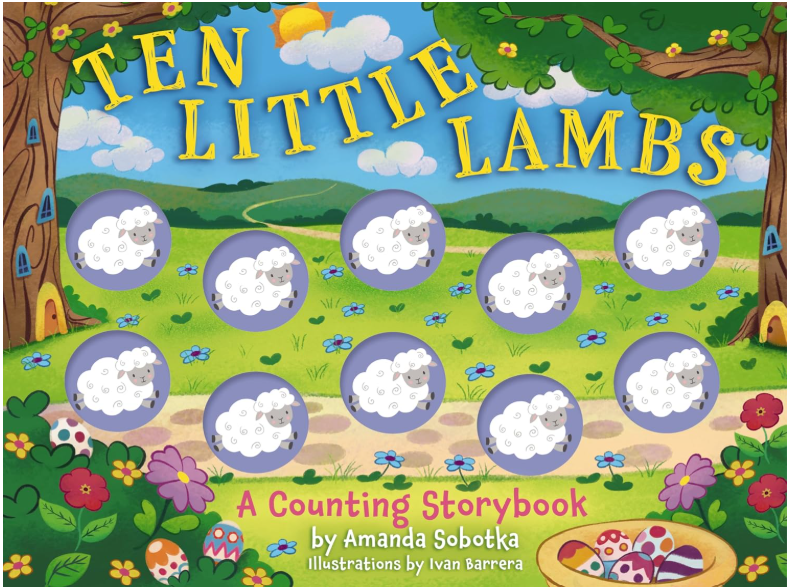
Story descriptor: “Count along with Ten Little Lambs and watch as they disappear! Learning to count has never been more fun. This unique board book counts from ten little lambs all the way down to one with adorable illustrations. With each page, one more lamb disappears. To demonstrate this concept, this book uses tactile lamb buttons to help children count how many little lambs are left as the story progresses. Follow along with the easy rhythm and rhymes of this story and let your child touch the colorful, built-in toys for a creative, hands-on approach to counting. Start young ones on a lifetime of loving reading and learning with Ten Little Lambs.”
Ten Little Bulldozers: A Counting Storybook, by Amanda Sobotka
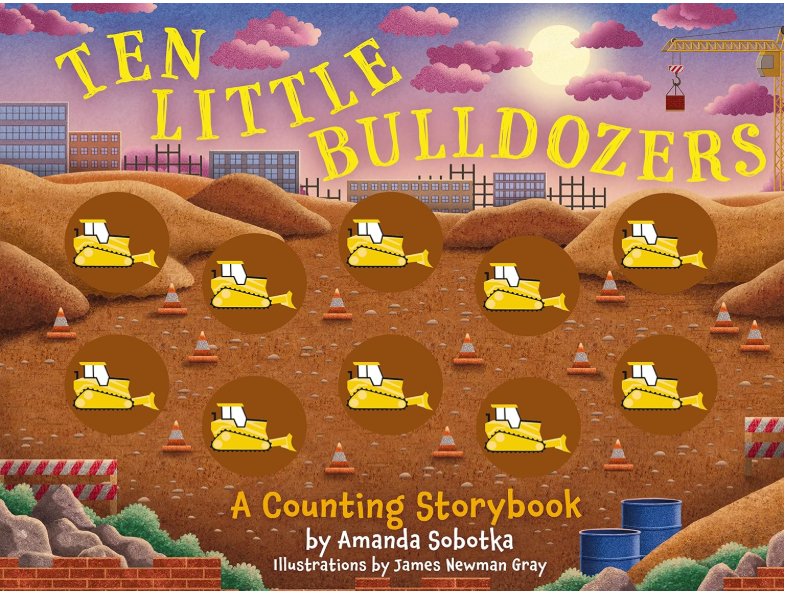
Story descriptor: “Beep! Beep! Count along with Ten Little Bulldozers and watch as they disappear! Learning to count has never been more fun. This unique board book counts from ten little bulldozers all the way down to one with adorable construction site illustrations. With each page, one more truck disappears. To help demonstrate this concept, this book uses tactile buttons to help children count how many little bulldozers are left as the story progresses. Follow along with the easy rhythm and rhymes of this story and let your child touch the colorful, built-in bulldozer toys to give a creative, hands-on approach to counting. Start young ones on a lifetime of loving reading and learning with Ten Little Bulldozers.”
For this activity, I needed the following:
- Readwrite stand
- Extendable Finger Pointer Stick, School Collapsible Telescoping
- Long Hand Pointing Stick
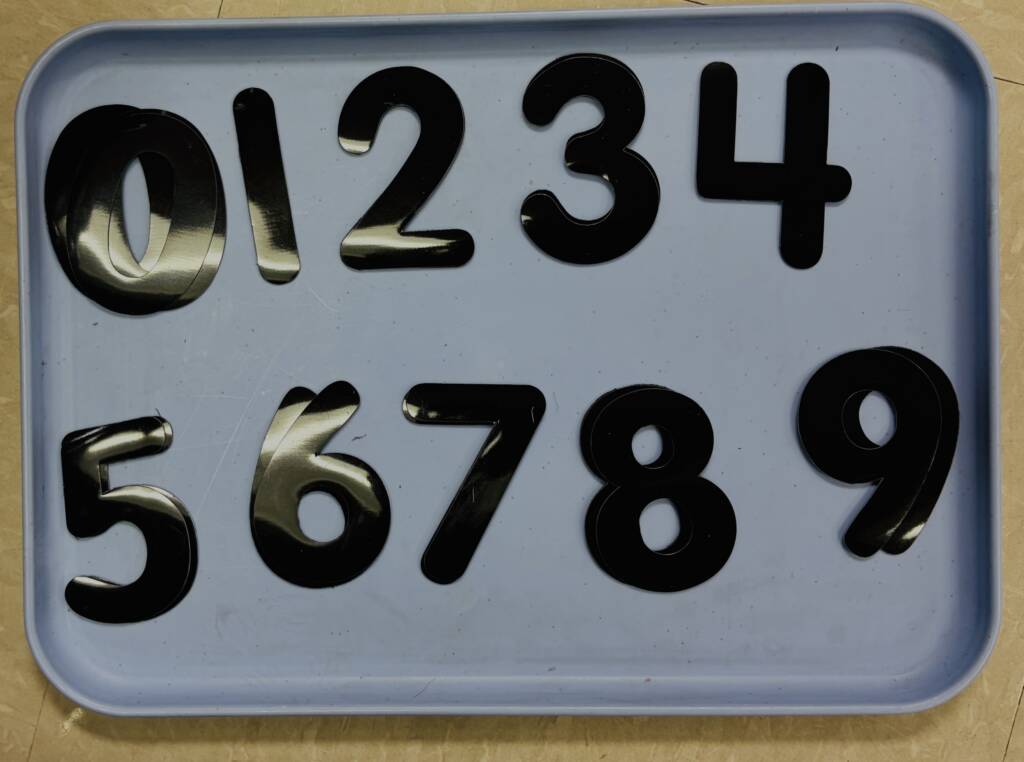
- Teacher Created Resources Black Classic 2 1/2″ Magnetic Numbers
- Colored Round Magnets
- Mr. Pen- Magnetic Small Dry Erase Whiteboard
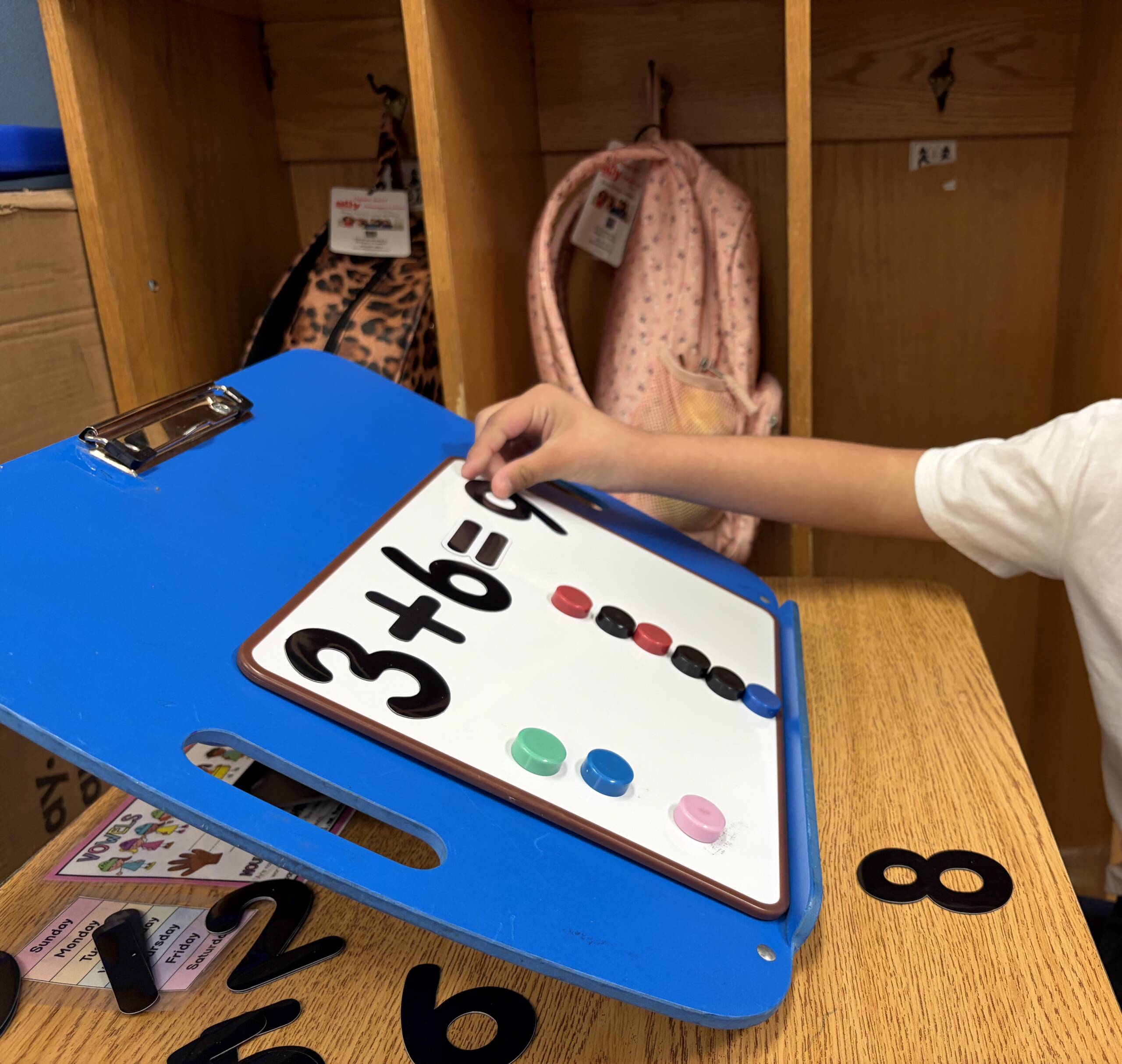
Using a slanted Readwrite stand with a magnetic dry-erase whiteboard placed on it provides an ideal ergonomic setup for early math instruction. The angled position of the Readwrite stand reduces neck strain, promotes proper posture, and places the manipulatives directly in the student’s optimal line of sight and reach. By pairing magnetic numbers with simple magnetic dots – which are easily sourced at craft stores, teacher supply shops, or retail stores – educators can bridge the gap between recognizing abstract symbols and understanding concrete quantities.
In this activity, an addition problem with a sum up to 10 is displayed on the board using the enlarged magnetic numbers, a plus sign, and an equals sign (for example, 4 + 3 =). Beneath each number, the student attaches the corresponding quantity of magnetic dots. These raised dots act as a visual and a counter, enabling the student to touch and count each dot sequentially from left to right. Once the student combines and counts all the dots representing both addends, they select the correct magnetic number representing the total sum and place it after the equal’s sign.
My students love to use the “magic pointer” as they call it as it makes the activity more playful. They become to teacher as they explain to me how they solved the problem. They don’t realize that they are working on their eye-hand coordination as well. I don’t use the “magic pointer” every time.
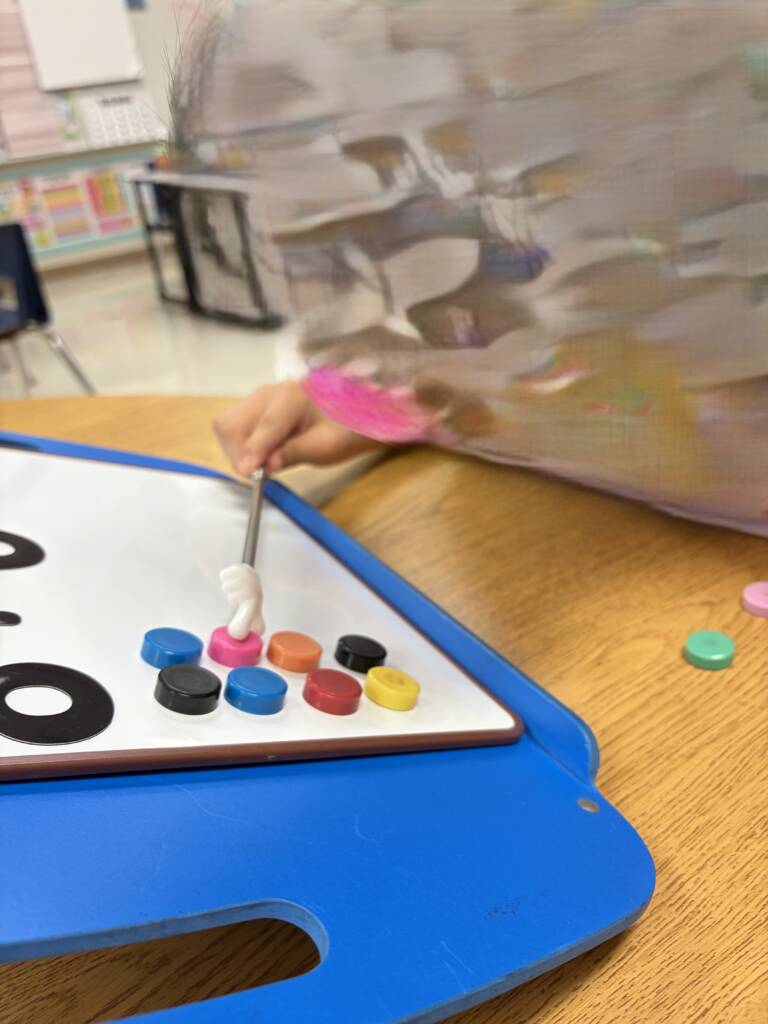
Also, when paired with the Readwrite board the telescoping arm allows students to point to items at the top of the board without stretching, straining, or blocking their own view. The student is able to point to each number at the top and then the magnetic dots under the number. I like to review and verbalize each of the equations following each problem. I do this by reading the problem and solution back to the student. Here I have the student use the extendable finger pointer stick to touch each part of the finished equation on the magnetic board one final time from left to right (e.g., pointing and saying aloud: “4 plus 3 equals 7”). I will ask the student to touch the magnetic dots beneath the total sum or addends to explain how they found their answer. Expressing their thought process verbally solidifies their conceptual understanding.
Wrapping up the lesson is all about the clean up as a learning routine as well. I like to involve the student in taking down the pieces. I have them sort the magnetic numbers back into their storage bins and group the magnetic dots by color or quantity. Cleaning up the board provides a satisfying visual transition out of “math mode” and back to the rest of their school day where they go back to class.
Tips
- Any type of magnets can be used. I used the circled ones as I had several packs of them in my storage that were left over from a previous project. Dollar stores are another good place to look for them.
- Braille number/symbol stickers can be easily added to the numbers. APH has both Feel ‘n Peel Stickers: Nemeth Braille-Print Numbers 0-100 as well as Feel ‘n Peel Stickers: UEB Braille/Print Numbers 0-100.
- As the whiteboards are…white. I try not to use white dots or lighter colors. I’m not always fast enough to pull them out as I have my students help with the setup of their work environment. When this happens, I wait on my student to notice they are struggling to see the magnetic dot on the whiteboard and we can then practice soliciting assistance.
Extension Activities
- Once a student has mastered using the magnetic dots and numbers on the slant board for simple addition to 10, draw or tape (painters tape works best) two high contrast ten-frame grids directly onto the dry-erase magnetic board. The student places the first set of magnetic dots in the top row of the ten-frame and the second set in the remaining spaces.
- Give the student the extendable pointer stick and role-play where they can teach a peer, parent, teacher, etc. how to solve an addition problem. I like to intentionally places the wrong number of magnetic dots under an equation. The student uses their pointer stick to point out my mistake, explain why it is incorrect, and then they fix my magnetic dots.