
All students, regardless of their ability to read print, should have access to state or national standards. English Language Arts and Math materials should be made available in whatever the prefered format or medium is for each student, whether that be braille, large print, or auditorily, as through the use of a screen reader. Students who are blind or visually impaired use “compensatory skills” to gain access to the core curriculum. This means that they should make use of strategies, techniques, and adapted materials, including the specific reading and writing methods of braille, regular print, regular print with optical devices, large print, voice output technology, and other symbols.
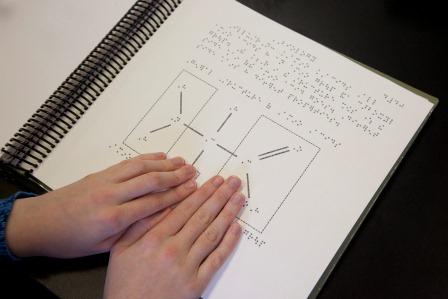
Braille Standards
The following states have developed standards or frameworks specifically for braille readers or students with visual impairments:
- California Braille Reading Standards (aligned with California content standards for students who use print) (2006)
- California Braille Mathematics Standards (aligned with California content standards for students who use print) (2006)
- Maryland Common Core State Curriculum Frameworks for Braille (ELA and Math) (2012 and 2015)
- Utah Braille Core Standards, Aligned with the Utah Core Curriculum Standards for English Language Arts K-6 (2011)
- Utah Braille Core Standards, Aligned with the Utah Core Curriculum Standards for Math K-6 (2011)
- 2020 Guidelines and Standards for Educating Students with Visual Impairments in Texas