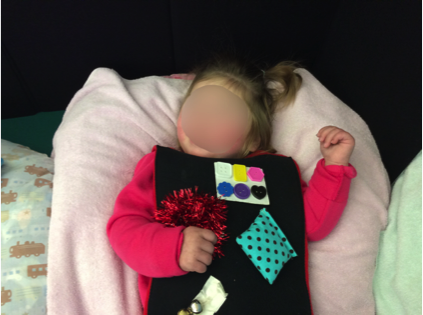
The Challenge:
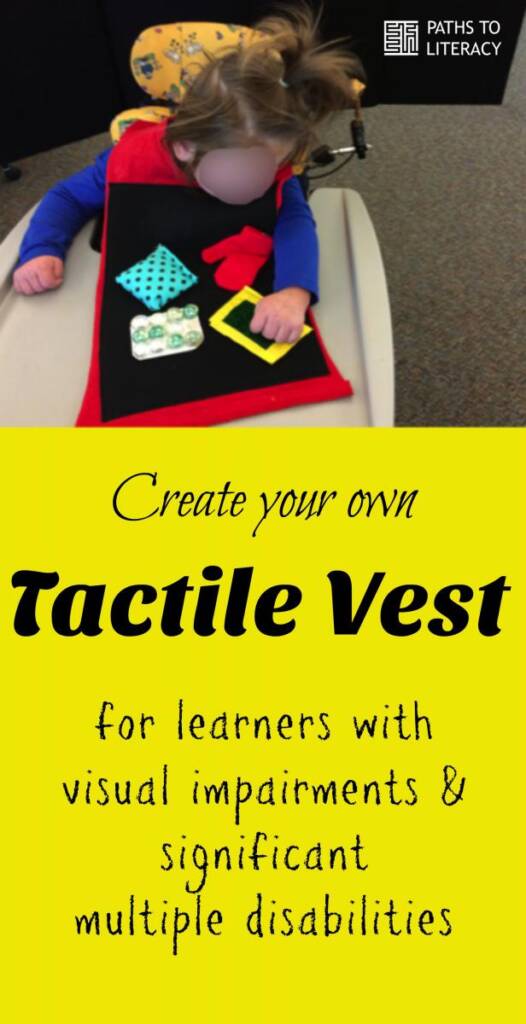
I had a student who didn’t have much movement. Her arms were usually bent at the elbow with hands semi-fisted at her chest. I wanted her to explore. How could I keep things always available to her without having them fall away? The Tactile Vest was born! It’s an easy on/easy off solution.
Making the Vest:
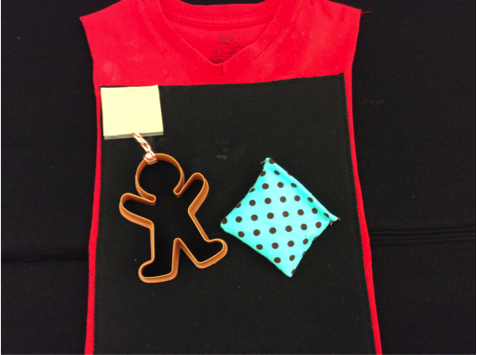
The vest is made by using an old T-shirt and attaching velcro compatible fabric, also called “Veltex”. It’s the same fabric found on an Invisiboard. I used a sewing machine to attach the fabric. This provides a sturdy, washable vest. A fabric spray adhesive is another option. I’m just not sure how durable it would be.
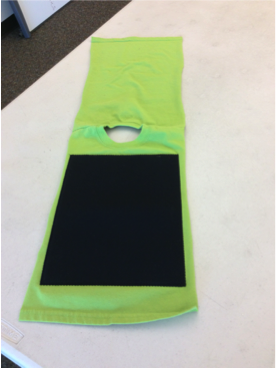
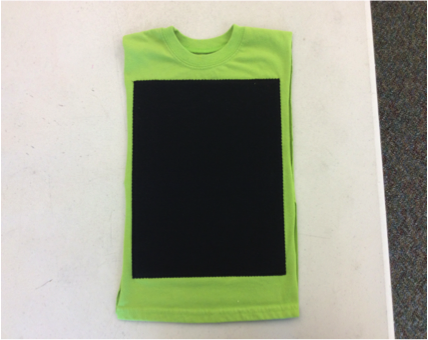
Using the Vest:
I’m able to create a variety of tactile goodies for a student to use. I vary the available textures so one might be smooth, one rough, and one that makes some type of noise. Items are easy to attach using Velcro and personalized to meet the needs of the student. Items can be changed quickly with the daily routine: sensory items for massage time, thematic items used at literacy circle, and by attaching a switch it can be used as a leisure activity for playing music or operating a toy, etc.
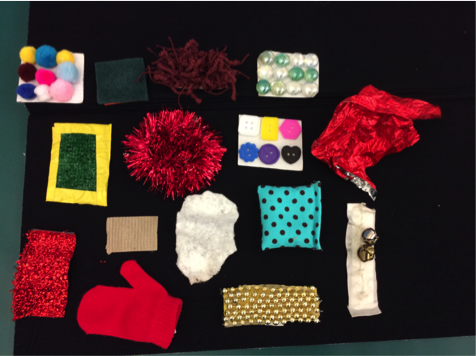
Find out about the child’s tactile preferences
This is a great way to check for tactile preferences. I keep one item the same (familiar) and expand by adding one new (unfamiliar) item. I then observe:
- How long does it take to become familiar?
- What are the preferences?
- What about positioning?
- Where will she touch?
- If I move a preferred item will she reach a little further to touch it?
- How long will she be interested in an item?
Just a few questions to get you started!
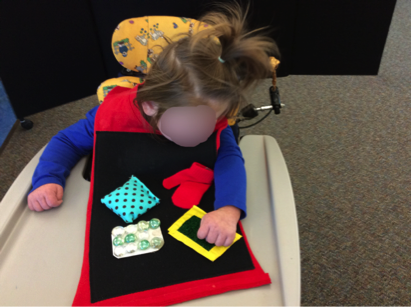
*The green polka-dot bean bag is actually a rice bag that can be heated in the microwave to add “warm” for concept development.
For more information on activity vests, see also: Active Learning Space