Skip to content
Blog

While You Are Home: Activities for Children with CVI

Activity ideas from Dr. Christine Roman for students with cortical visual impairment (CVI) in each of the three different phases.

All images shared by Diane Sheline


While you are home…

I am writing this blog post during a time in which we are all self quarantined. It’s a strange and unsettling time. If you are spending more time indoors than you expected, and you are a family member of a child with CVI, you may be toward the bottom of your “fun things to do” list. My own children had a phrase they used on long rainy days indoors. “Mom, what can we do or eat?”. To that end, I am offering a few ideas of things you may be able to do with your children.

Phase I

  • Put a few drops of food coloring in a container of hand sanitizer gel. Place it on a backlit surface and move it gently back and forth. When your child turns in the direction of the color gel, apply on the child’s hands if appropriate.
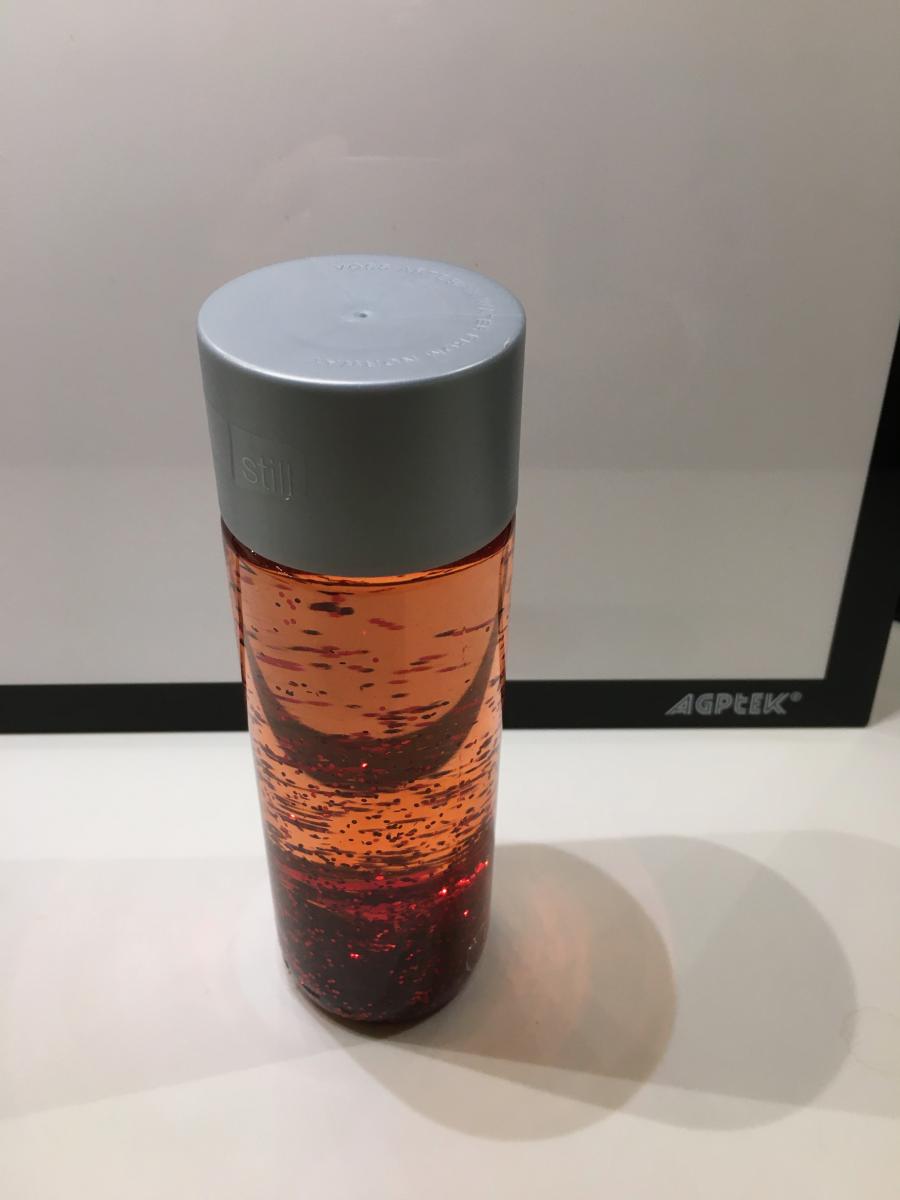
A few drops of food coloring in a container of hand sanitizer gel

  • Create a simple video of your child’s favorite ball moving in a trough, tabletop, or between 2 hands. Play the video (without sound) and then offer the ball once your child localizes on the video.

Red ball rolling
Video of ball moving
Red ball in trough
Red ball in trough
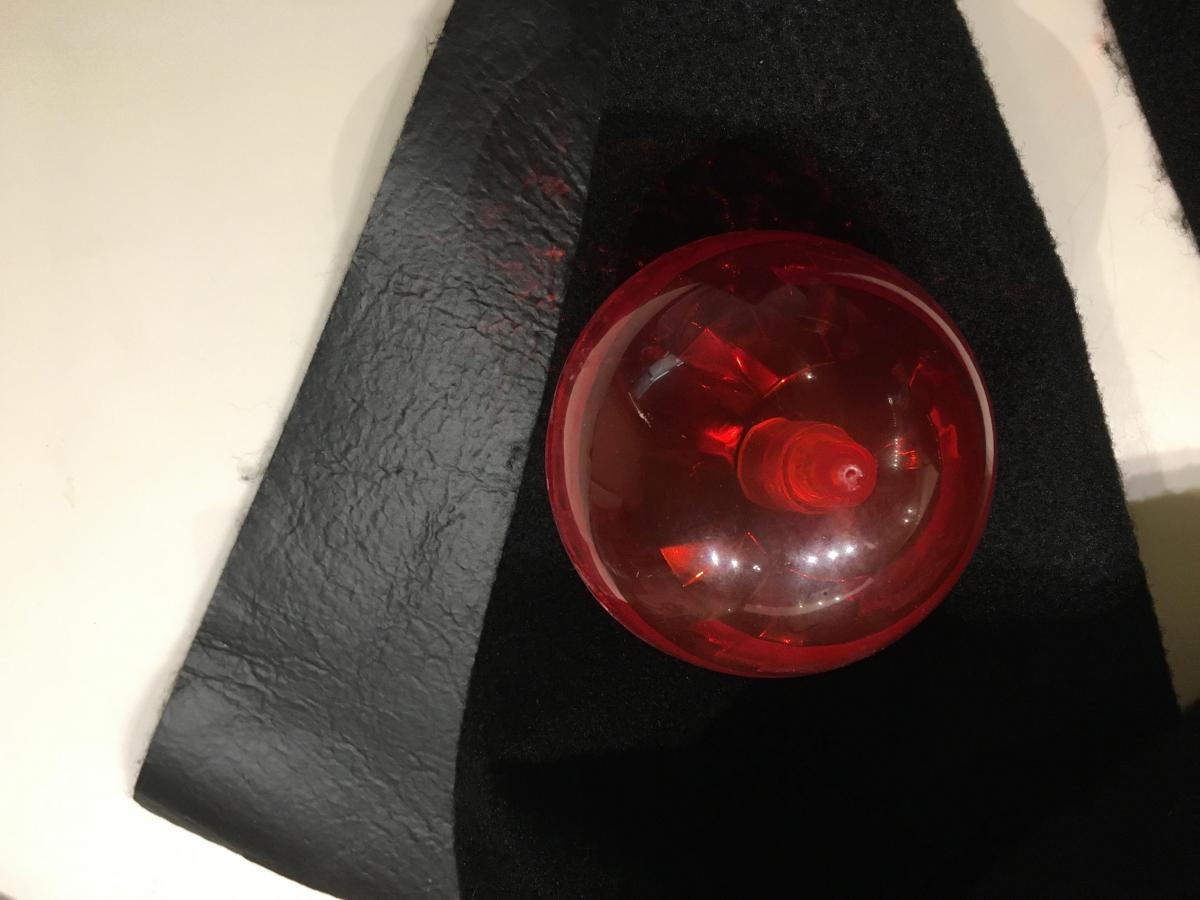
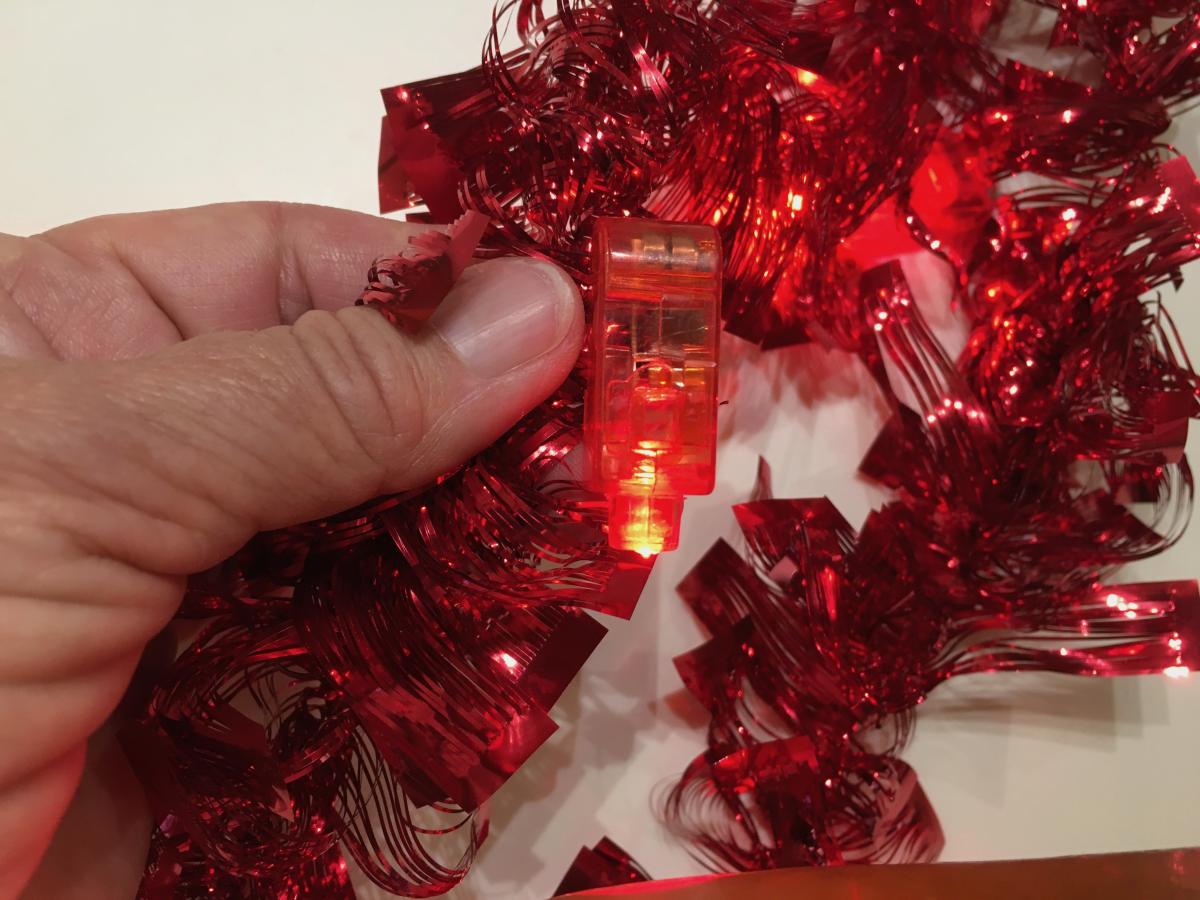
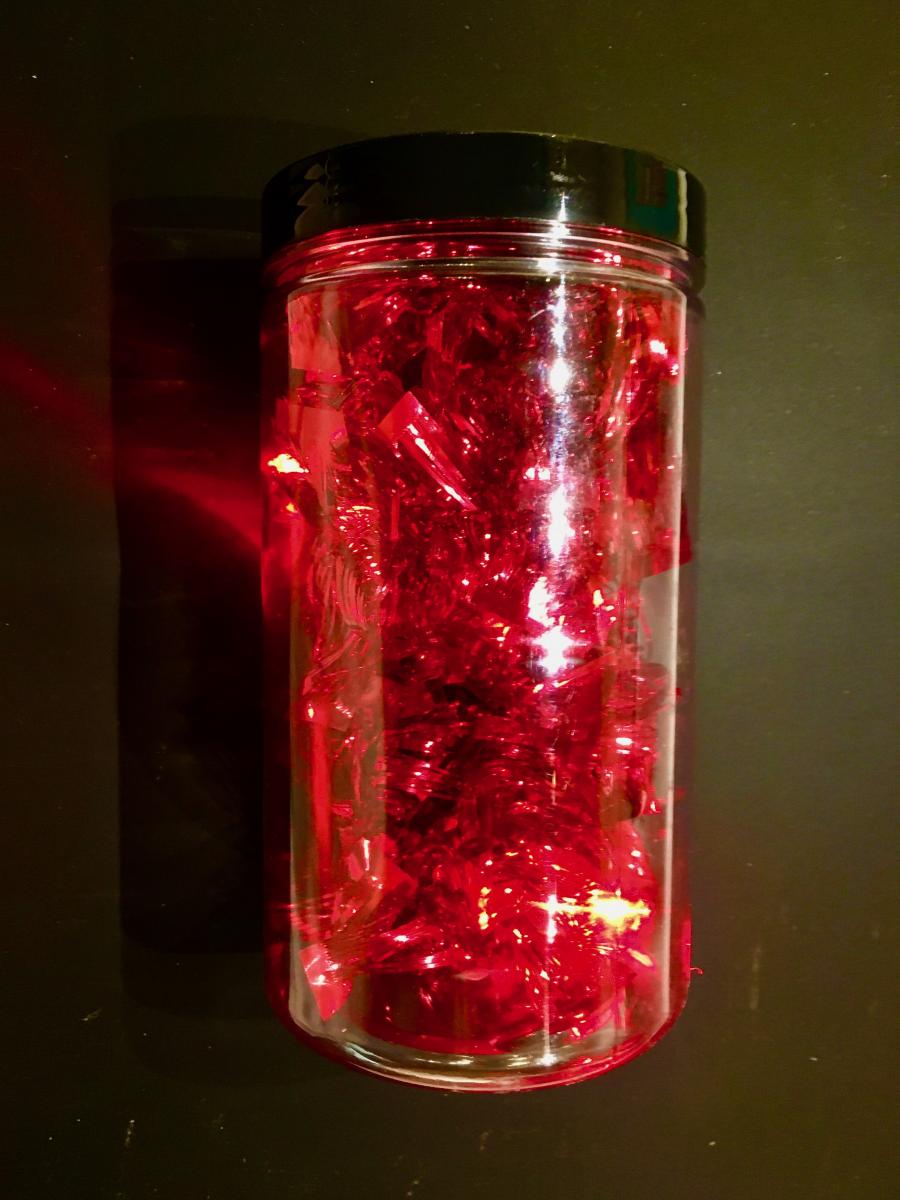
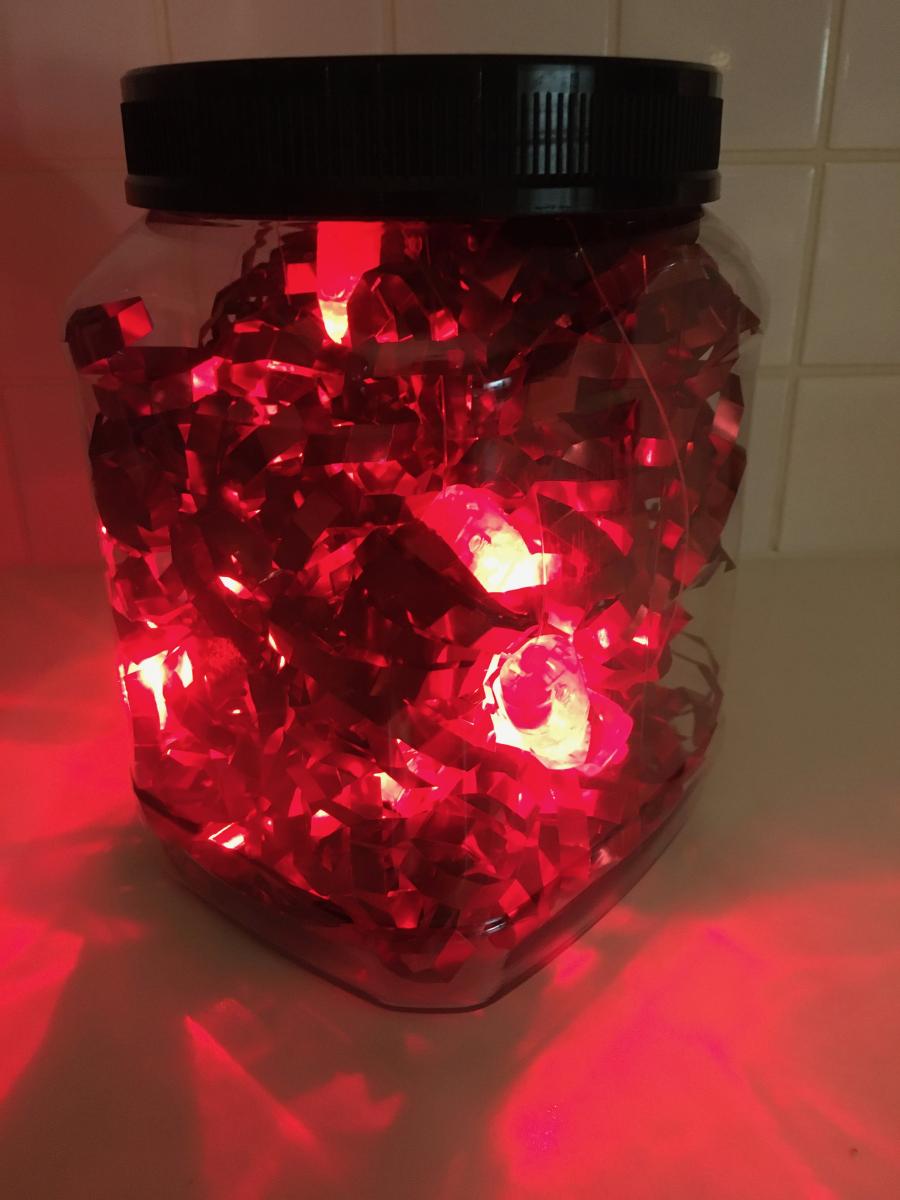
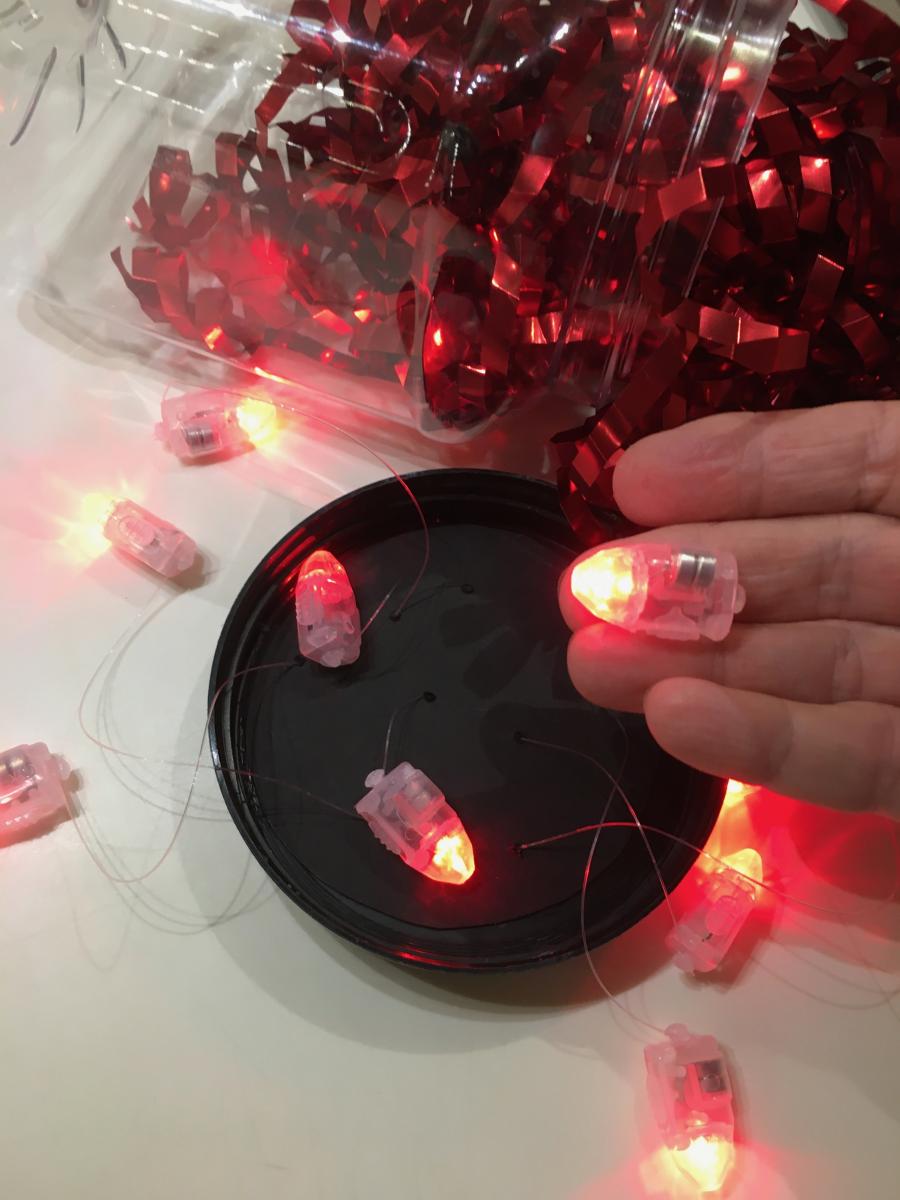
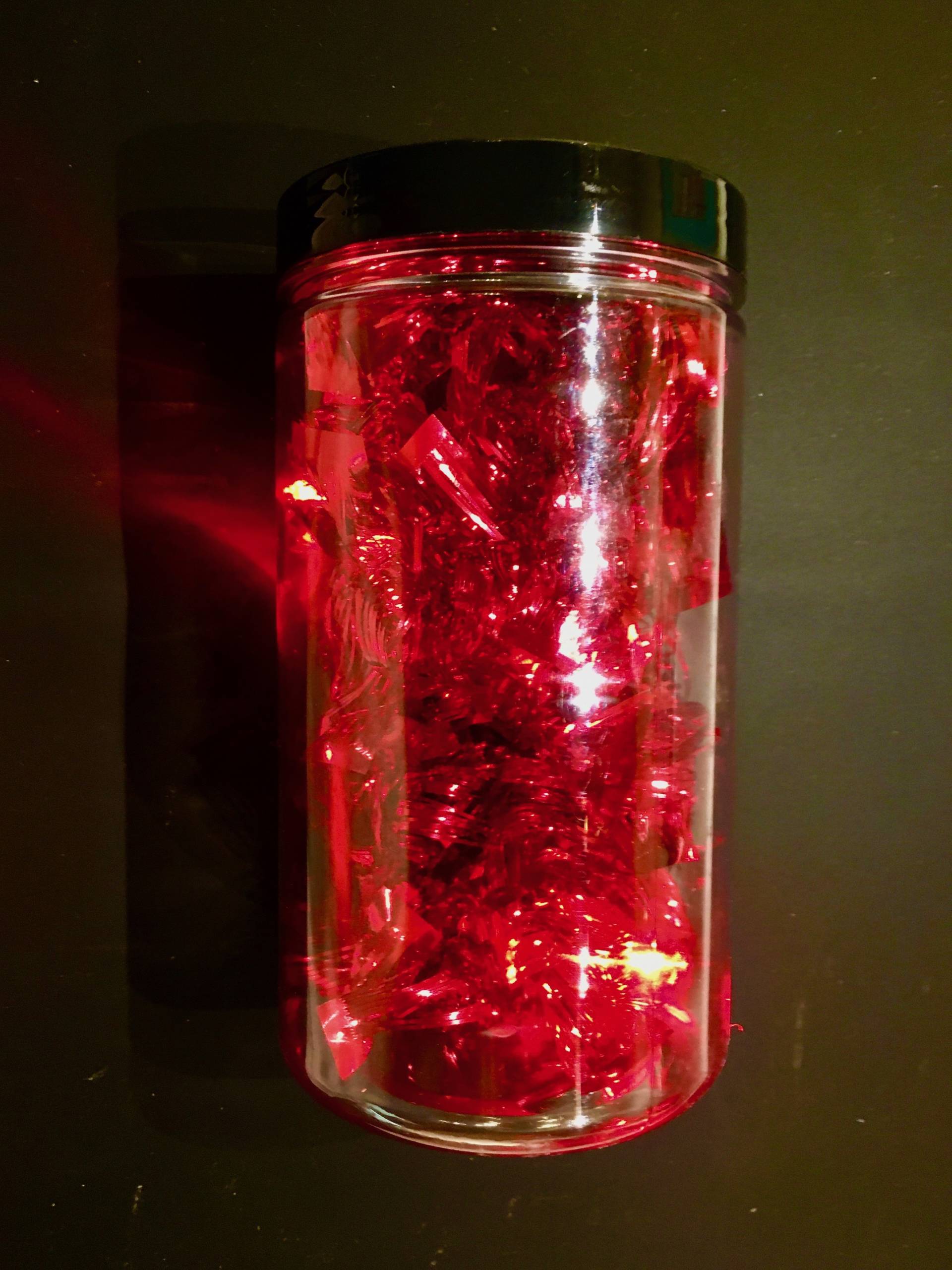
  • Dismantle a color pom-pom or use other shiny material stuffed into an empty plastic water bottle. Attach a small light or slip the light inside the bottle.  If near Phase II, these shiny, lighted bottles can be lined up for a simple bowling, or knock-down-type game.
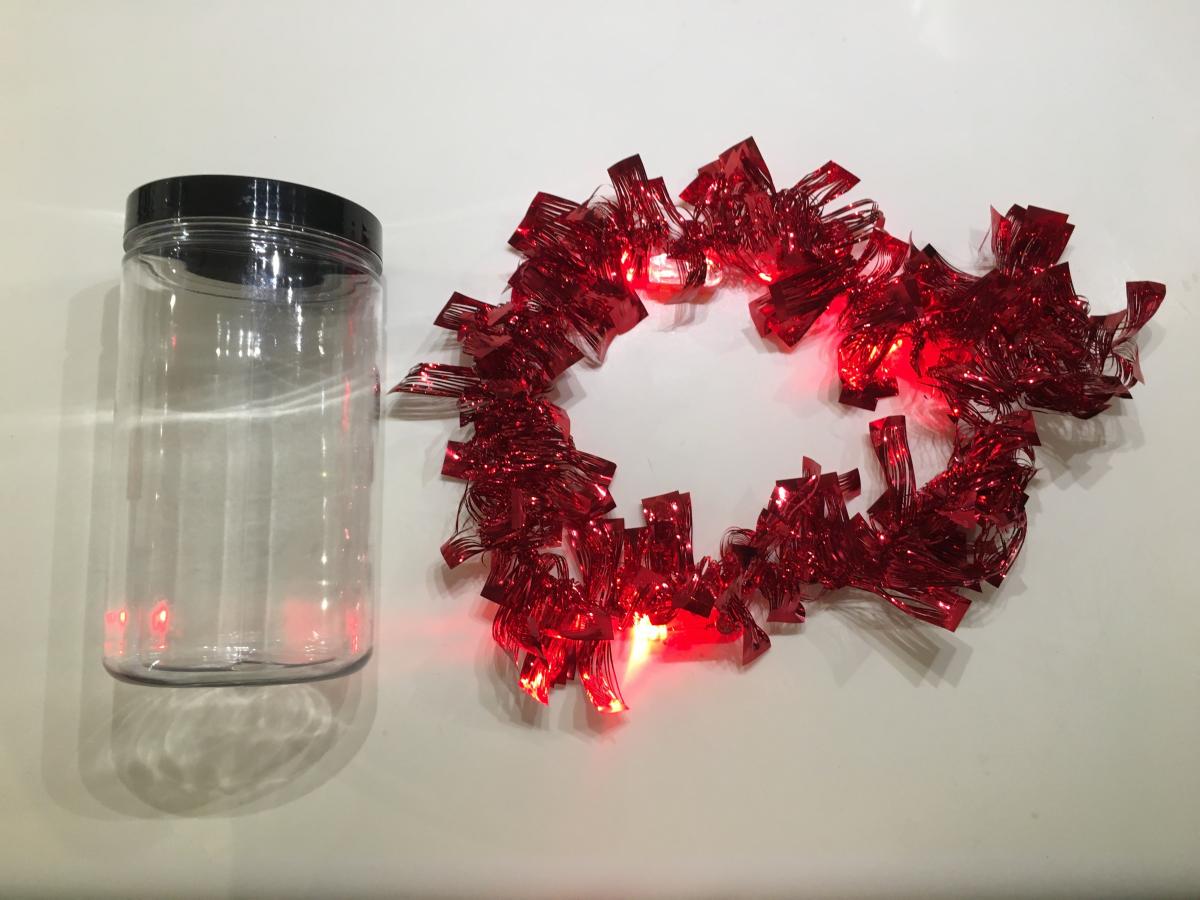
Empty jar and red mylar garland with 3 finger lights
Red mylar garland with lights
Red mylar garland in an empty plastic container
Red mylar garland in rectangular jar
Red bullet-shaped lights

Phase II

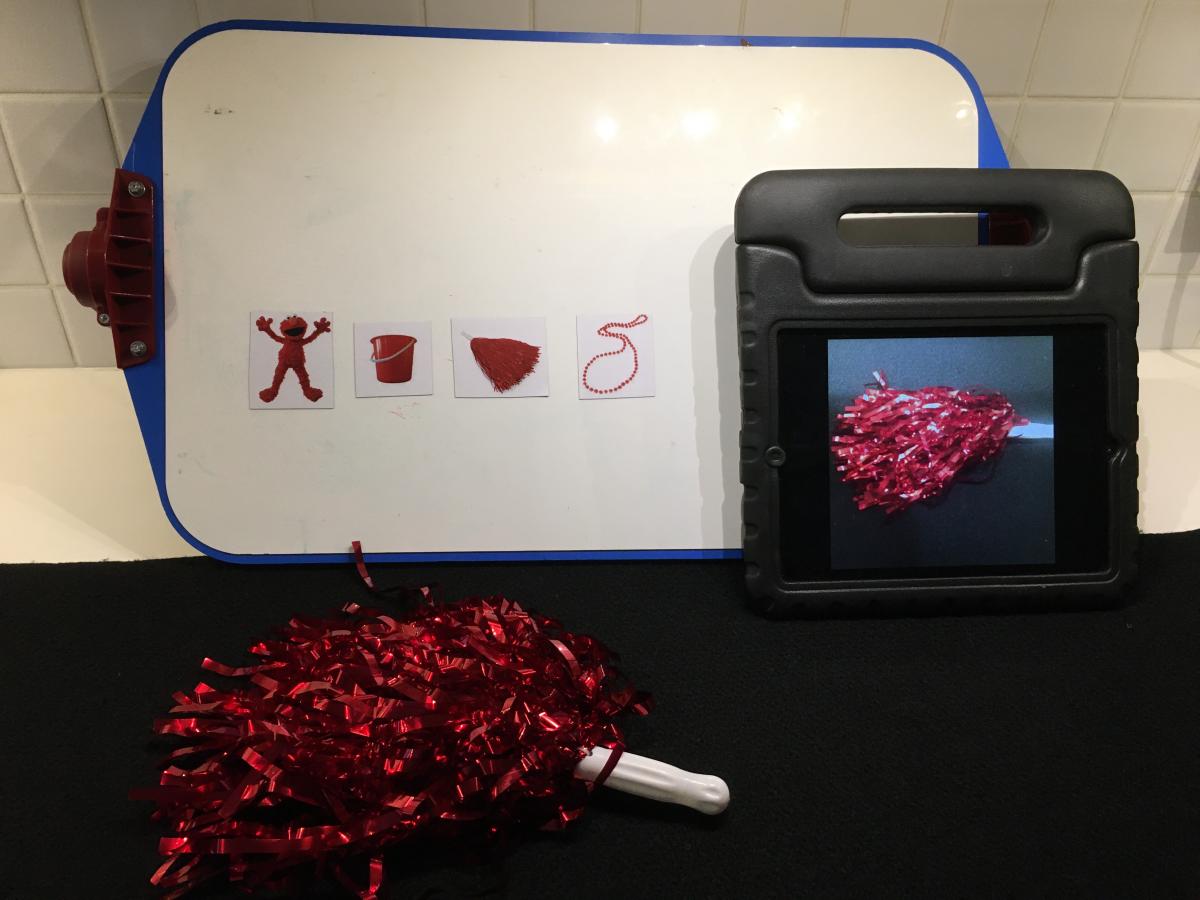
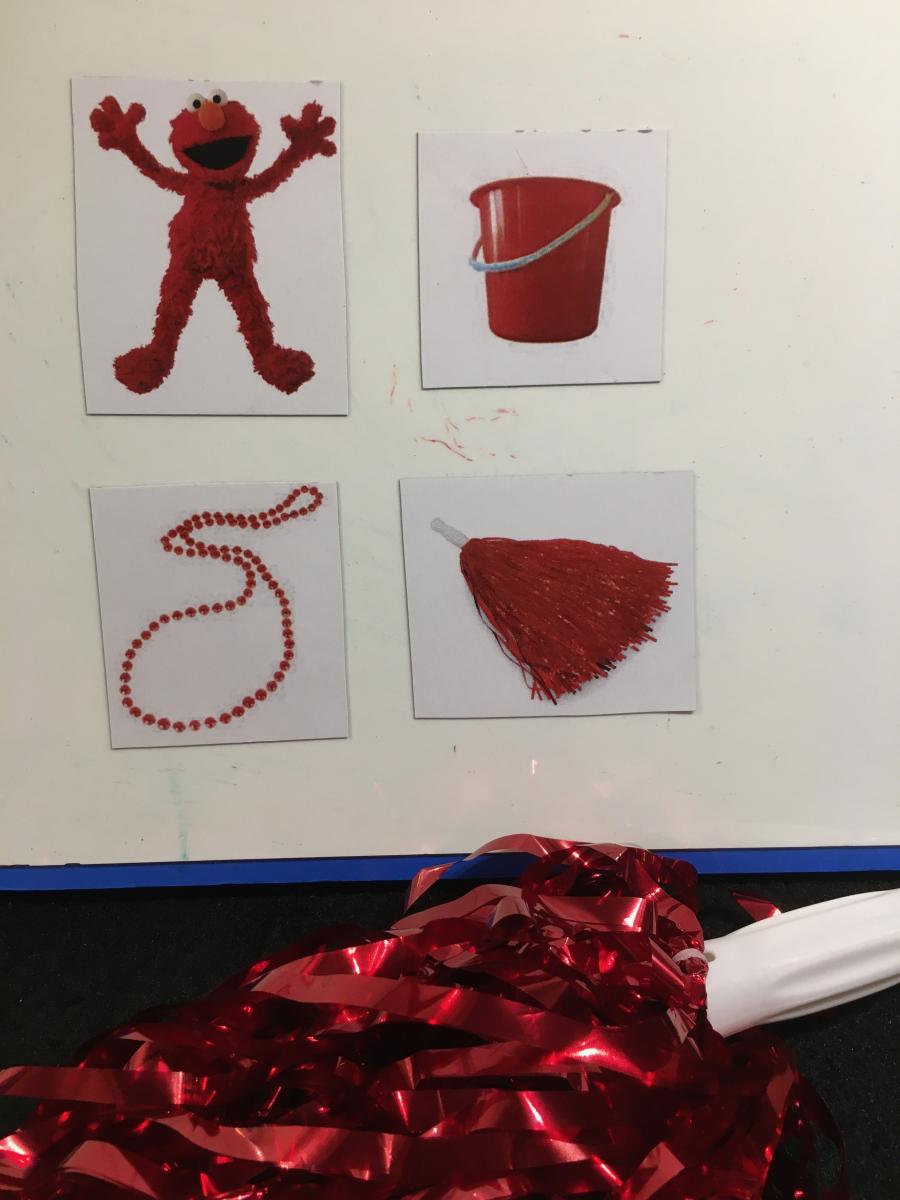
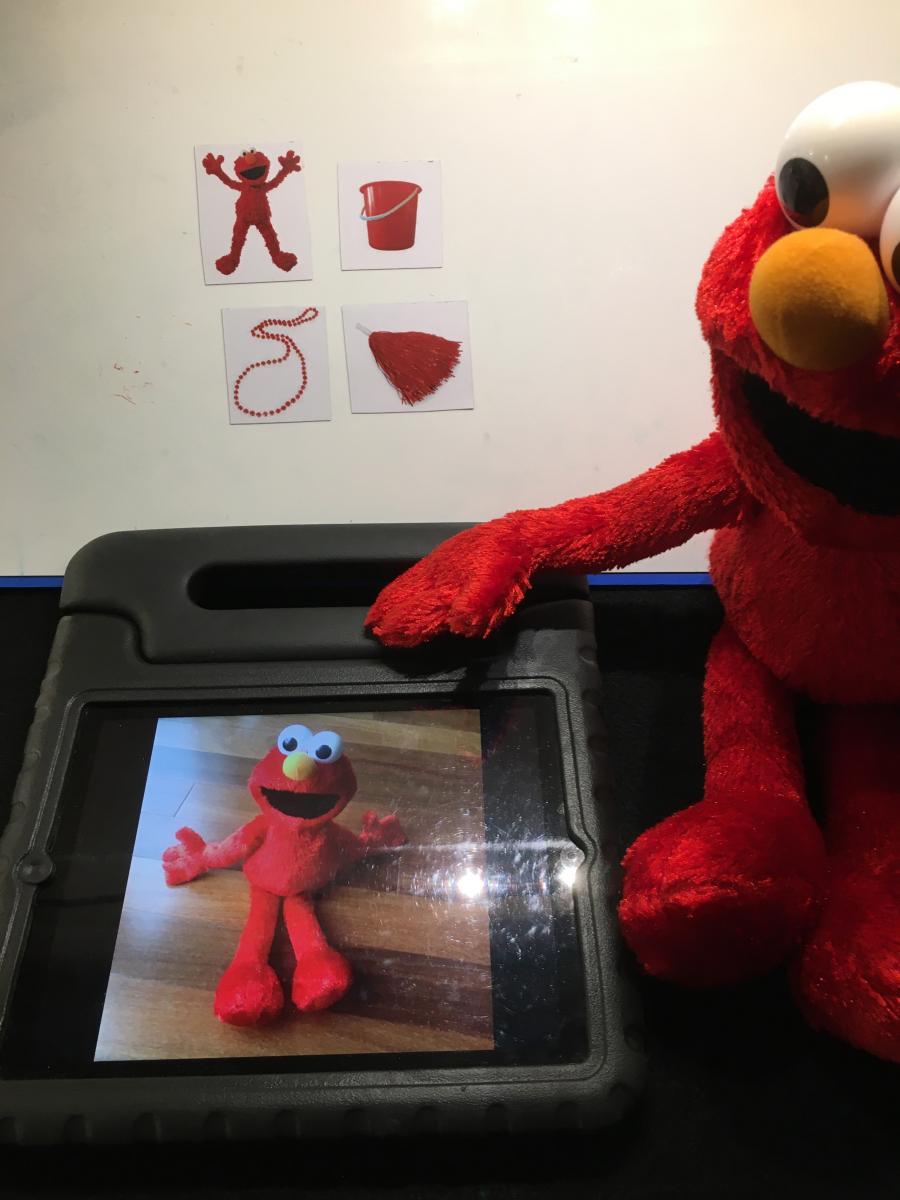
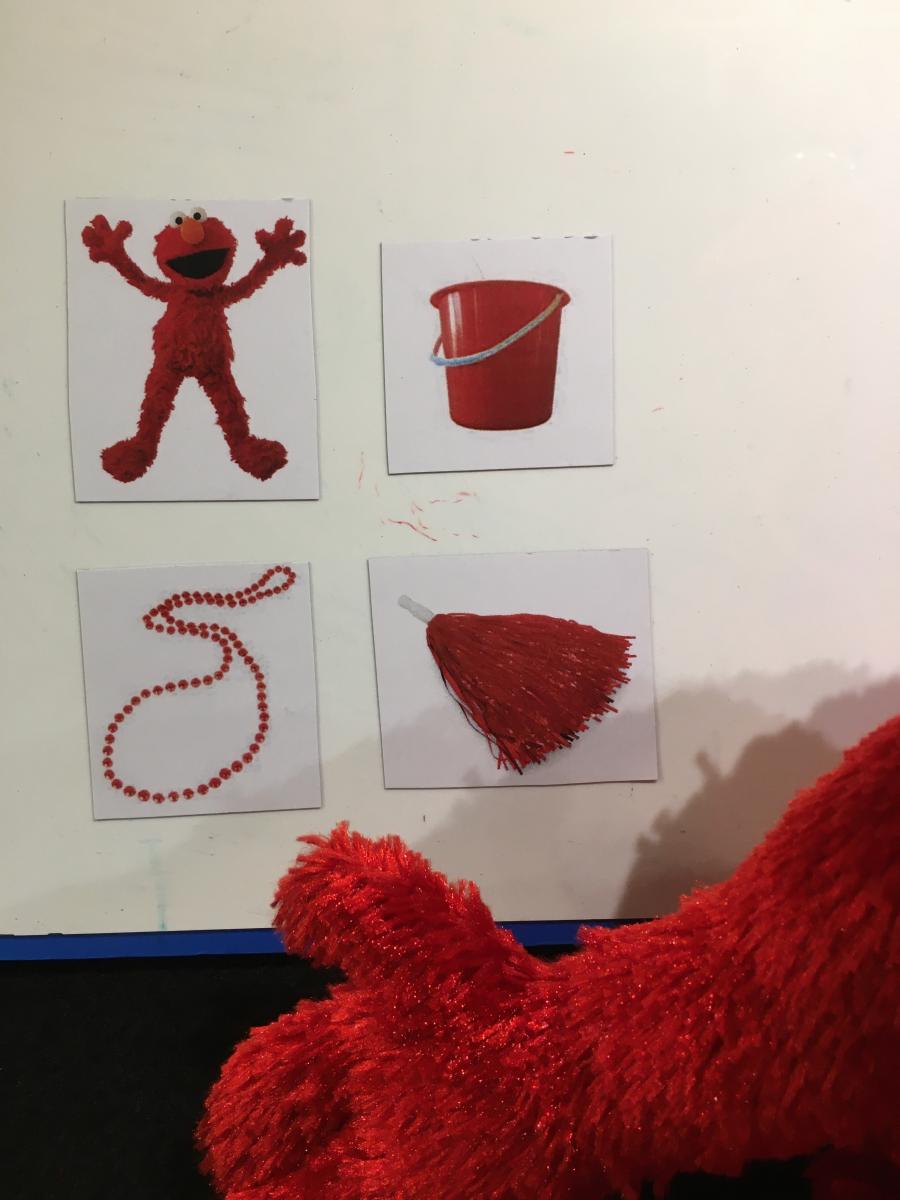
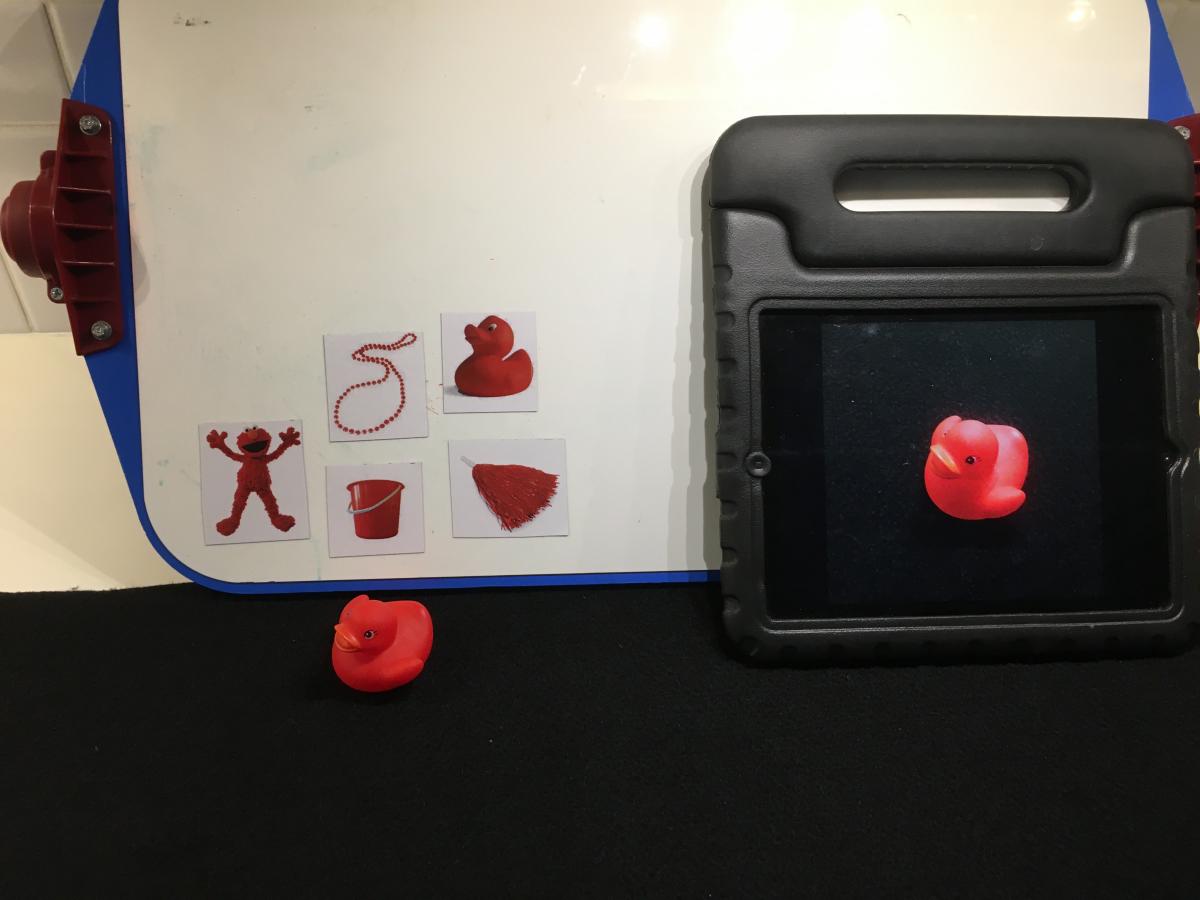
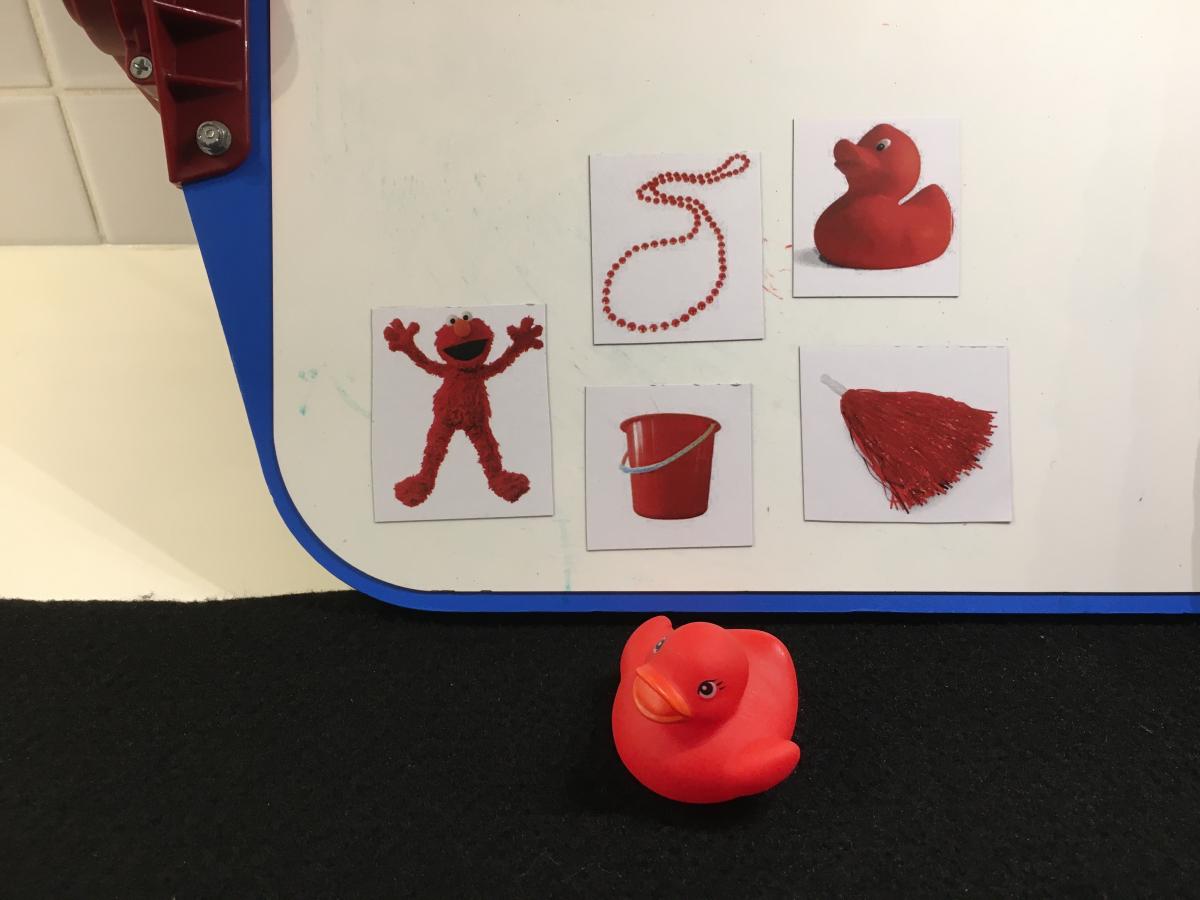
  • Create a matching game using an object and a photo of the same object. 
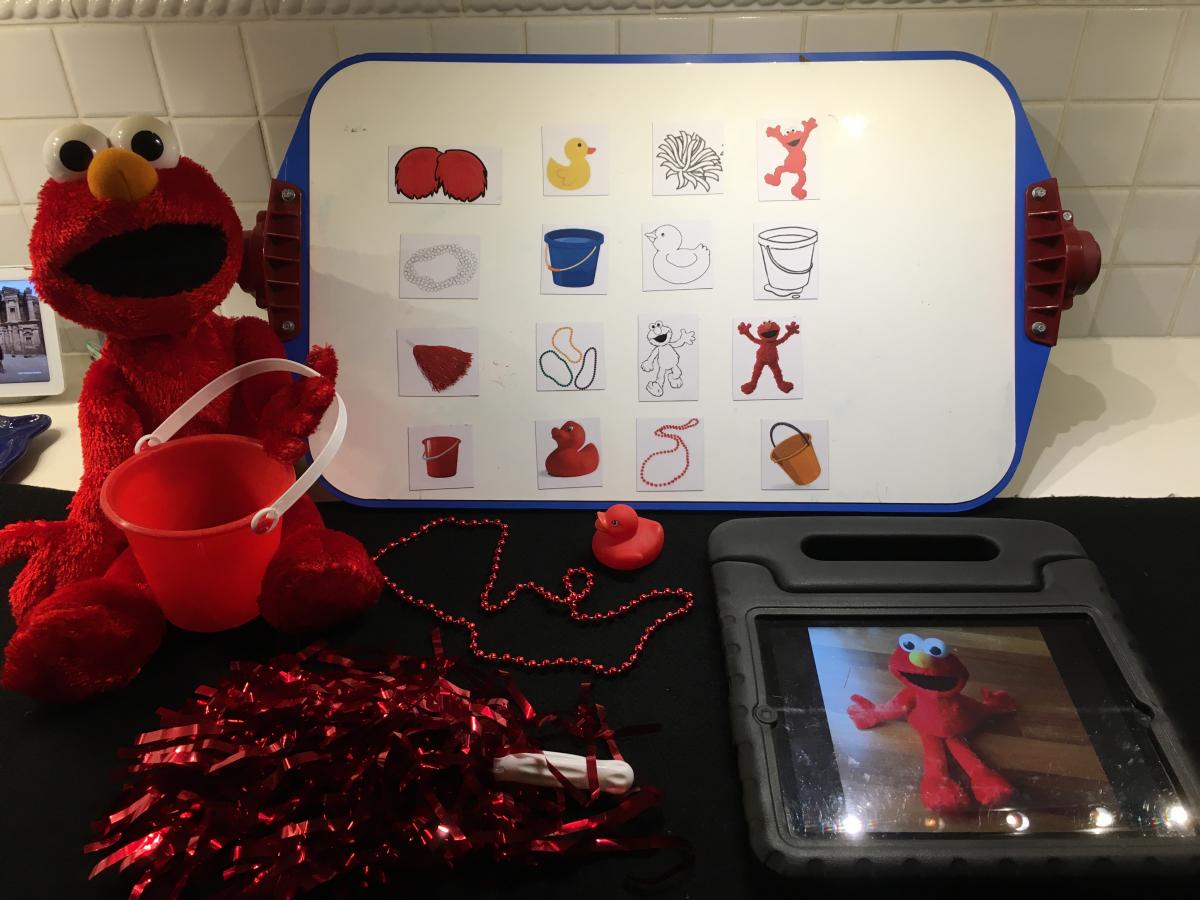
Elmo with red mylar pom pom, iPad and picture symbols on All-in-One Board
Picture symbols on All-in-One Board
Matching red mylar pompom to iPad image and picture symbol card
Picture cards with red mylar pompom
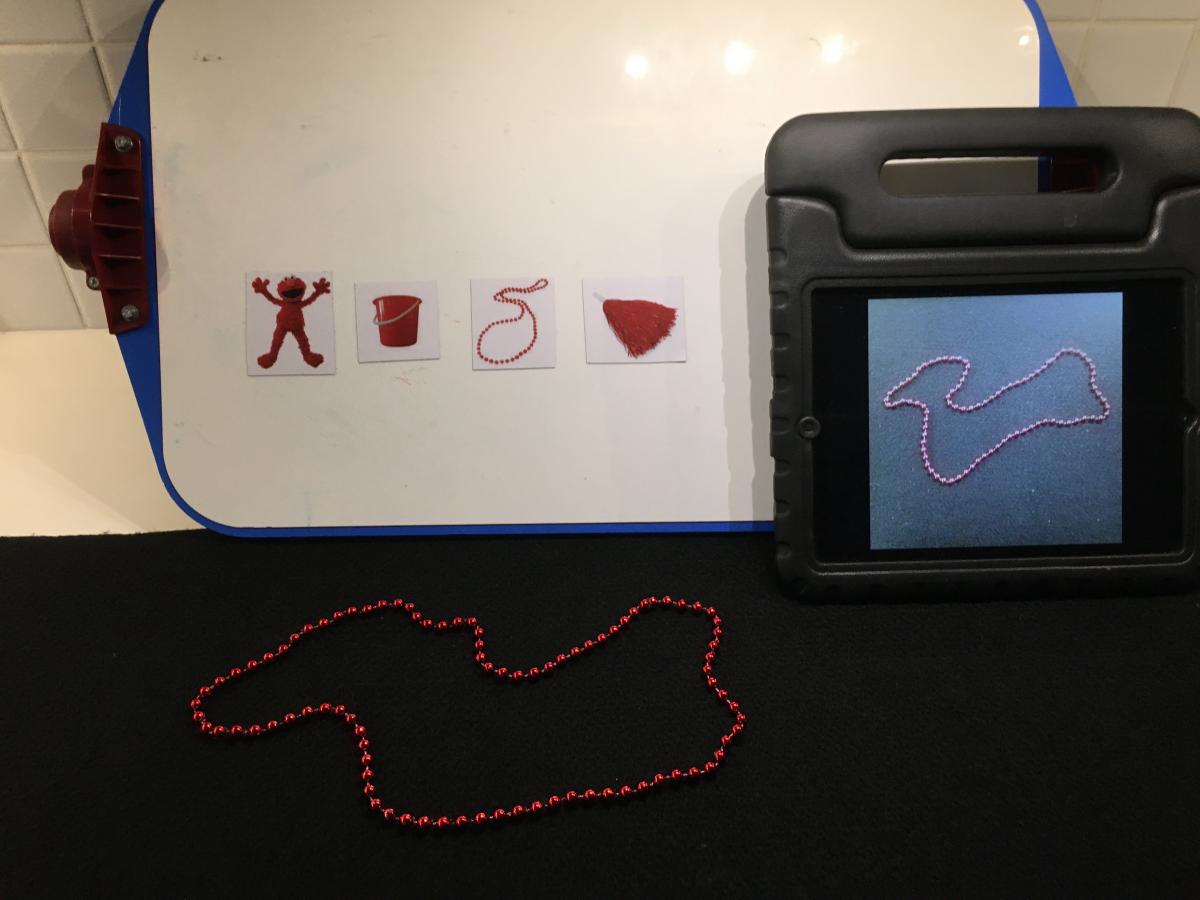
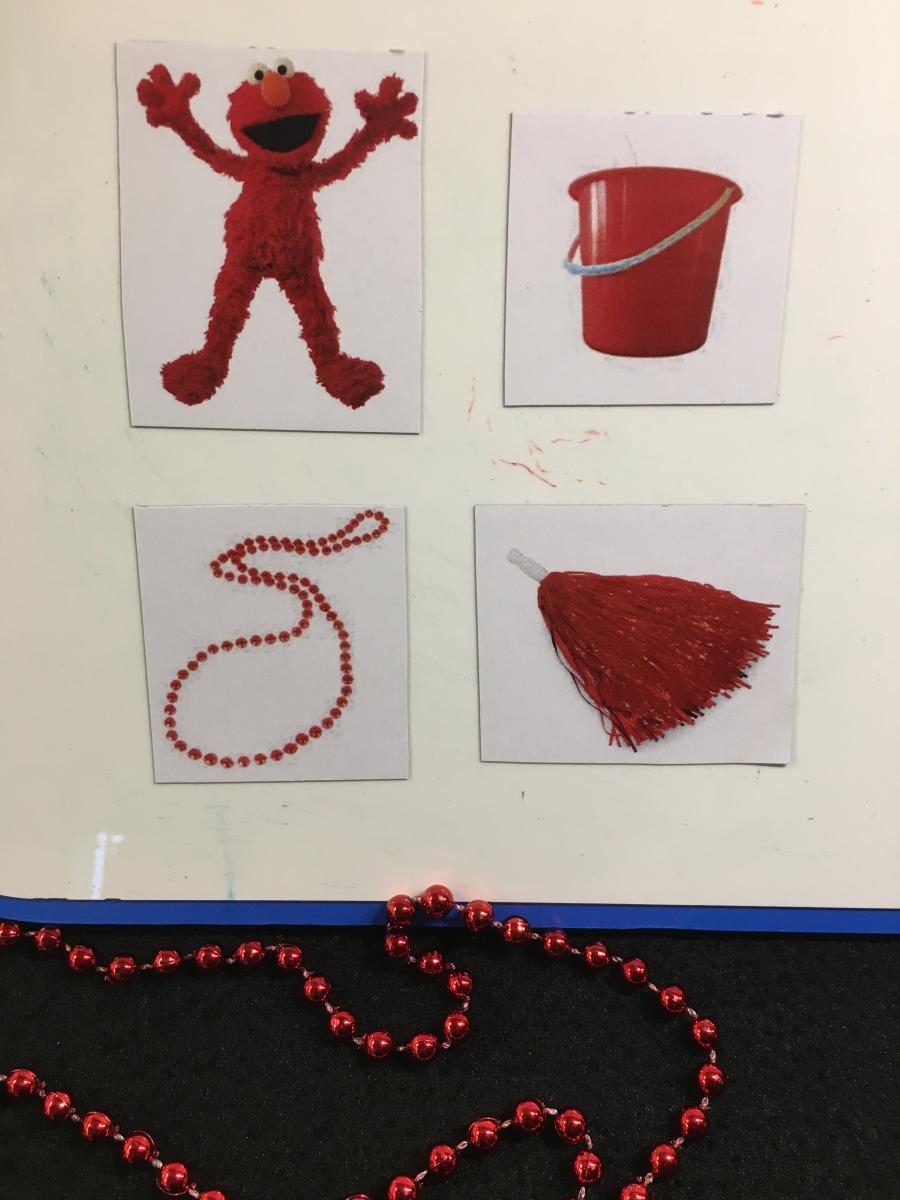
Shiny red beads with image on iPad and picture cards
Shiny red beads with picture cards
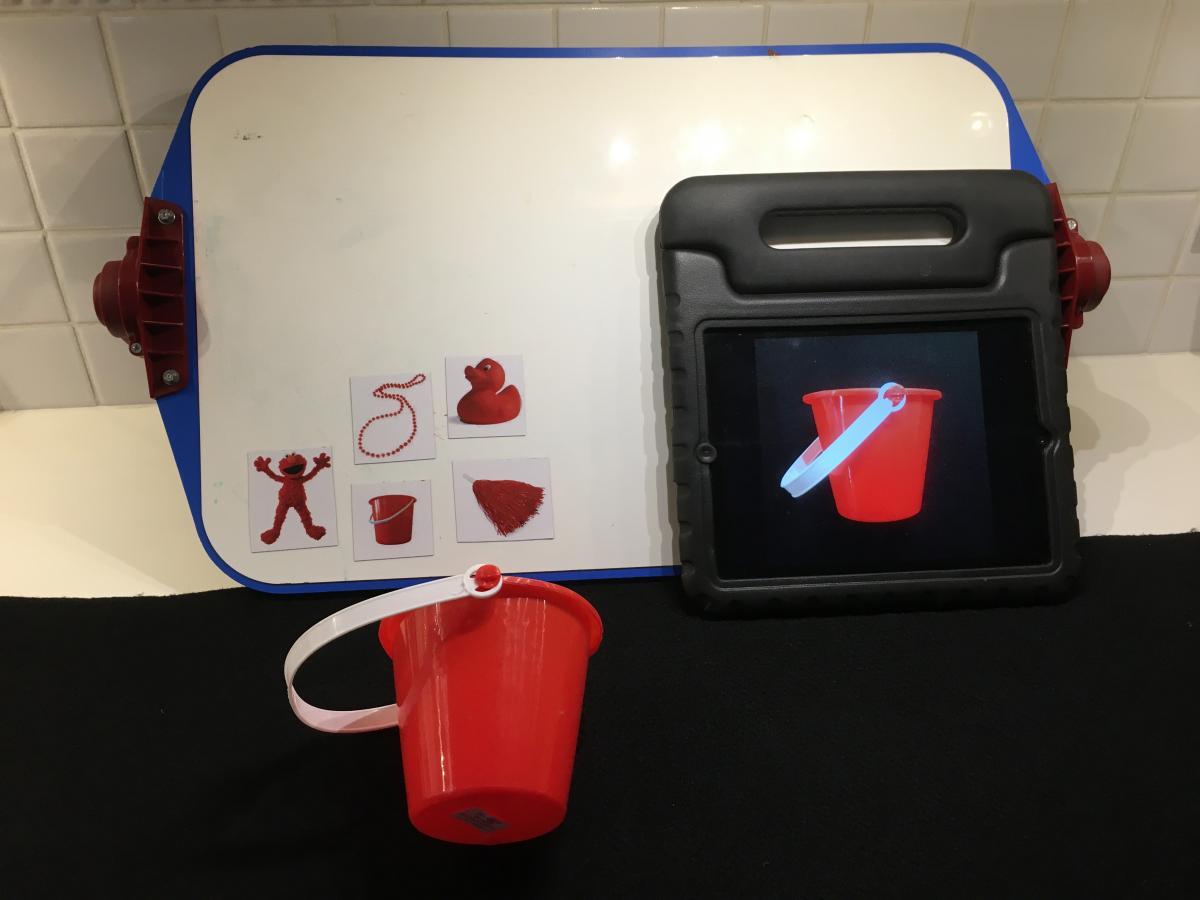
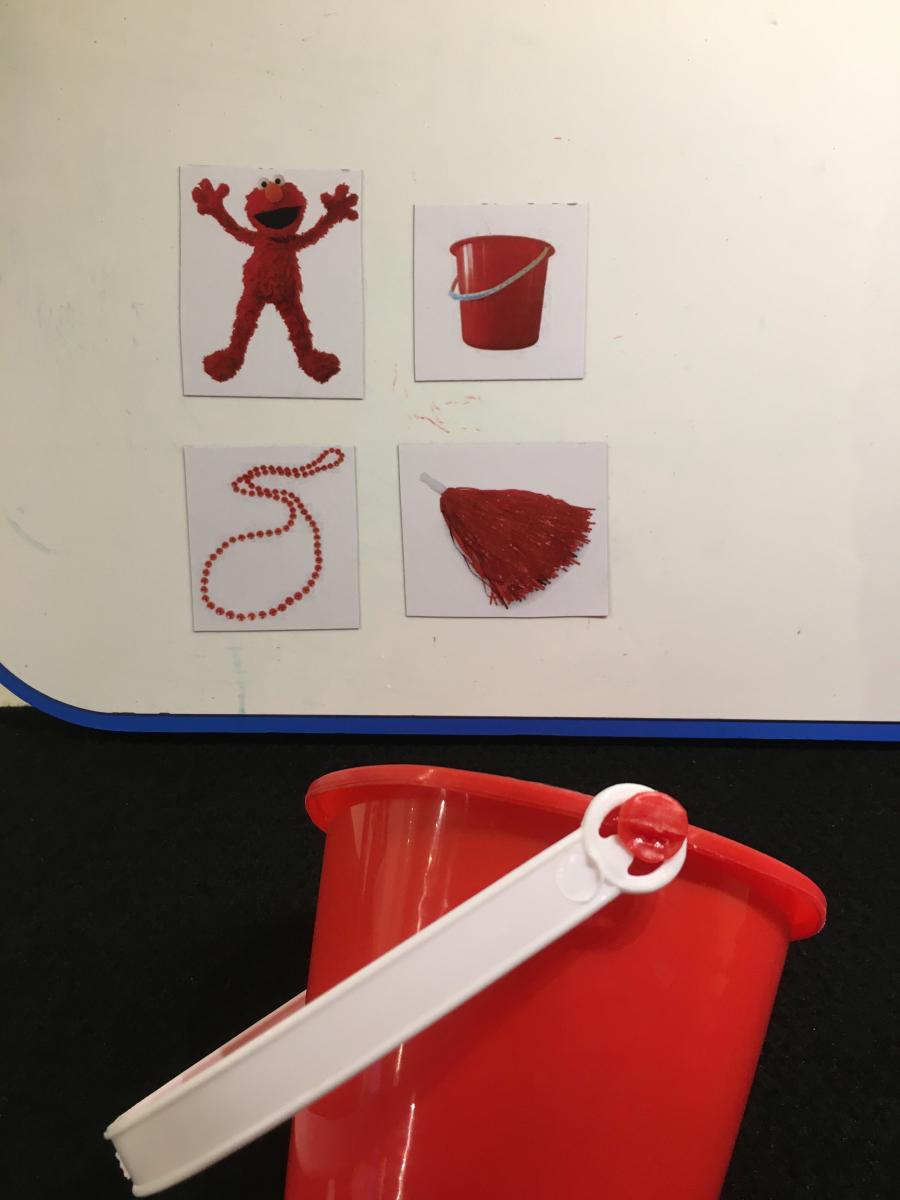
Red bucket, ipad with photo or red bucket, photo cards on All-in-One Board
Red bucket and photo cards
Elmo with photo of Elmo on iPad and picture cards
Elmo's arm with photo cards
Elmo’s arm with photo cards
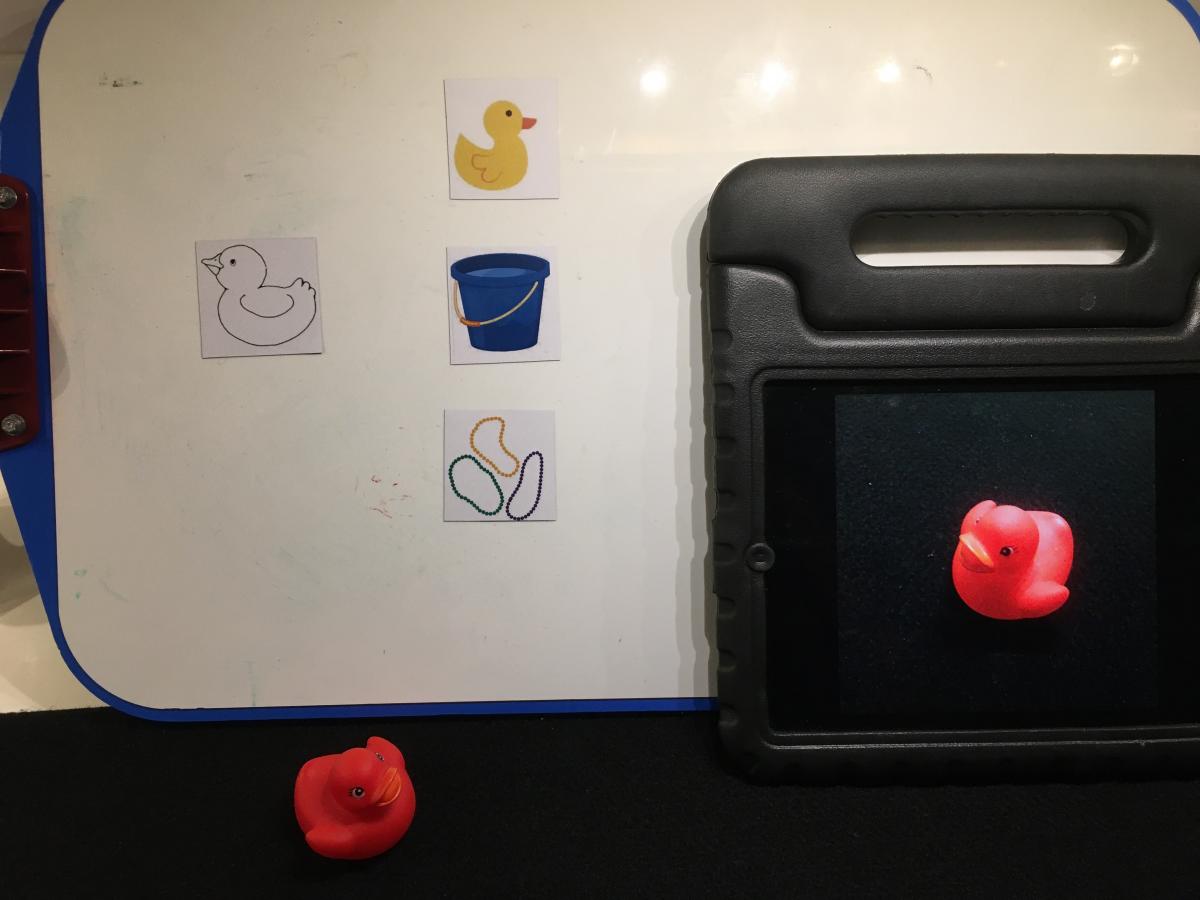
Red rubber duck, photo of red rubber on iPad, and photo cards
Red rubber duck with photo cards on All-in-one-Board

Advanced Options (for those who are higher in Phase II)

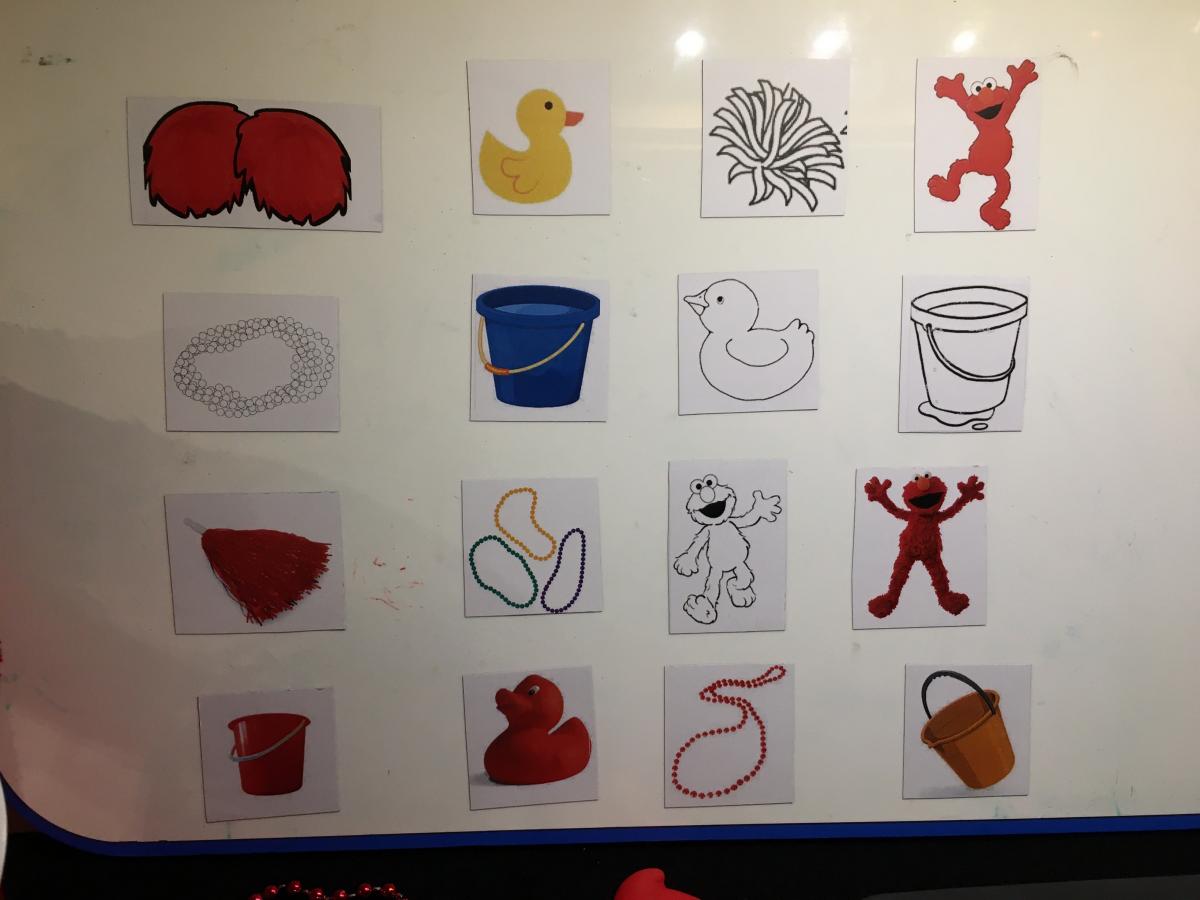
If higher in Phase II, match an illustration of an object to a photographic “match” (e.g. a drawing of a cup with a photo of a different cup).
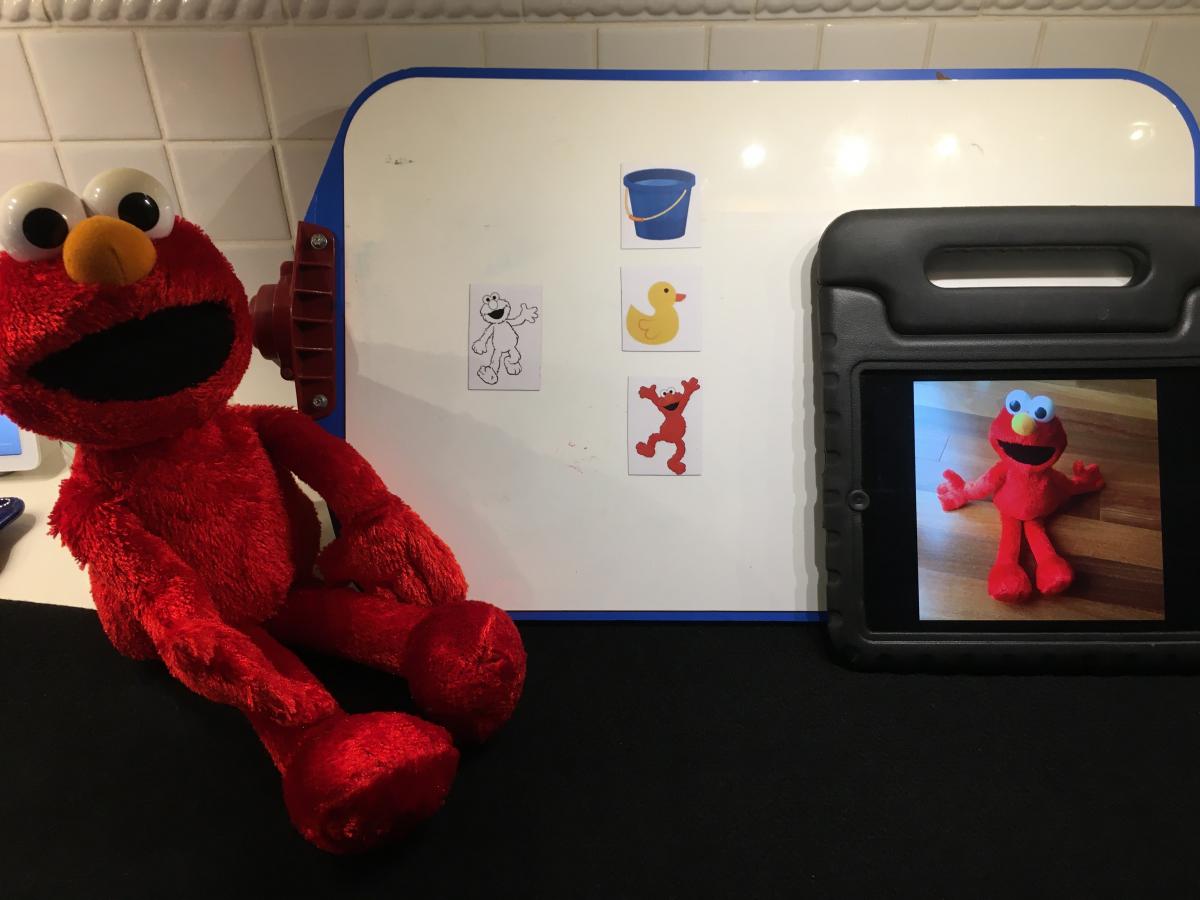
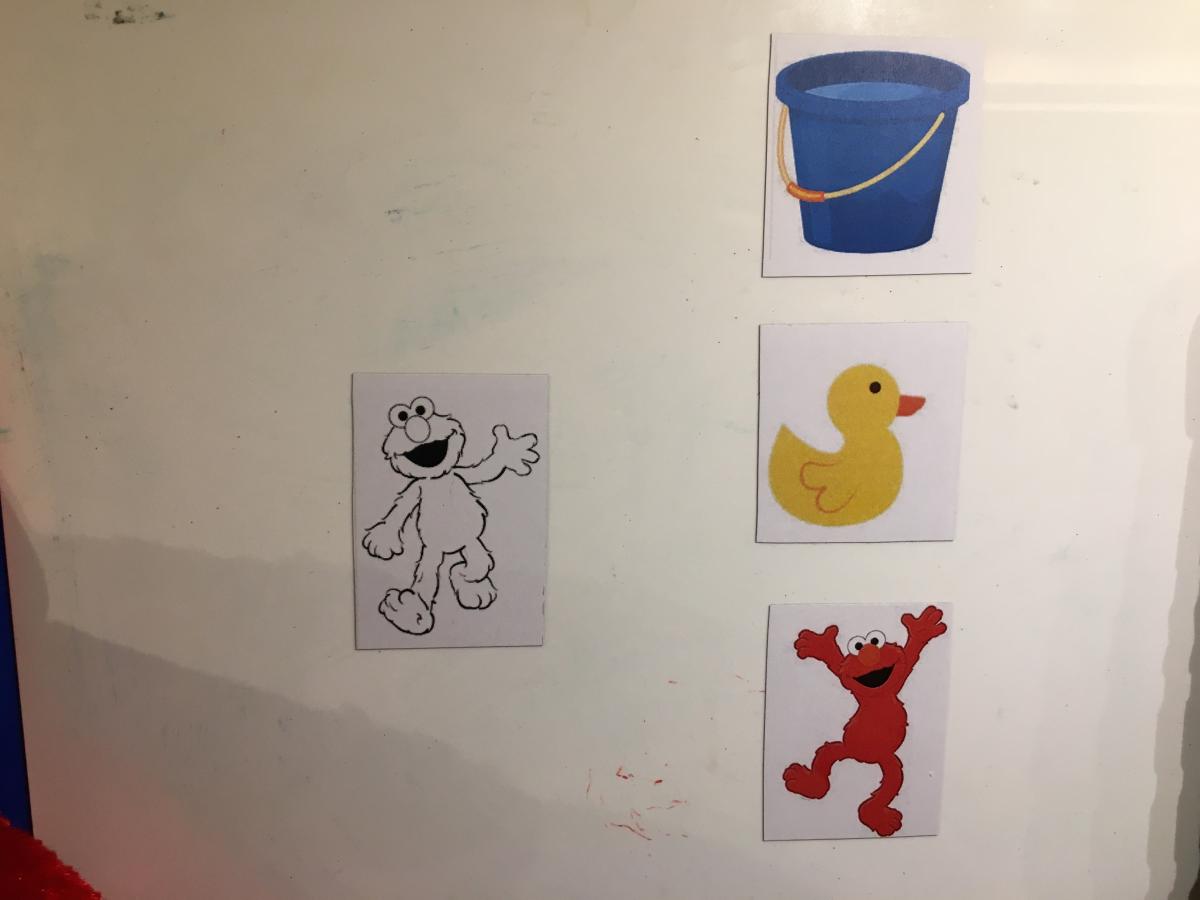
Elmo with photo of Elmo on iPad and black & white Elmo drawing
Photo cards with one black & white Elmo, and one red Elmo
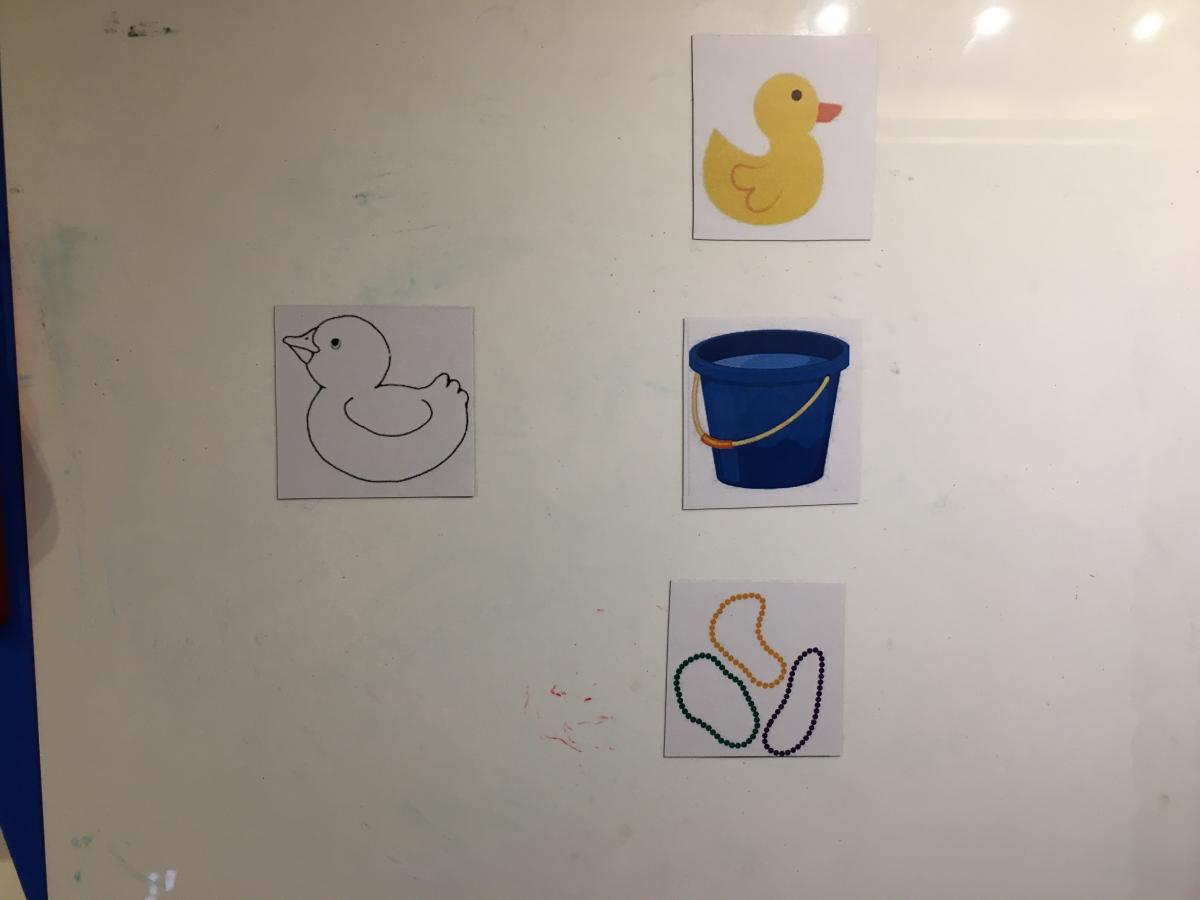
Red rubber duck with photo of red rubber duck on iPad and images of other ducks (yellow and black & white)
Picture cards of black & white duck, yellow duck, blue bucket, and colored beads
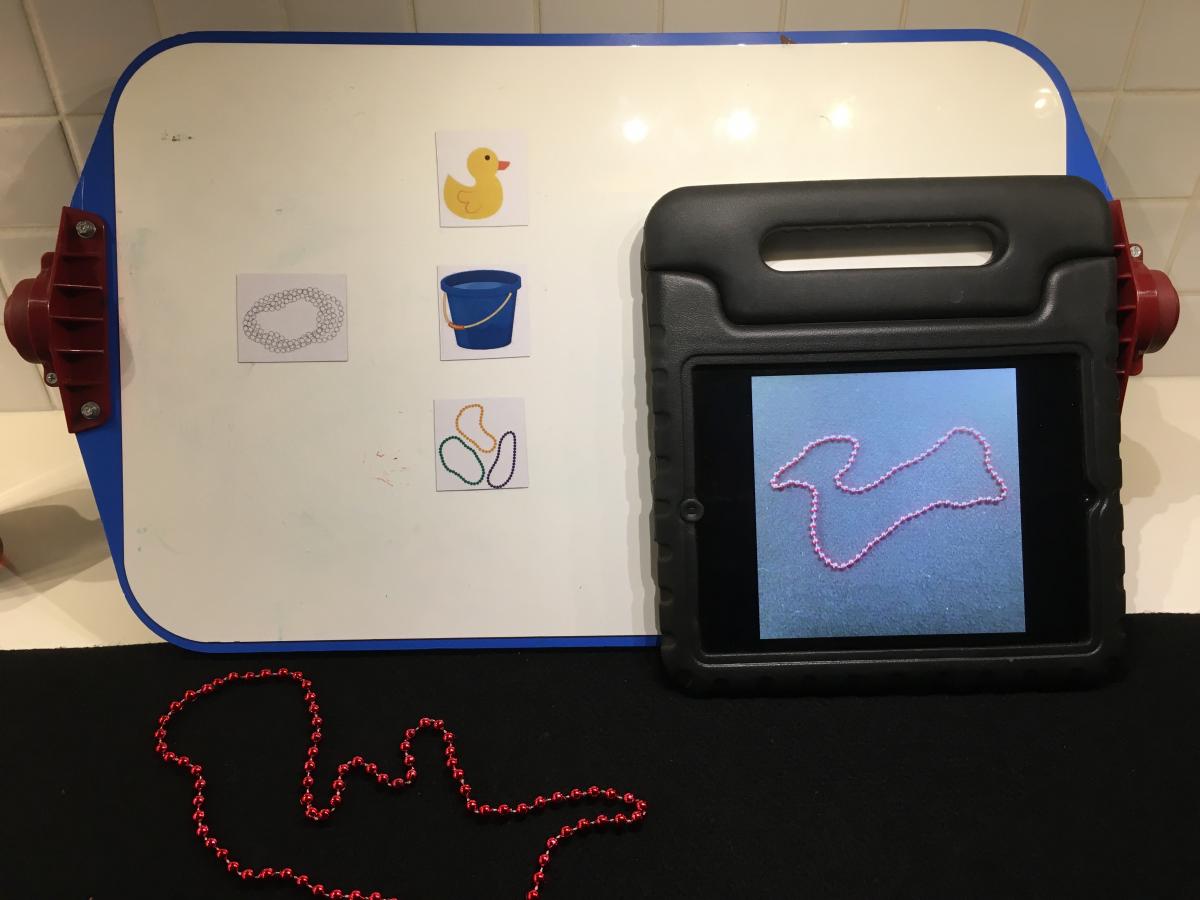
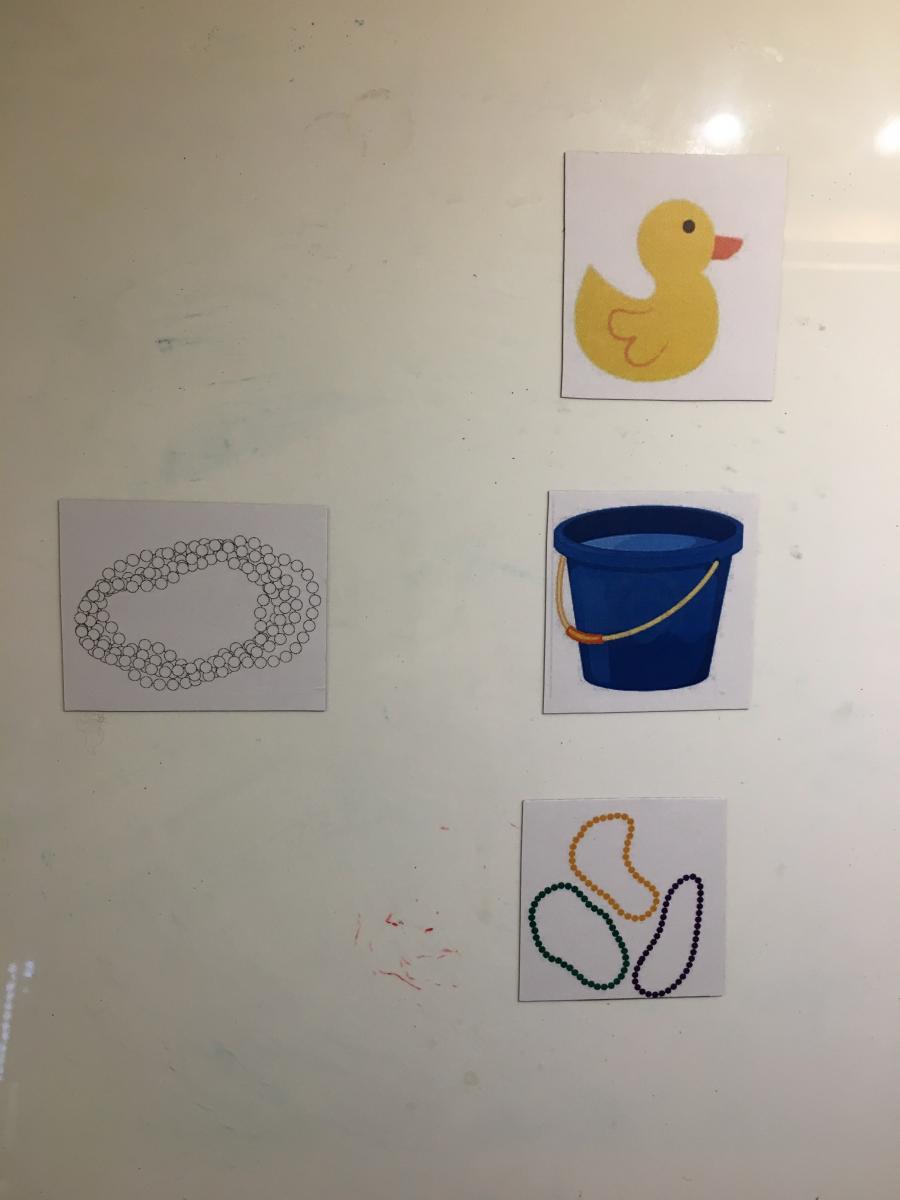
Red beads, photo of red beads on iPad, black & white drawing of beads, and 3 beaded necklaces of different colors
Picture cards of black & white drawing of necklace, yellow duck, blue bucket, and 3 beaded necklaces of different colors
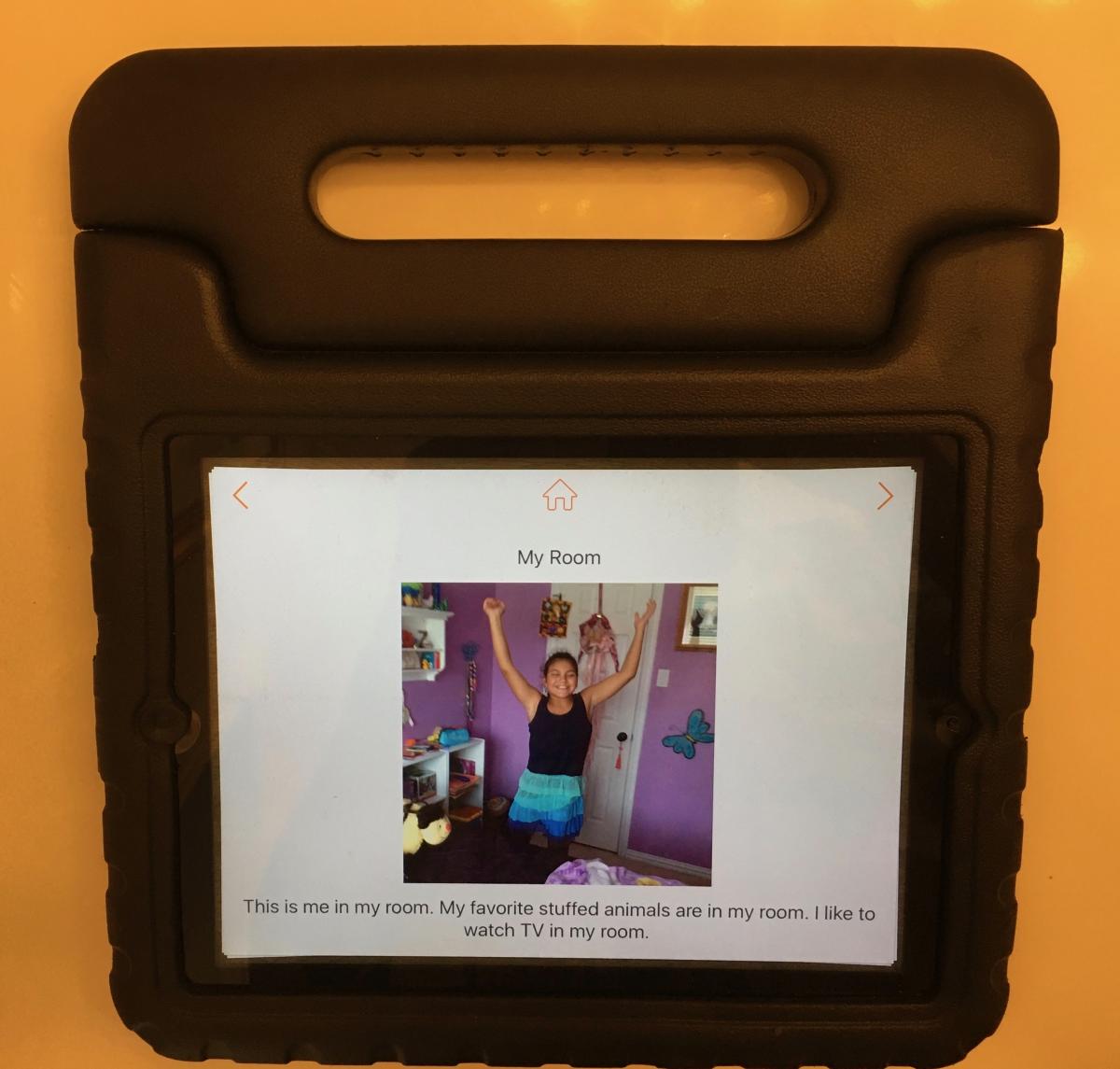
  • Create a family video of a routine such as mealtime, going to the mailbox, washing dishes, etc. and keep a video diary of “a day in the life”, or “favorite parts of my day”. Your child will be the featured star of the video and will likely enjoy watching themselves in the video.
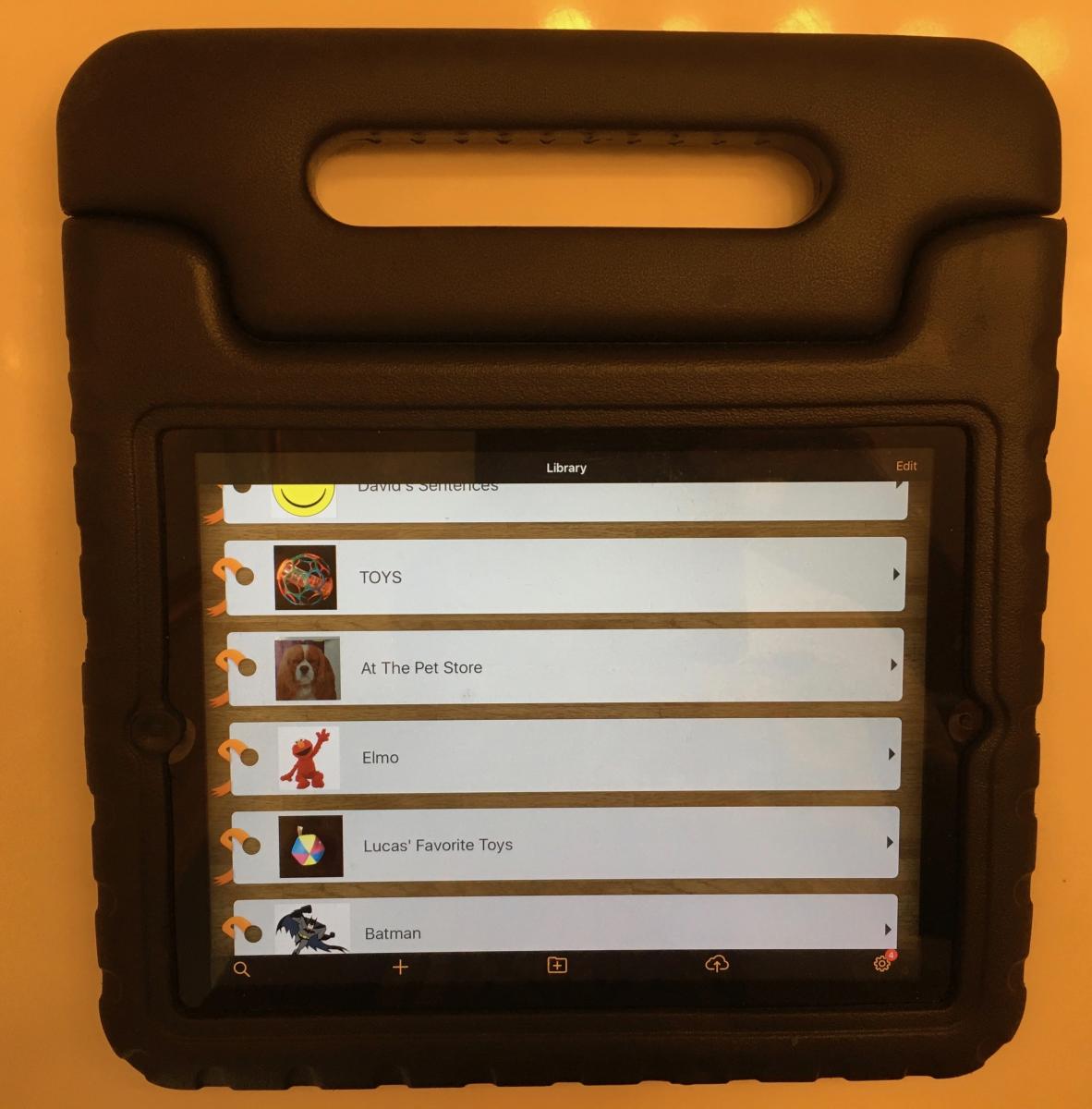
Pictello can be used to create a similar type of story.
Using Pictello to show people in child's life
Using Pictello to show people in child’s life
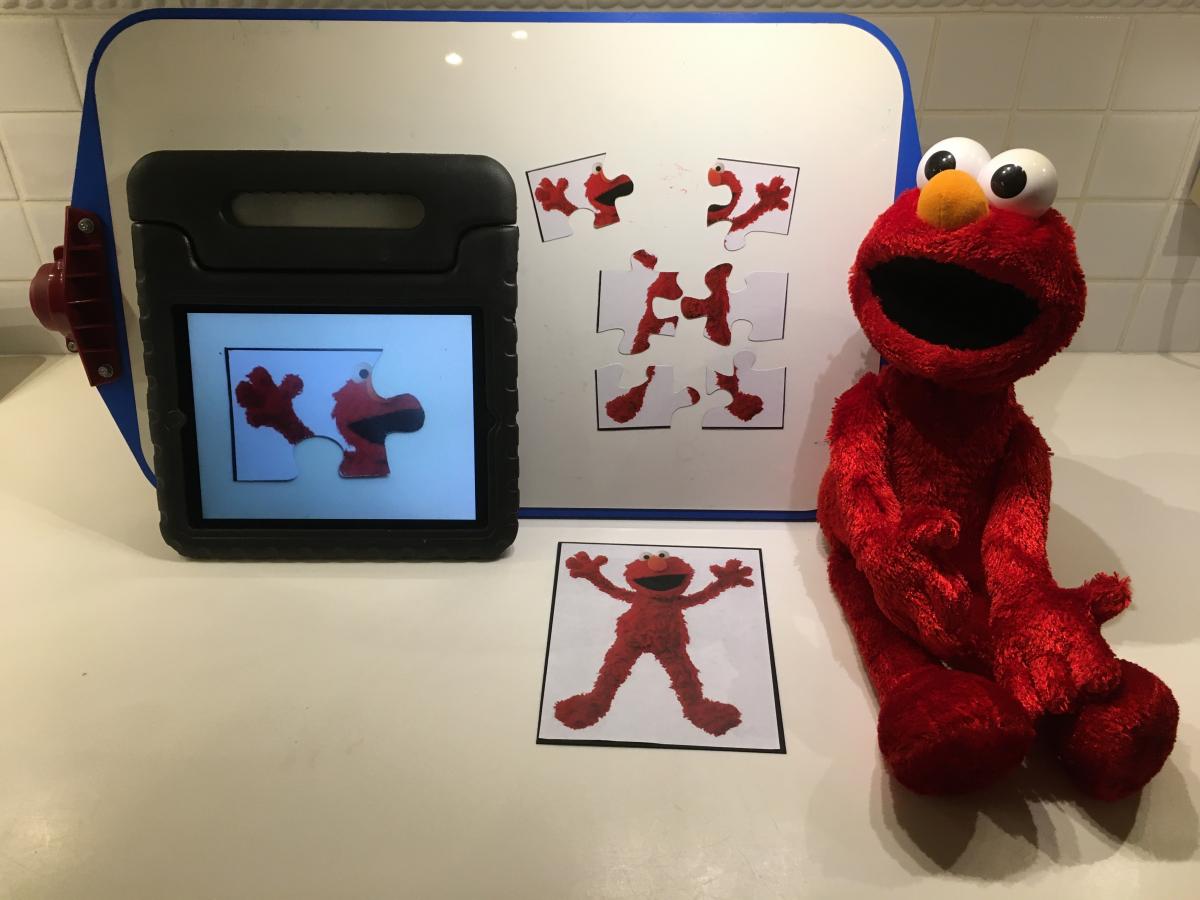
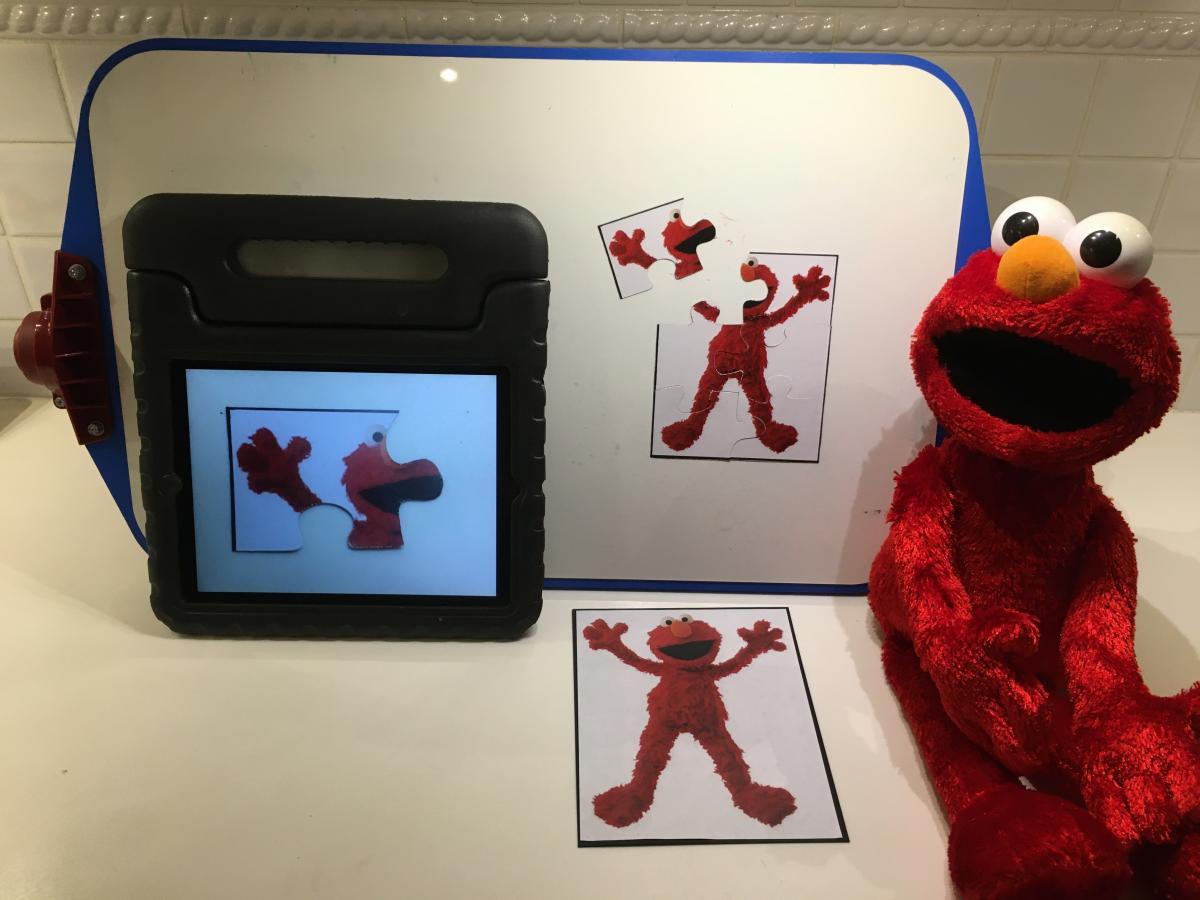
  • Make simple puzzles (more complex if Phase III) made from images cut into 2-3 pieces and take iPad photos of the pieces. As you are building the physical puzzle, find the “next piece” by choosing from the backlit images of individual pieces.
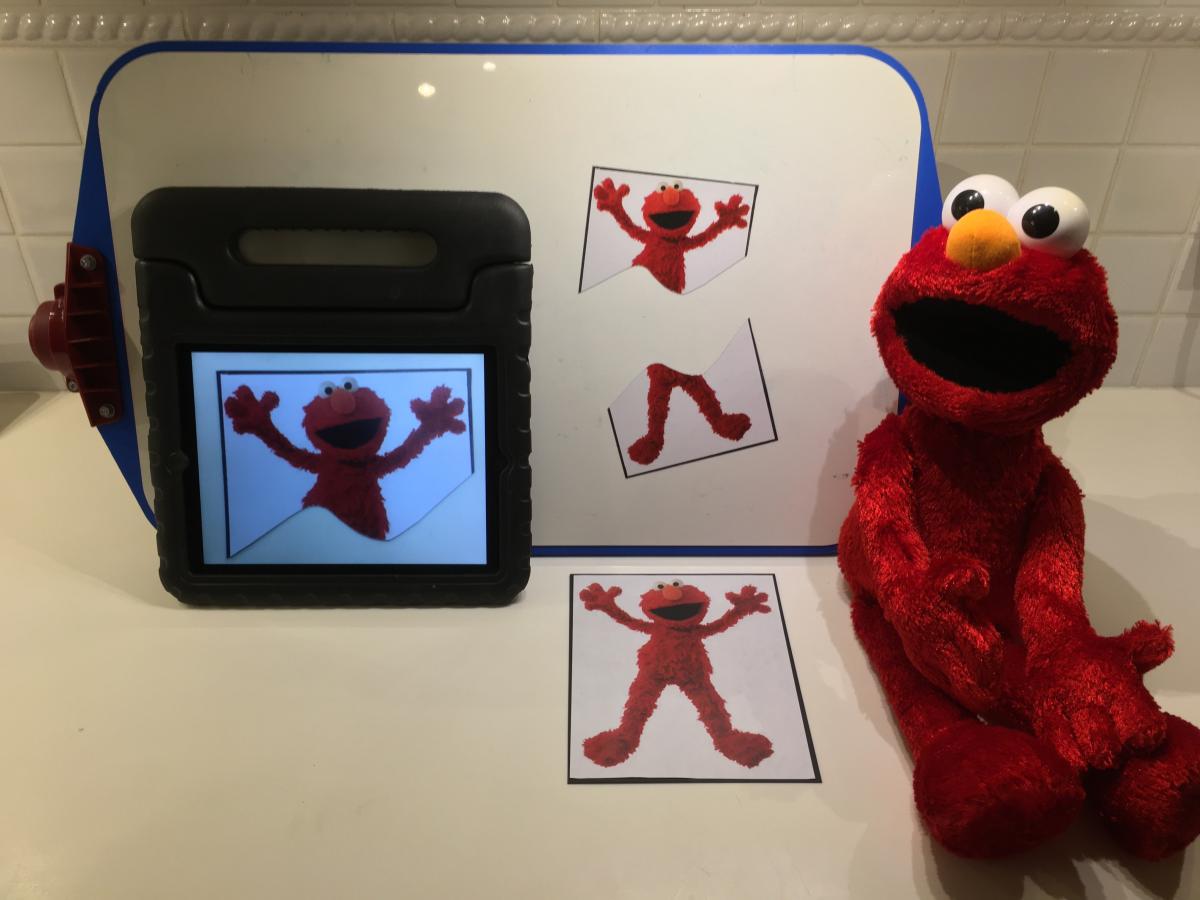
Stuffed Elmo with Elmo photo on tablet and Elmo puzzle
Elmo puzzle with 6 pieces
Elmo puzzle with Elmo doll and image of puzzle on tablet
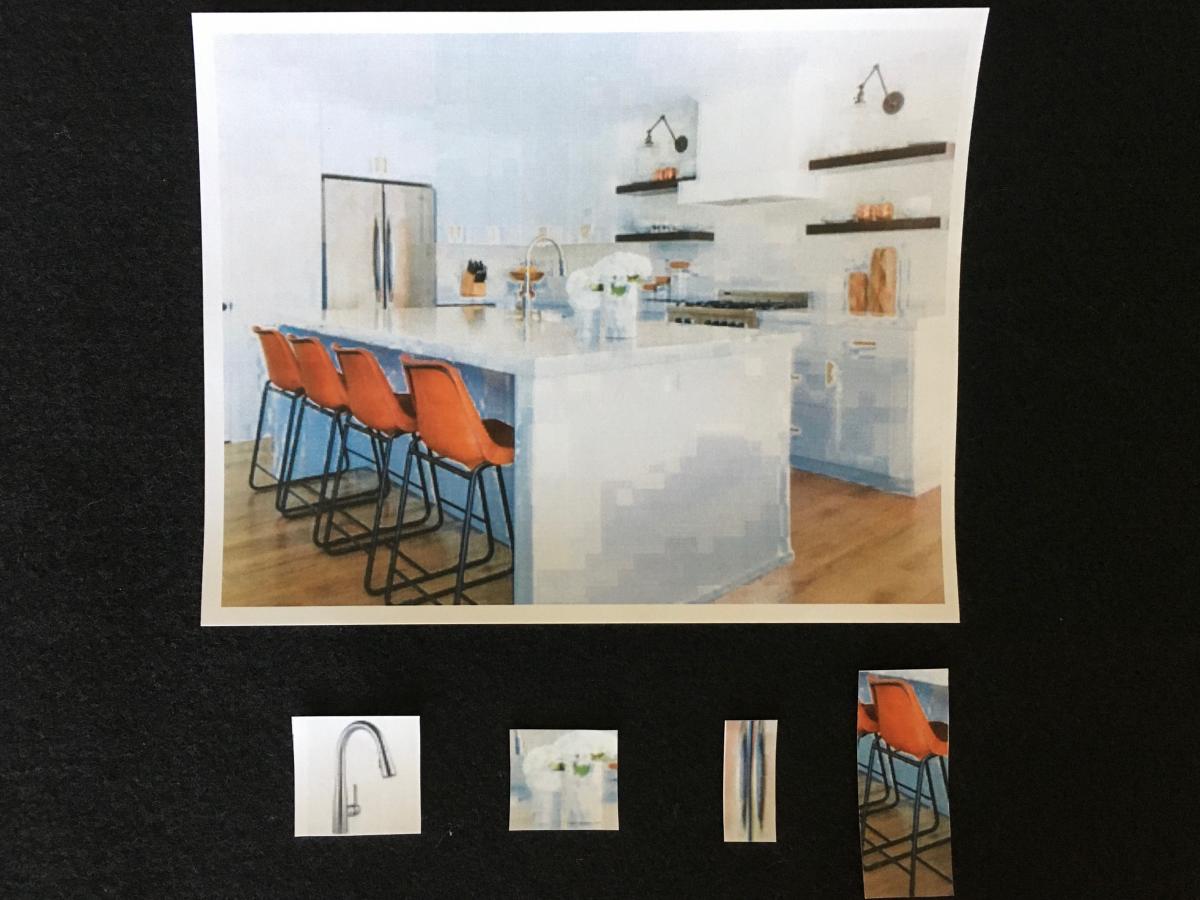
  • Create a matching game using small photo images of environmental features at home (couch, TV, chair, table, dresser, doorknob…). Show the prompt image to your child and ask them to place the part to the whole. For example, “This is a picture of part of something in the living room (photo of a corner of the couch). Can you show me where the rest of this is (physical couch)?”
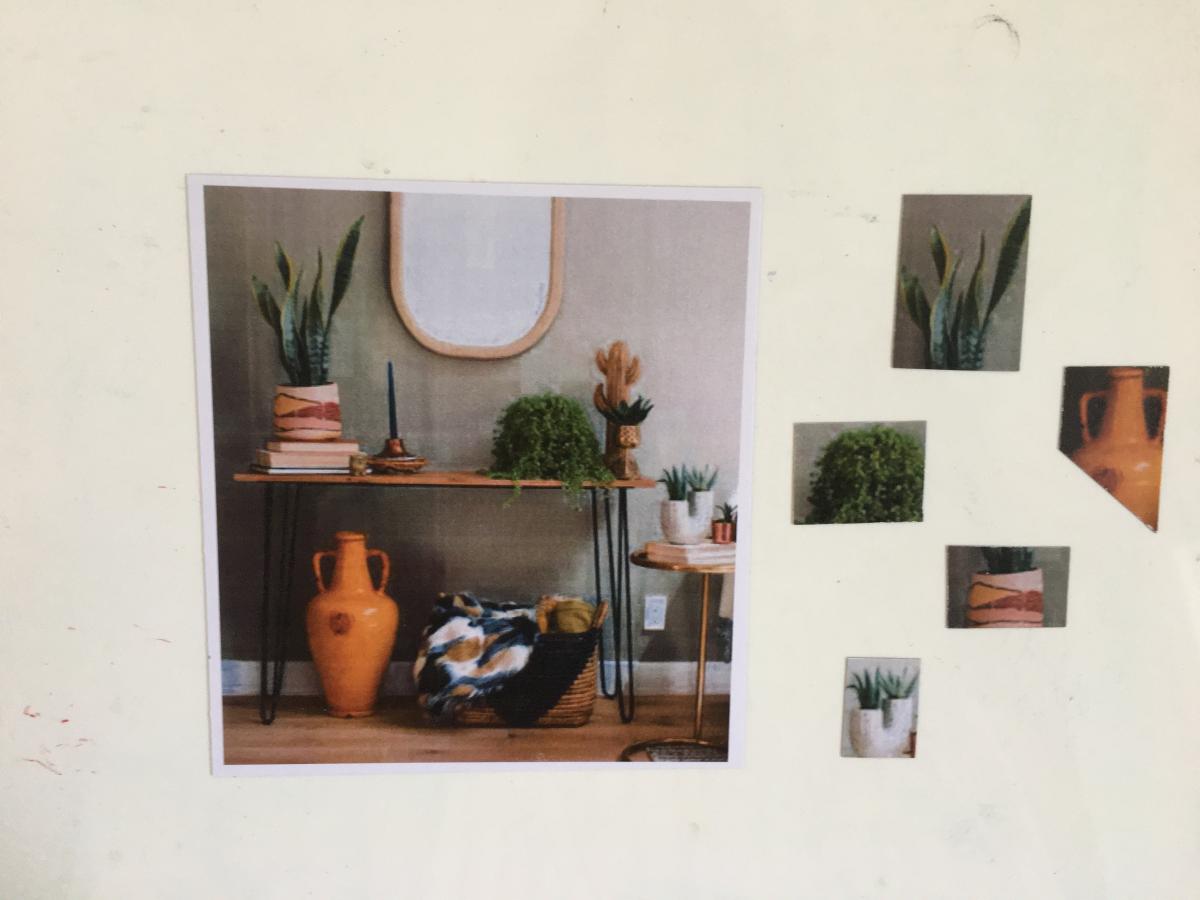
Photo of shelves in living room with matching images cut into pieces
Kitchen with matching cards of various features

Phase III

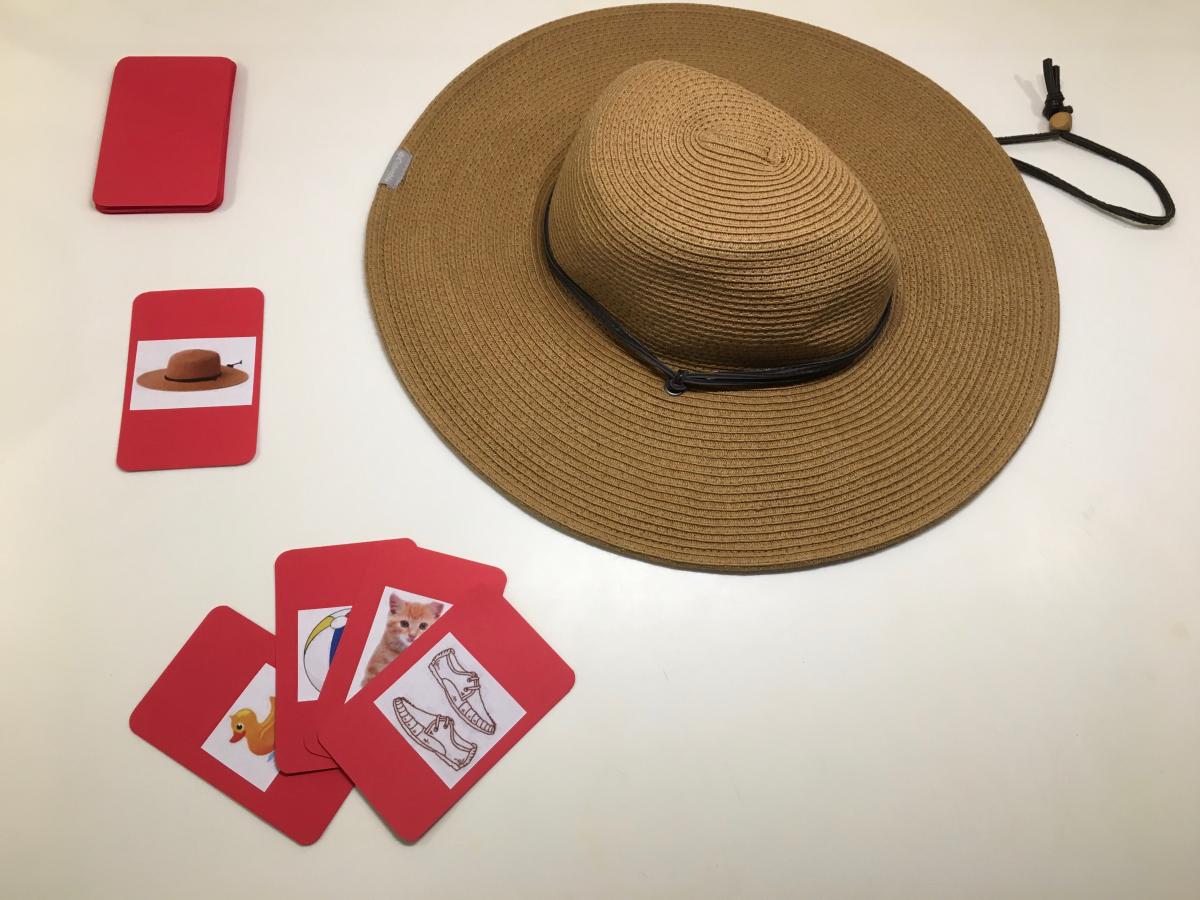
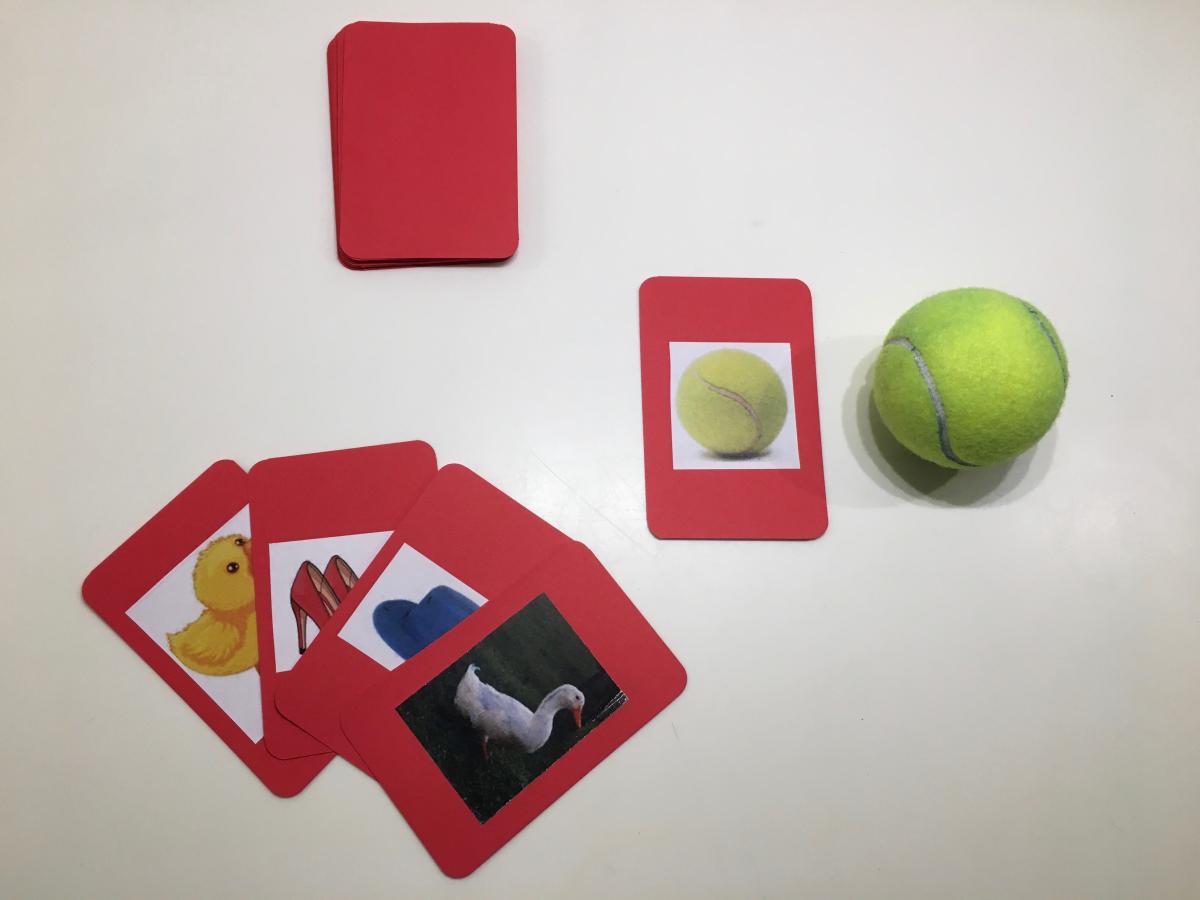
  • Create a salient feature “go fish” game. Create cards by cutting out simple magazine images creating sets of the same subject (ducks, balls, shoes, hats, cats…). The players can ask for matches by using salient feature language (“Give me your cards that have a picture of something with pointed ears & whiskers”). The winner can be the one who first gets a certain number of matches.

* Note that it may be best to post the pictures on a black or neutral background, as the red may be too interesting or distracting to some children.

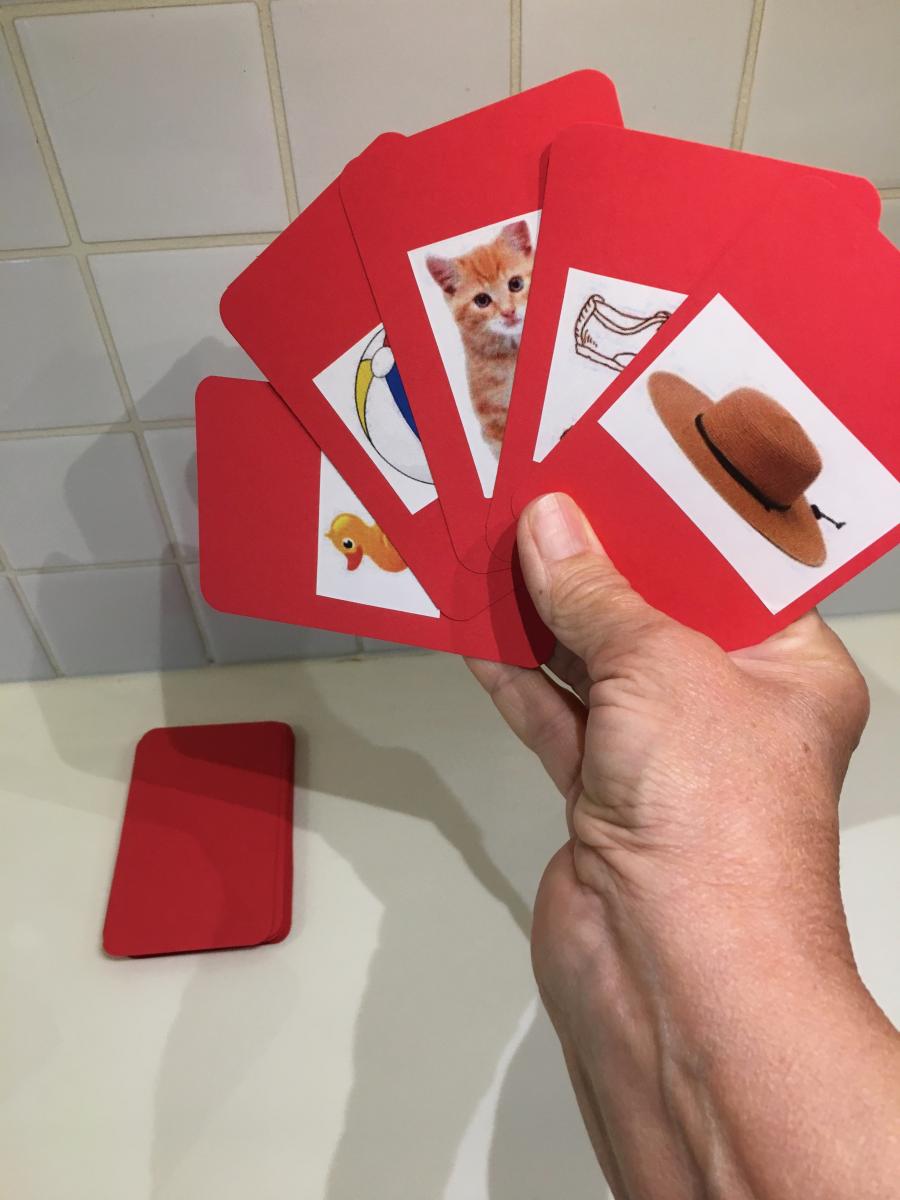
"Go Fish" photo cards
“Go Fish” photo cards
"Go Fish" photo cards
“Go Fish” photo cards
"Go Fish" game with photo cards and a hat
“Go Fish” game with photo cards and a hat
"Go Fish" game with photo cards and a tennis ball
“Go Fish” game with photo cards and a tennis ball
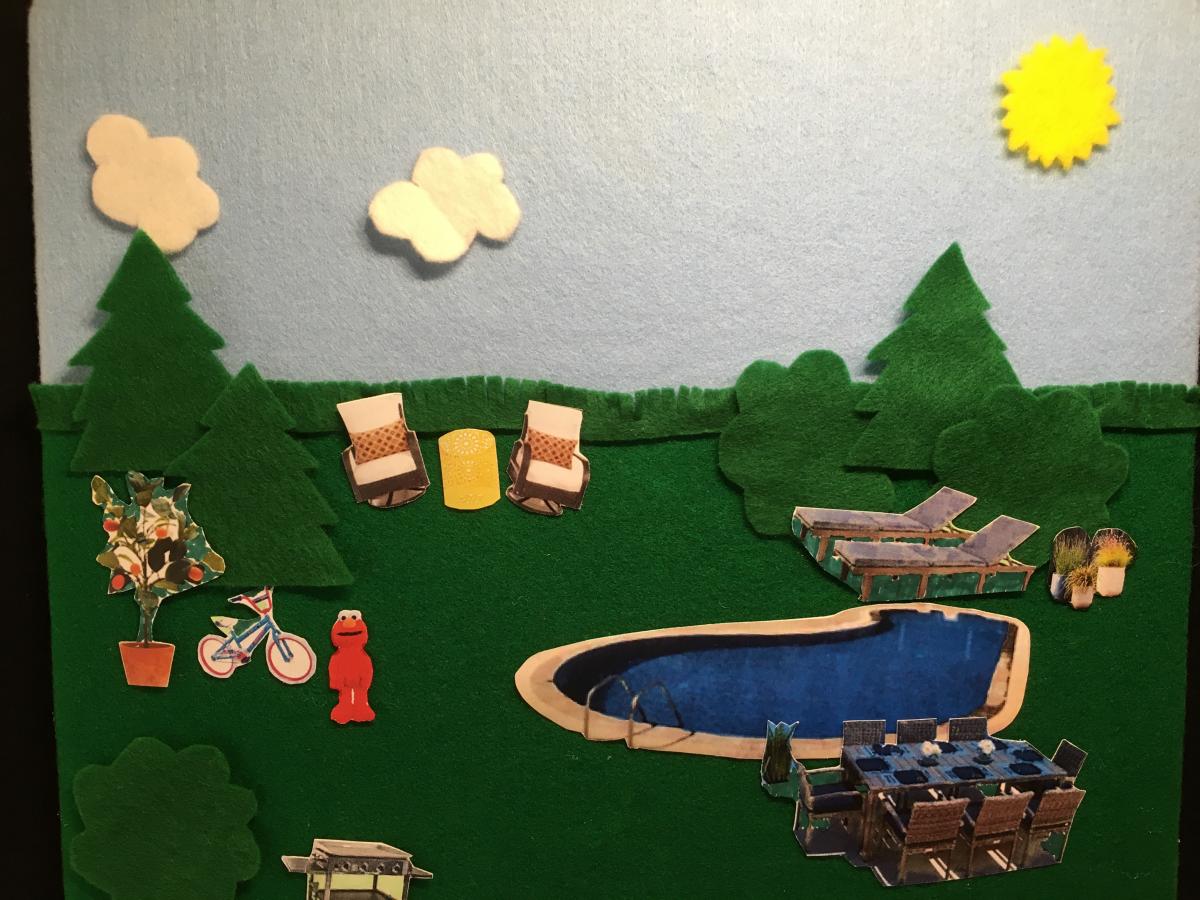
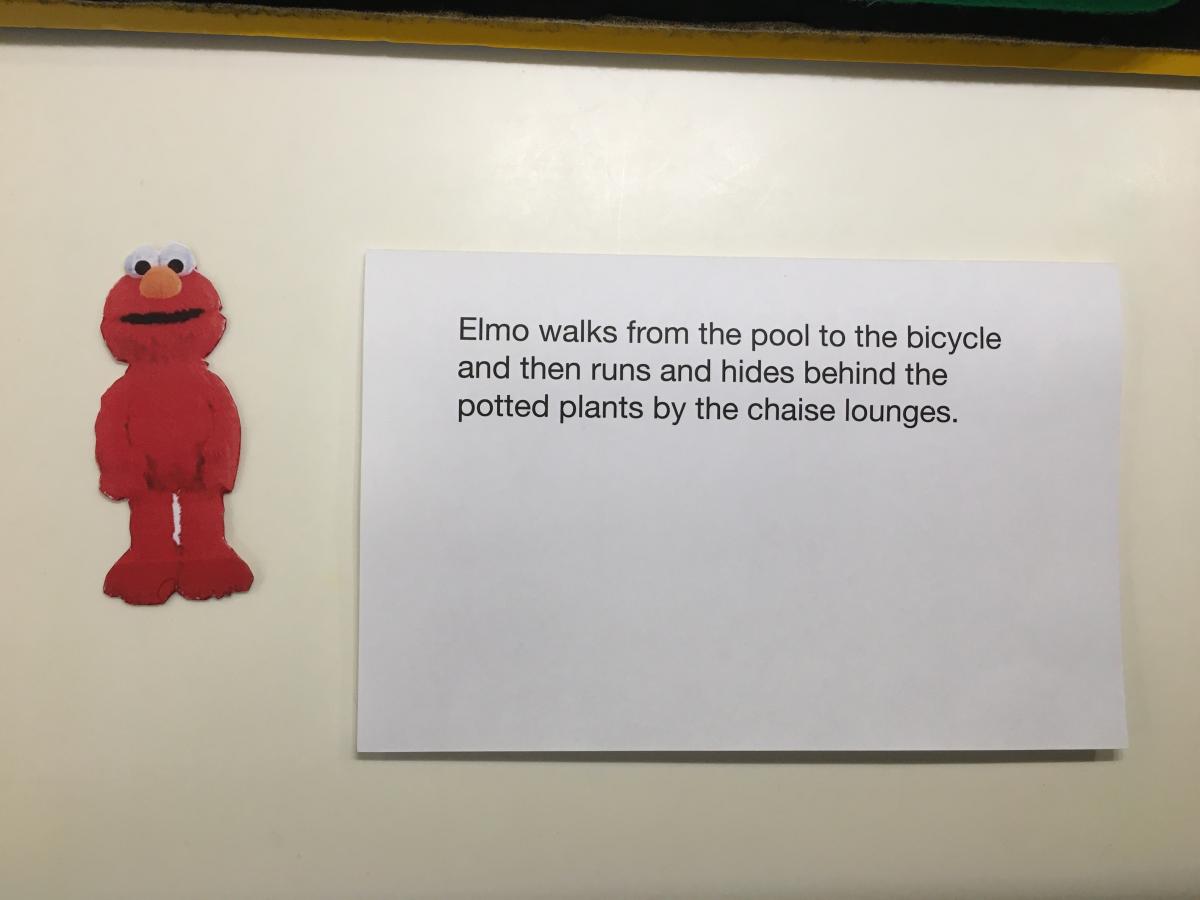
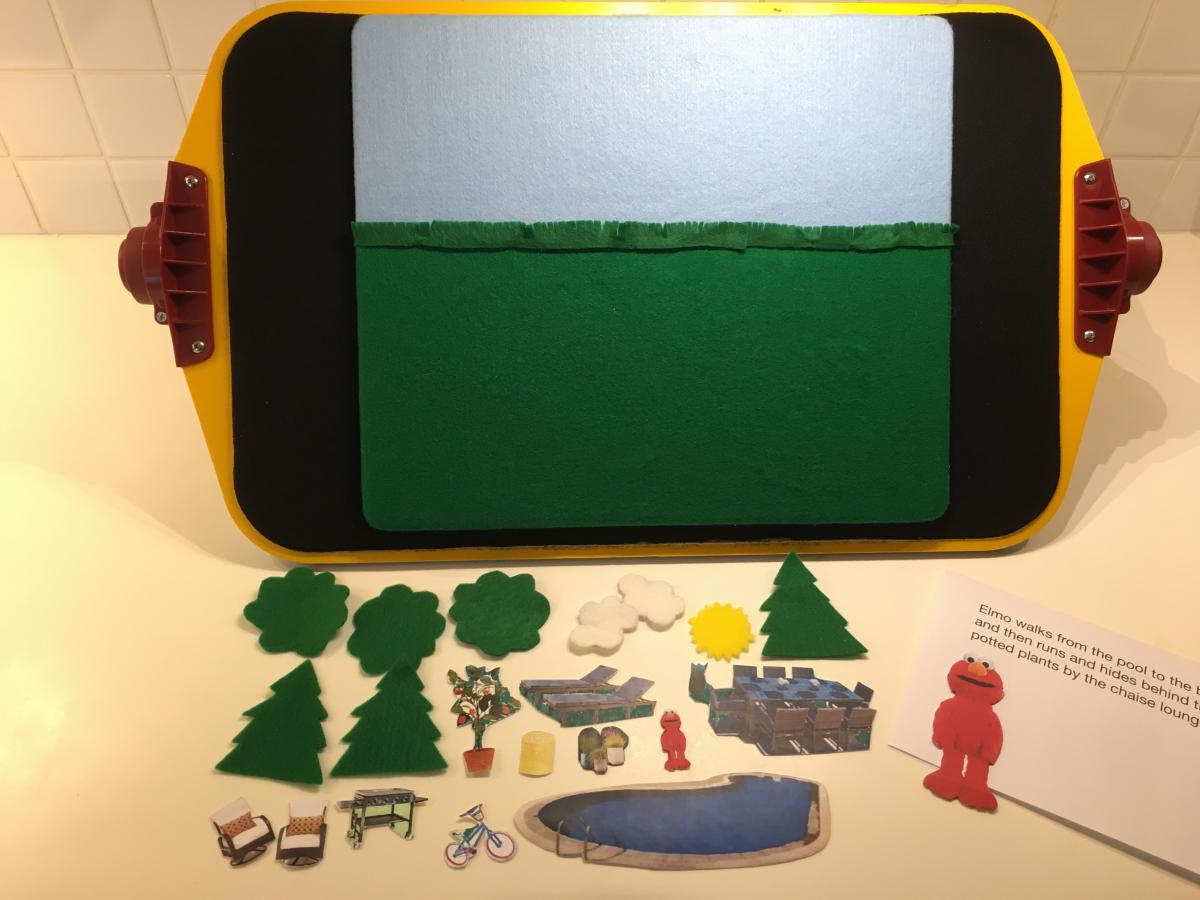
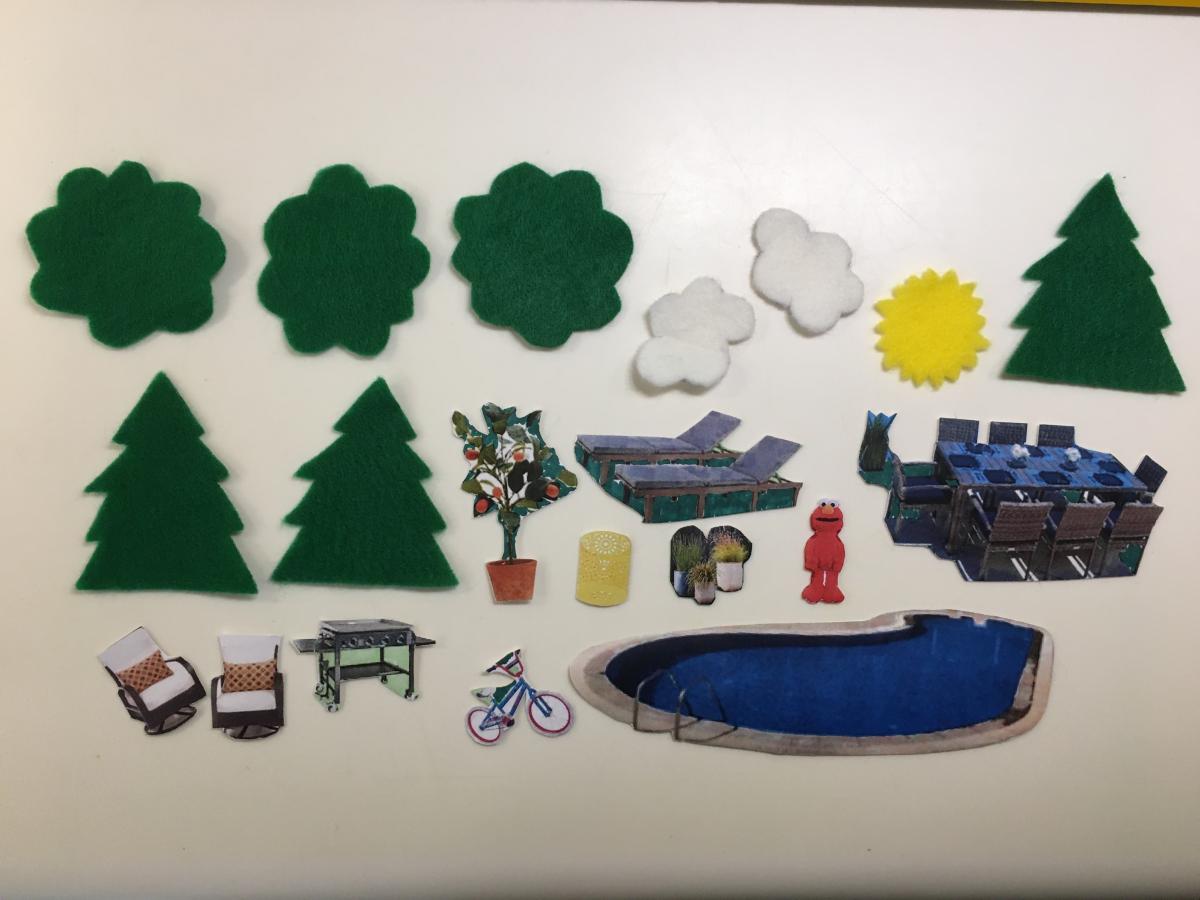
  • Make a map of a familiar area: backyard, basement, or living room. Cut out shapes (or, used photo images of the actual targets) that represent furnishings, environmental features (deck, tree swing, windows) and place the objects on the felt board or other map-making surfaces. SImple animal or character figures can be used to create a sequence of activity (“Clifford moves from the bed to the window and then puts his bone on the dresser”). The child can replicate with their own body in real space or play by moving the character on the map surface.
  • Try to incorporate temporal relations, such as which is closer and which is further away?  Would it take me longer to get to __ or to __? 
  • Look at what’s next to something else, e.g. what’s next to the pool?
  • Find all of the things with wheels (e.g. car, grill)
  • Talk about what’s in the neighborhood.  Can the child find his house in the neighborhood?  What is next to the house and where is his house in relation to other things in the neighborhood.
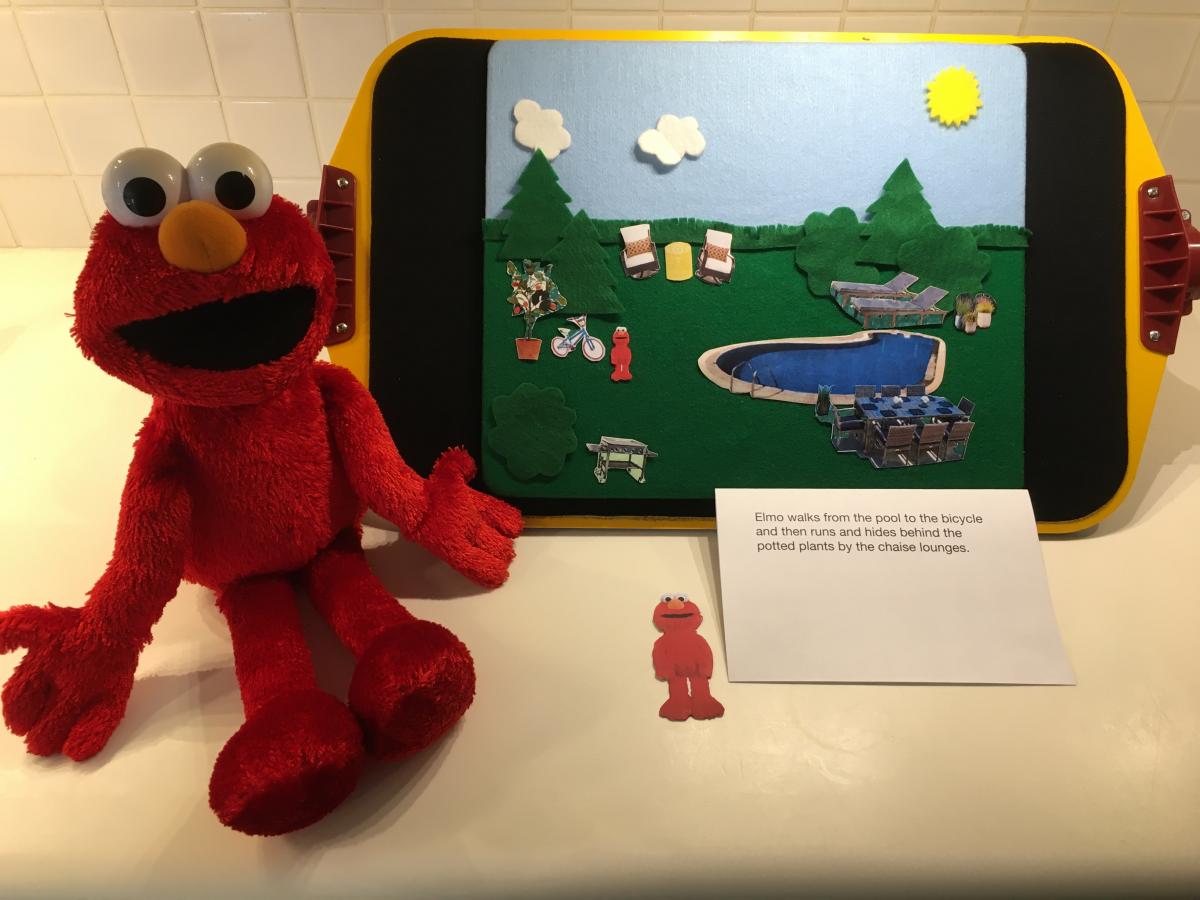
Elmo with felt map of familiar area on All-in-One Board
Small Elmo in felt-board map of familiar scene
Elmo with card describing where he will walk.
All-in-One-Board with Elmo and scenery on table
Trees, clouds, pool, lounge chairs, and Elmo cut outs
Trees, clouds, pool, lounge chairs, and Elmo cut outs for flannel board
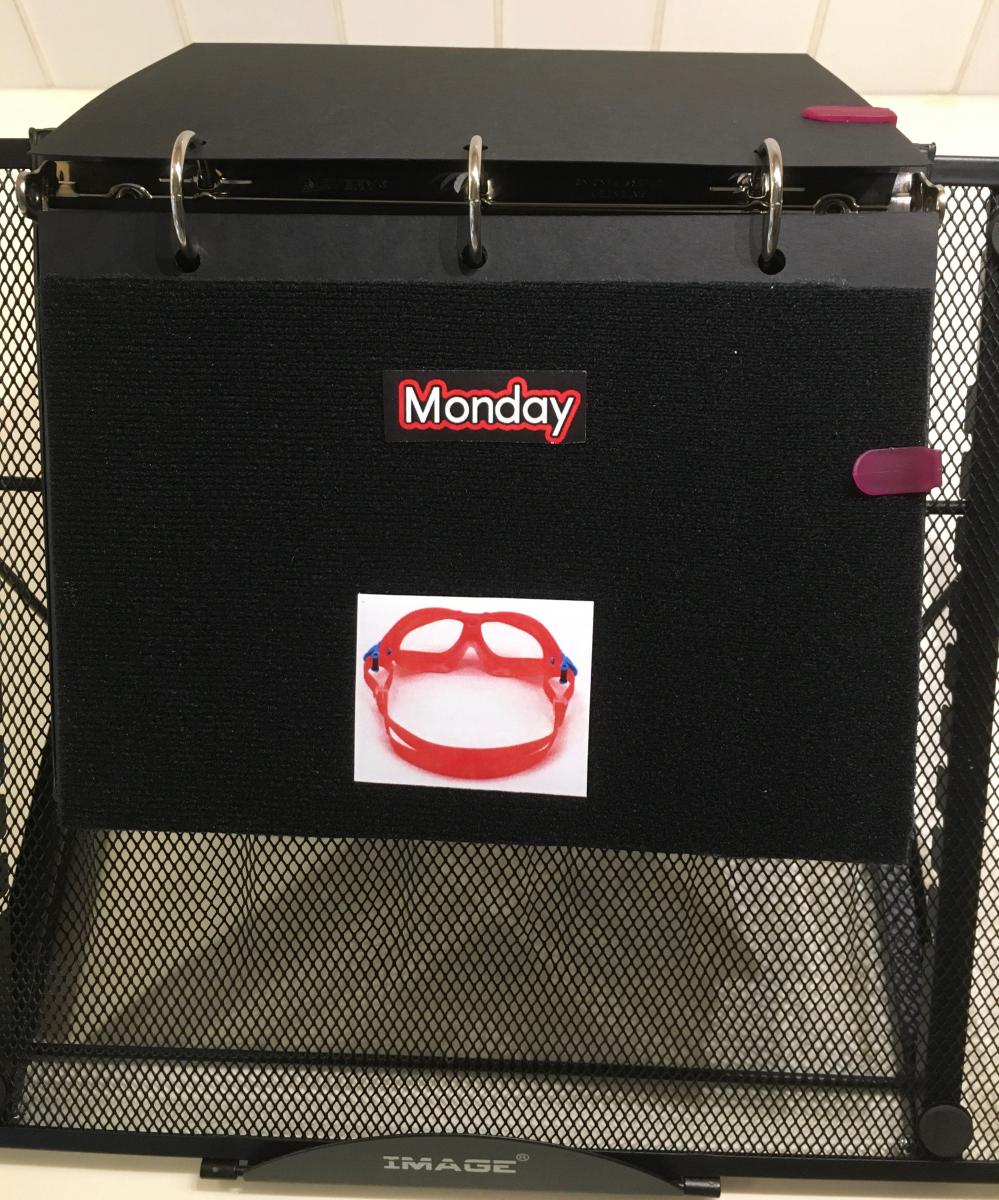
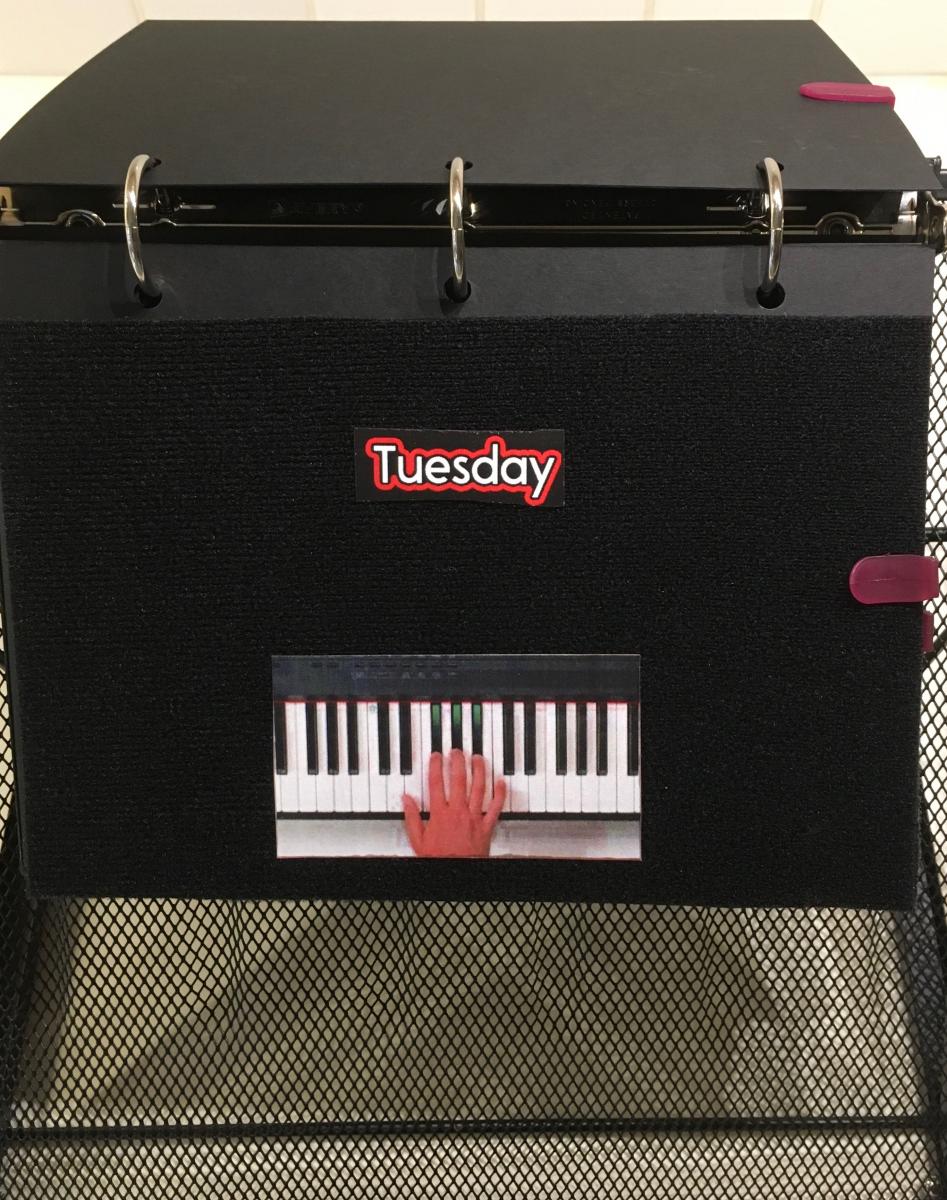
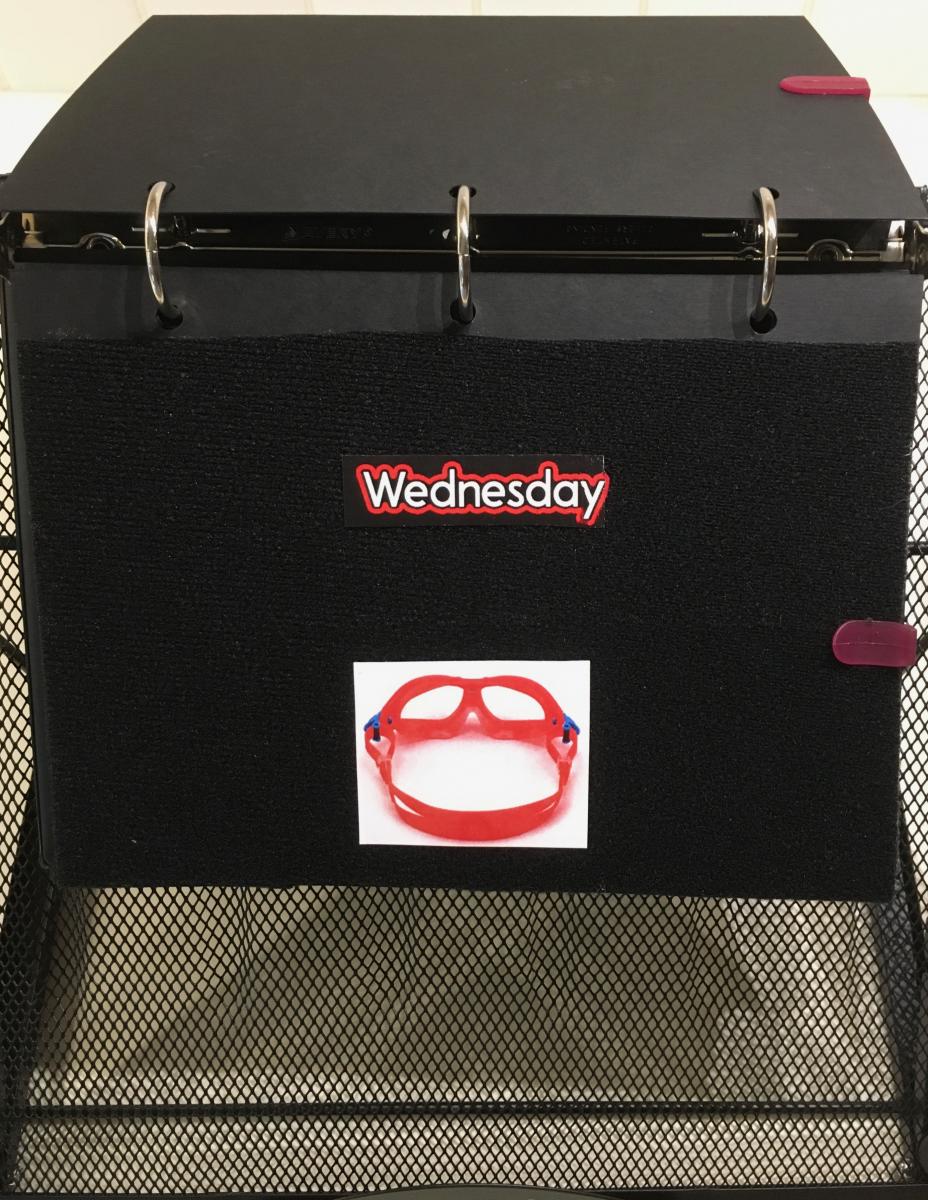
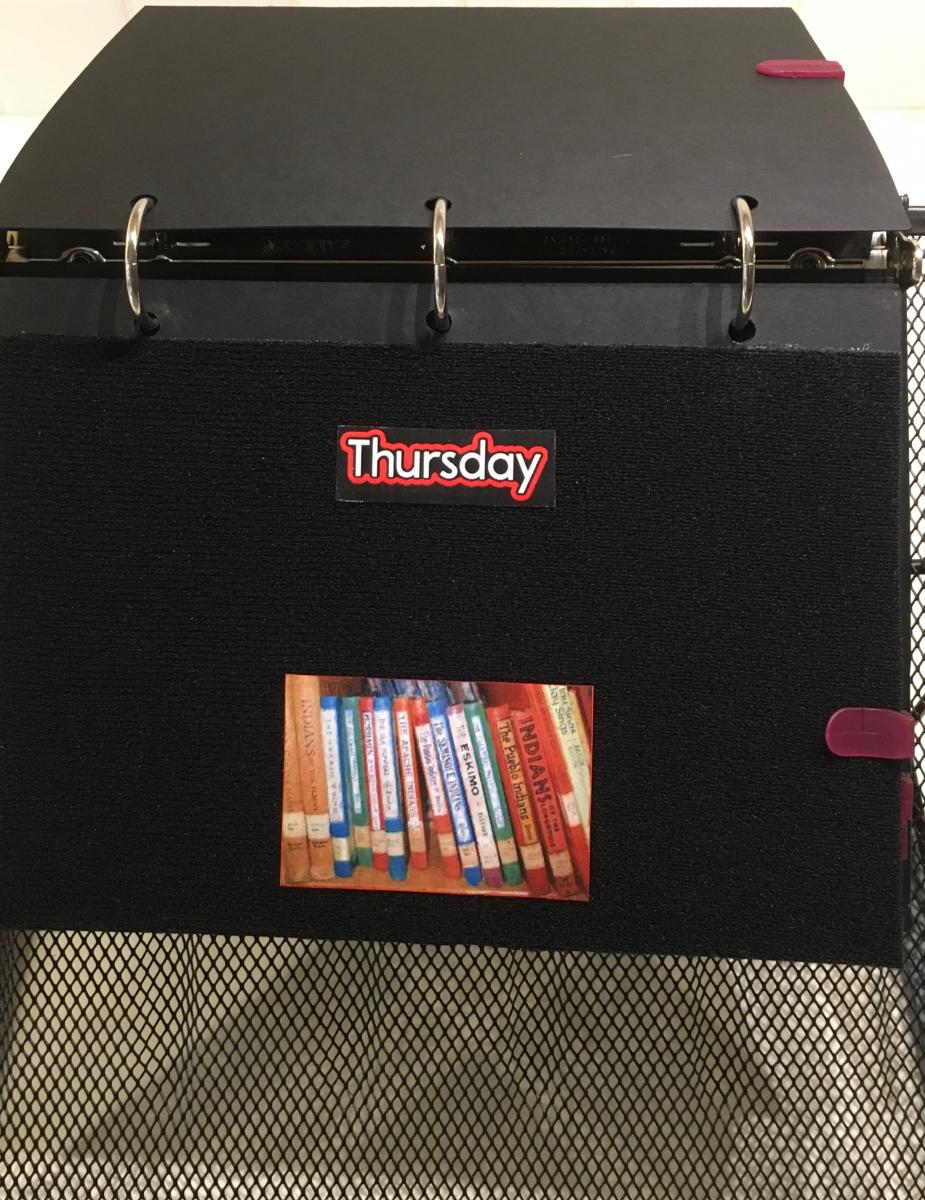
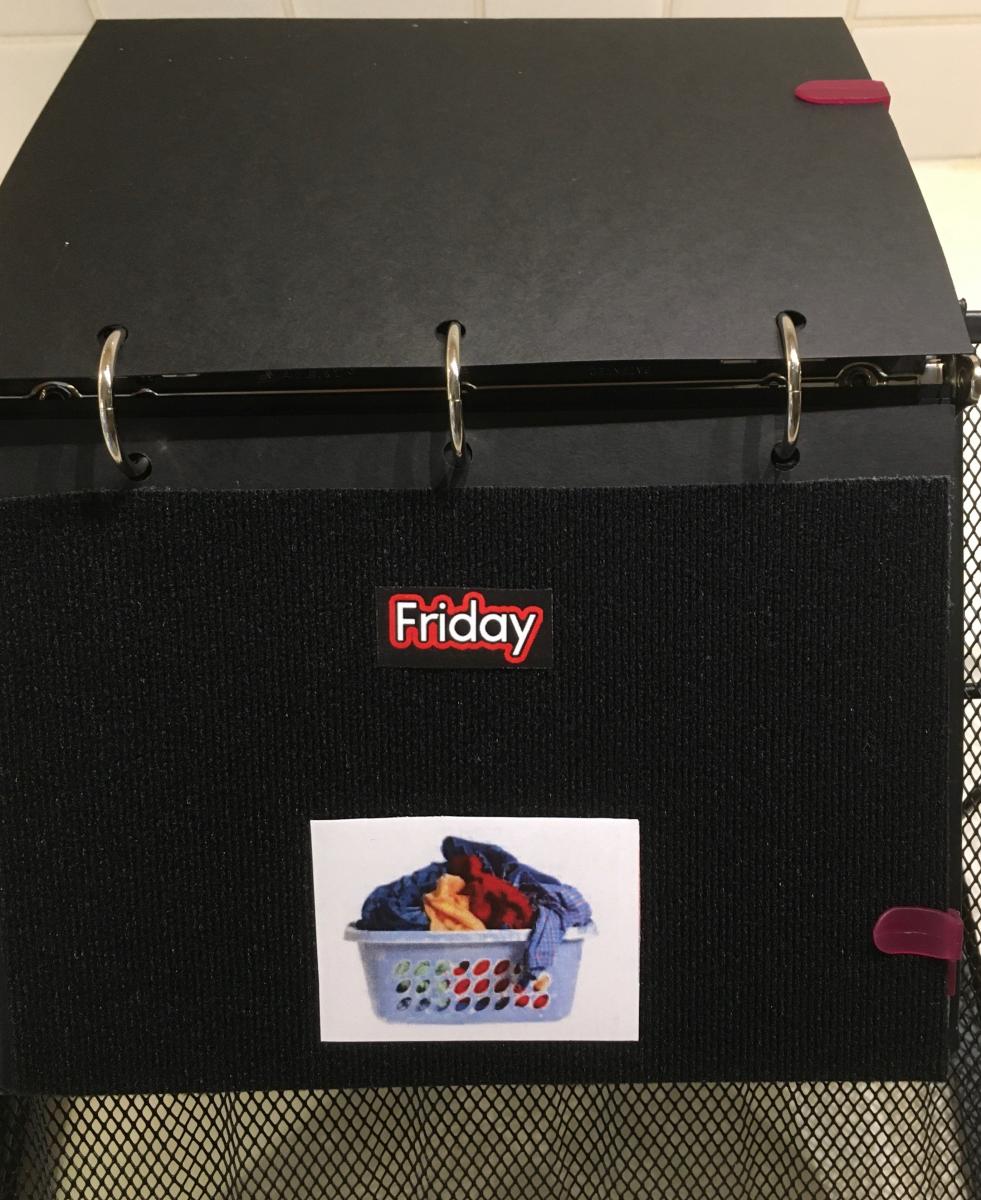
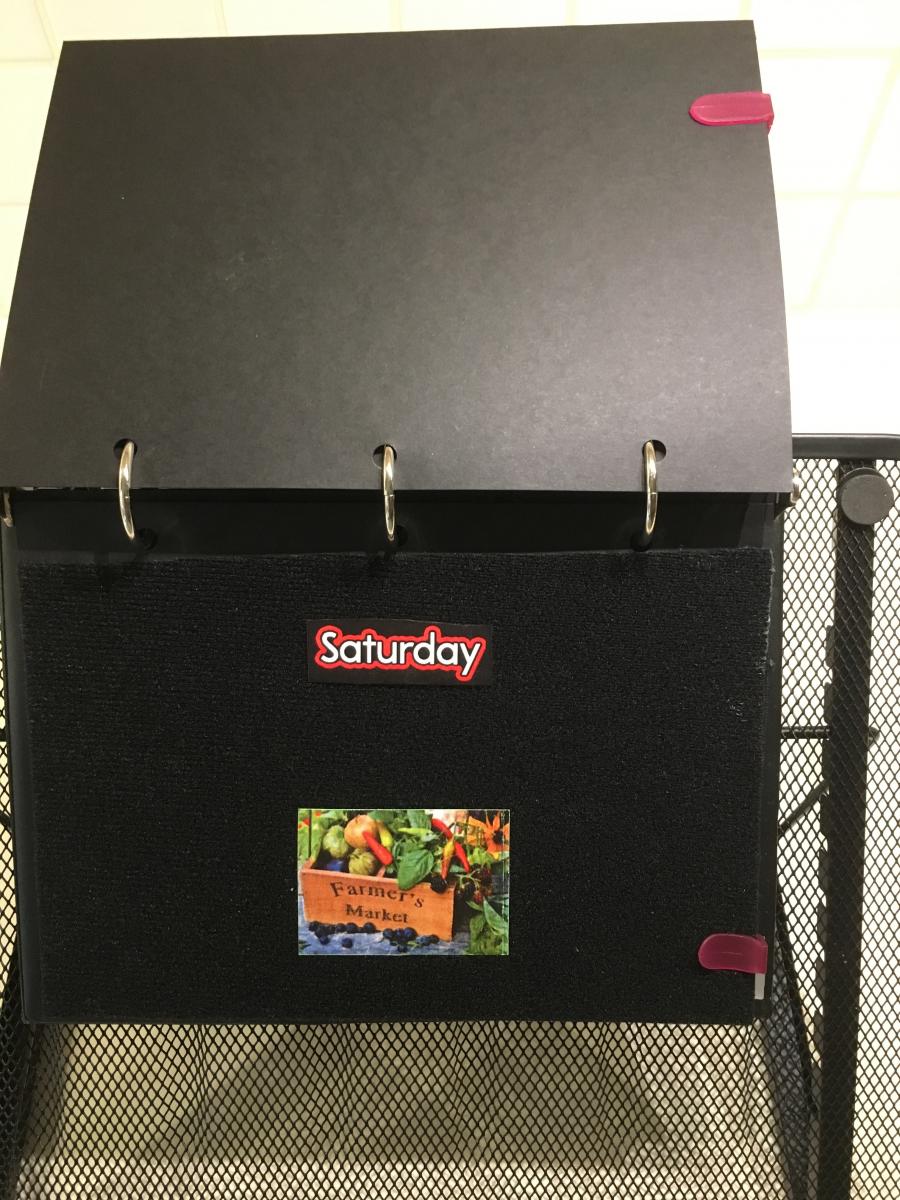
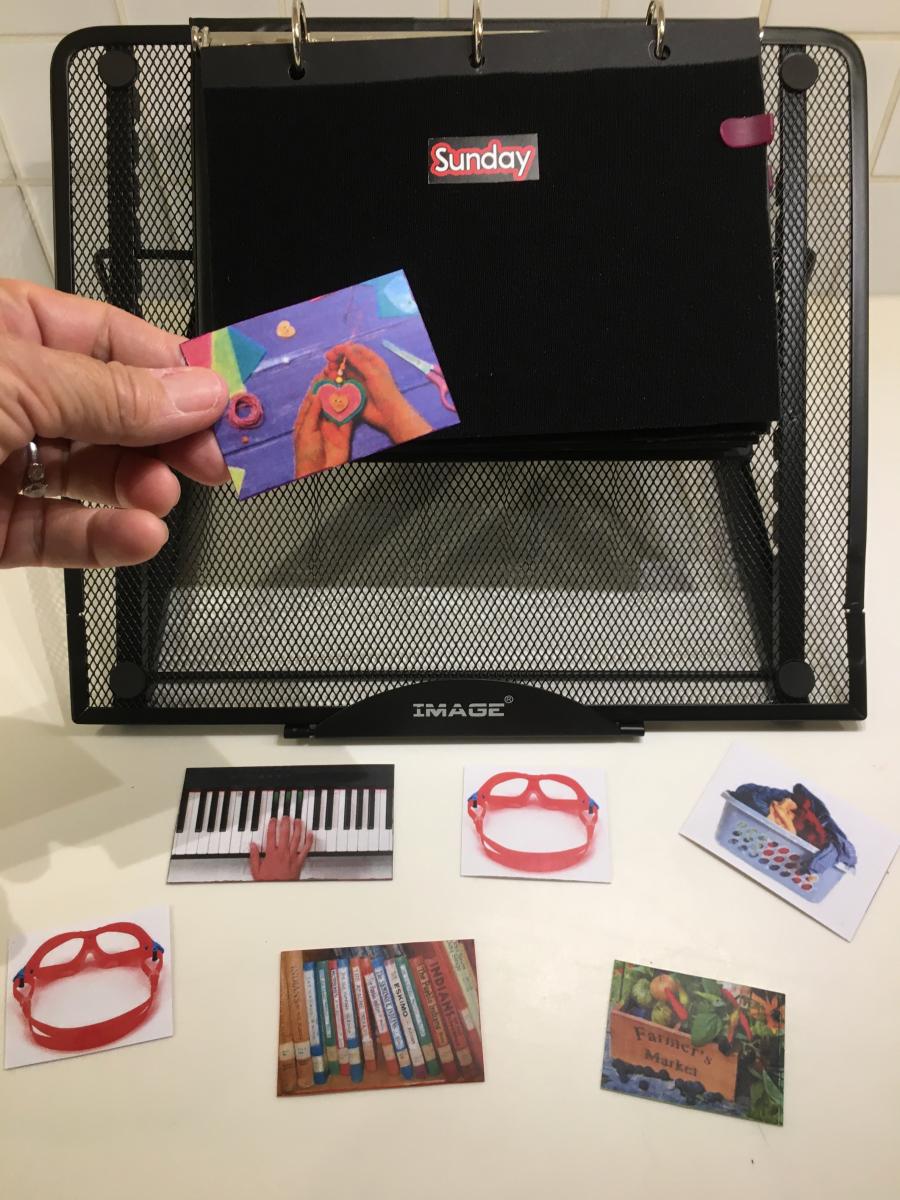
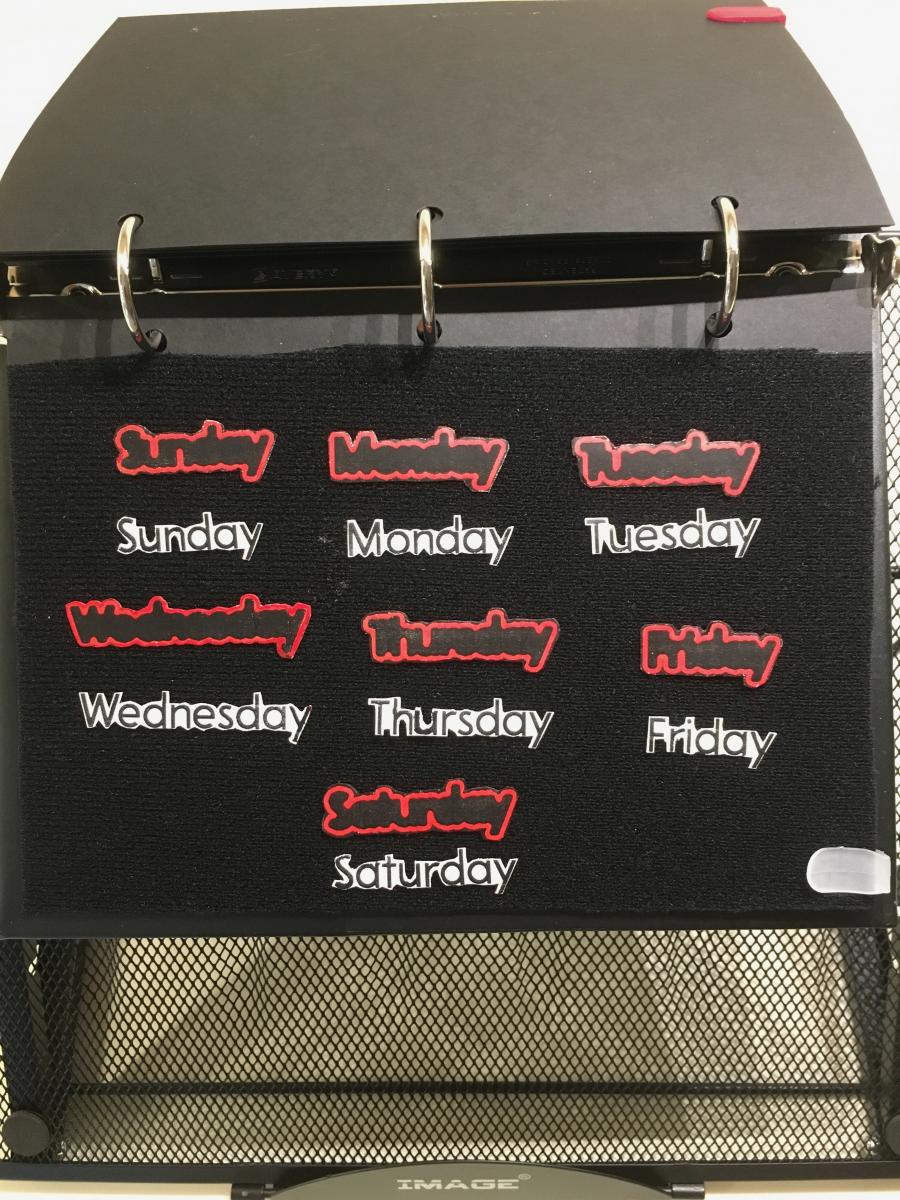
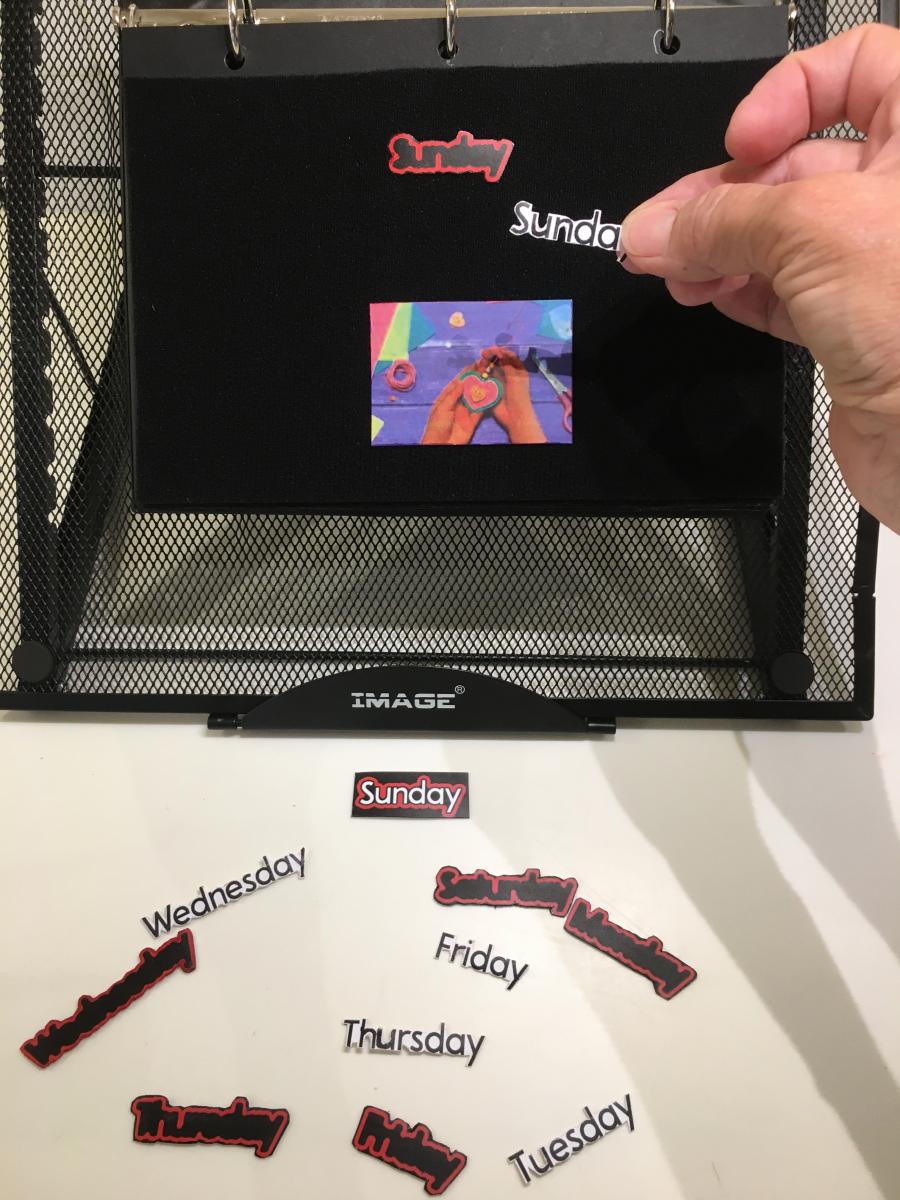
  • Create a visual journal that has an image of some element of the day and match it to the day of the week. The names of the days can be color-bubbled or, the child can add the weekday name to the bubble outline. At the end of the week, you can review the “week at a glance” which will help support the development of concepts such as temporal relations, sequence and salient features of daily occurrences. (Phase II or III)
  • You can also create this kind of journal with your phone, by taking photos of different things throughout the day and then reviewing them at the end of the day.
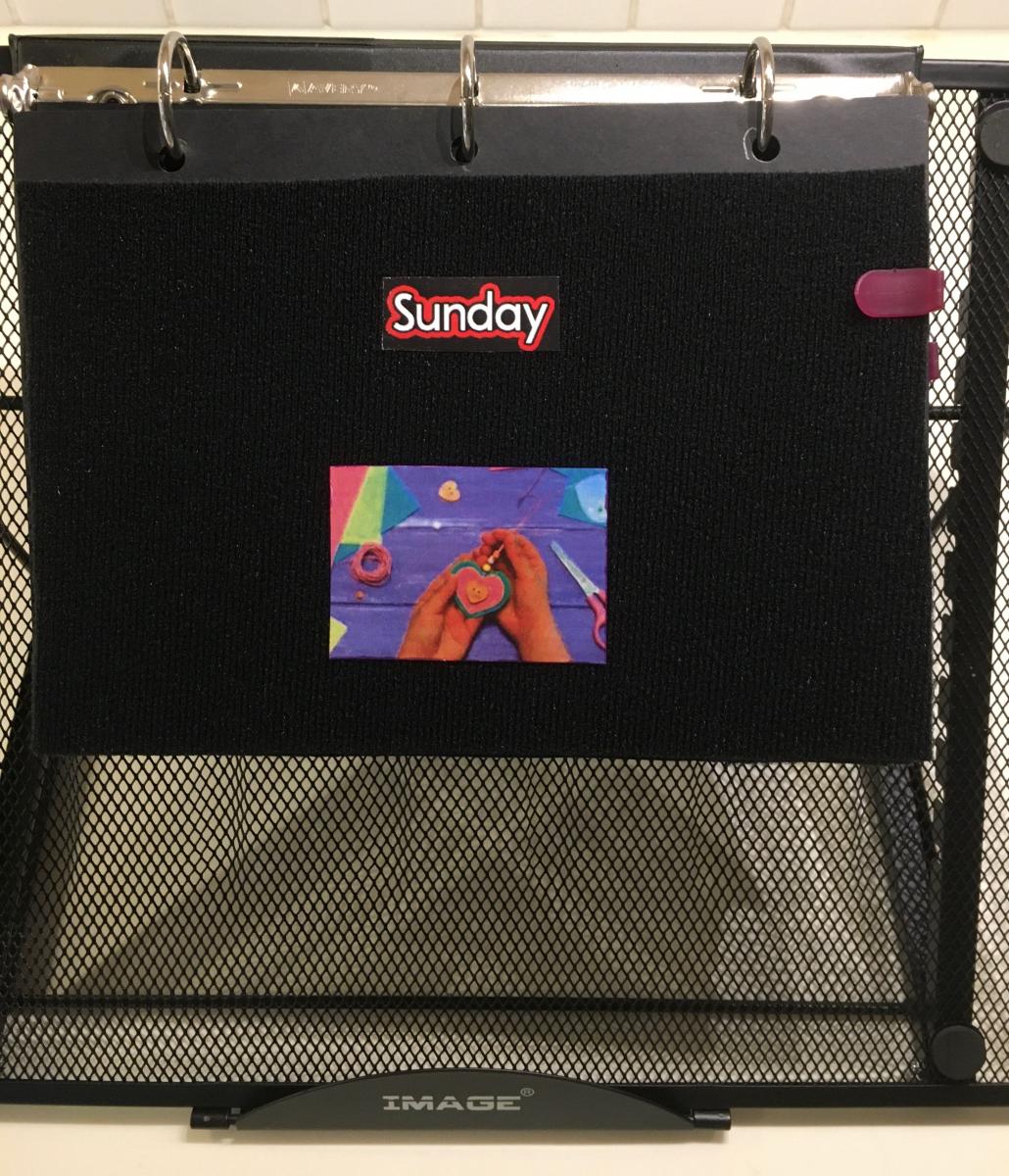
Visual Journal: Sunday
Visual Journal:  Monday with red sunglasses
Visual Journal: Monday with red sunglasses
Visual Journal:  Tuesday with piano keyboard
Visual Journal: Tuesday with piano keyboard
Visual Journal:  Wednesday
Visual Journal: Wednesday
Visual Journal:  Thursday
Visual Journal: Thursday
Visual Journal:  Friday with laundry basket
Visual Journal: Friday with laundry basket
Visual Journal:  Saturday with Farmer's Market
Visual Journal: Saturday with Farmer’s Market
Finding picture card for Sunday
Visual Journal:  Days of the Week
Visual Journal: Days of the Week
Matching day of the week to bubble shape outline

I hope some of these ideas will be appropriate for the child in your life who has CVI. I’ll add more ideas in future posts!

Stay safe and be well. You and your families are all on my mind and in my heart.

Reprinted with permission of the author.  Read the original blog post

Many thanks to Diane Sheline for sharing these images!  Read her posts on Strategy to See.
While You Are at Home collage


SHARE THIS ARTICLE
green heart, orange sun, green heart, orange sun pattern.
Blog

Using Patterns for Cognitive Gain

Student writing with a white marker on a black strip of paper on a white slant board.
Tips and guides

8 Key Areas for Supporting Writing with CVI

Student and teacher looking as a photo of Spotty the dog.
Blog

Making Books to Increase Visual Awareness