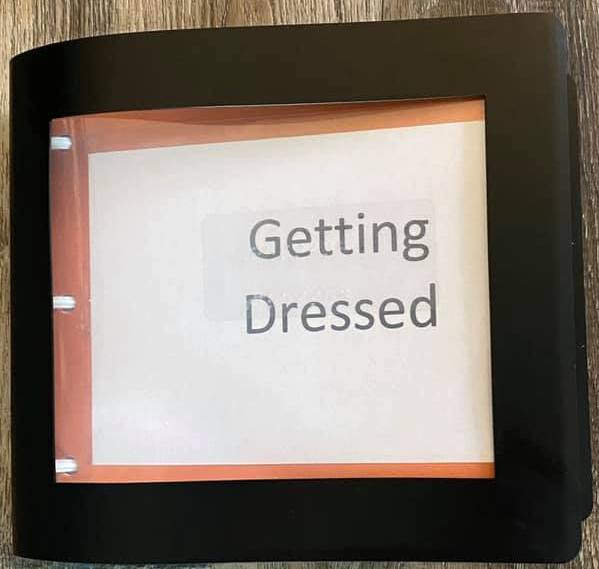
This spring I discovered that my student who is 18 years old and blind, with autism, was not able to shower independently. At that time, I created a shower and hygiene book and, thanks to support from his mother, he quickly made progress in learning to shower himself. Thanks to the continuation of remote teaching, I learned that he has NOT been dressing himself either! We had goals written for folding/hanging clothes and putting them away (which he is doing ), but after giving him the shower book and talking about progress, his mother said that she is getting his clothes out each day and handing them to him one at a time telling him to get dressed. (At the beginning of Covid, she was still dressing him, so we have made great progress!) I dropped off this Dressing Book social story, sequencer, and tray at his house and was thrilled to find out in a follow-up Zoom session that he has also learned to dress himself now.
Tactile Sequencer
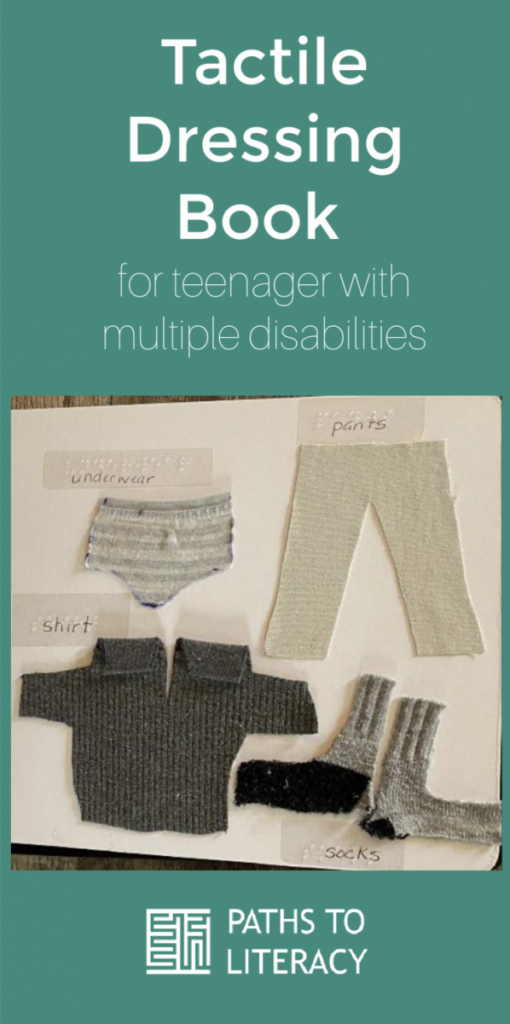
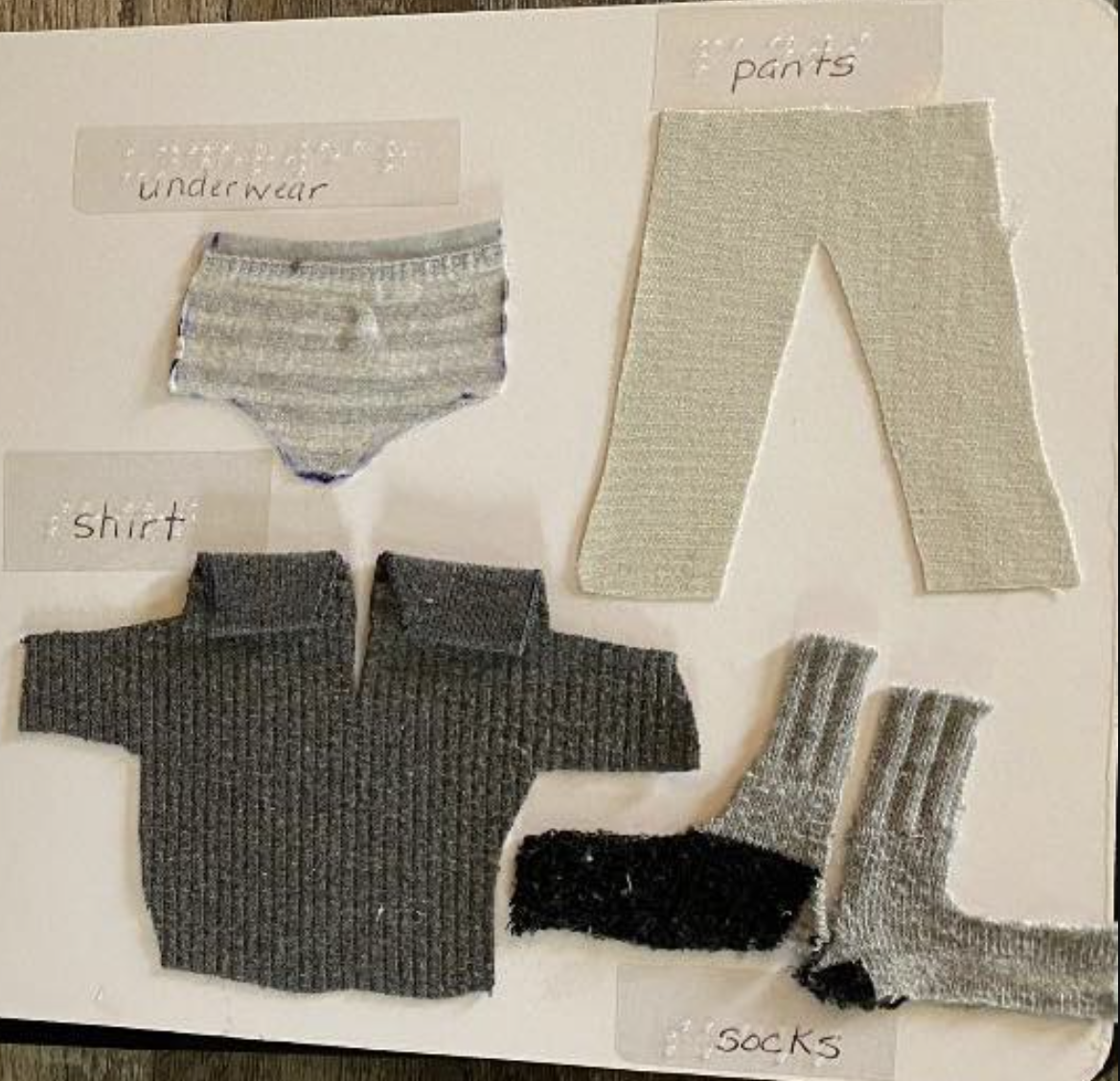
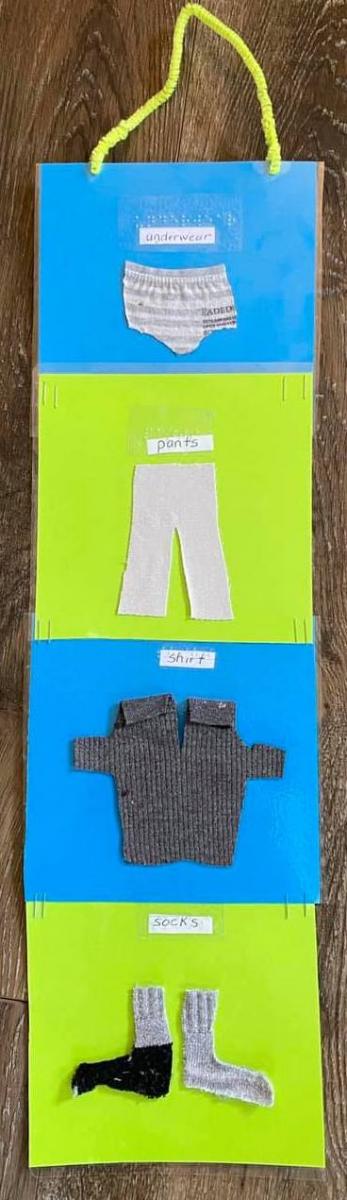
A tactile sequencer is designed to provide a tangible way for individuals to follow the steps in a given activity. In this case the tactile symbols are arranged in top to bottom sequence, but that can also be arranged left-to-right. The loop at the top of the sequencer allows it to be hung on a door knob, dresser knob or hook in the bedroom. We worked on matching the tactile symbols to the actual clothing items and he is able to identify each piece.
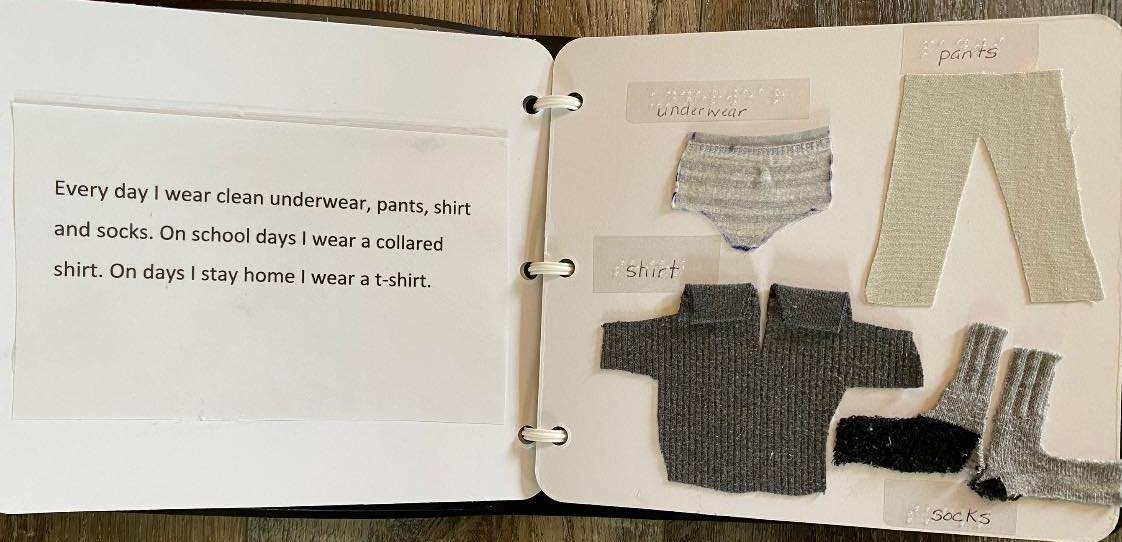
Top to bottom images are: underwear, pants, shirt, and socks. Note that the labels are in both print and braille.
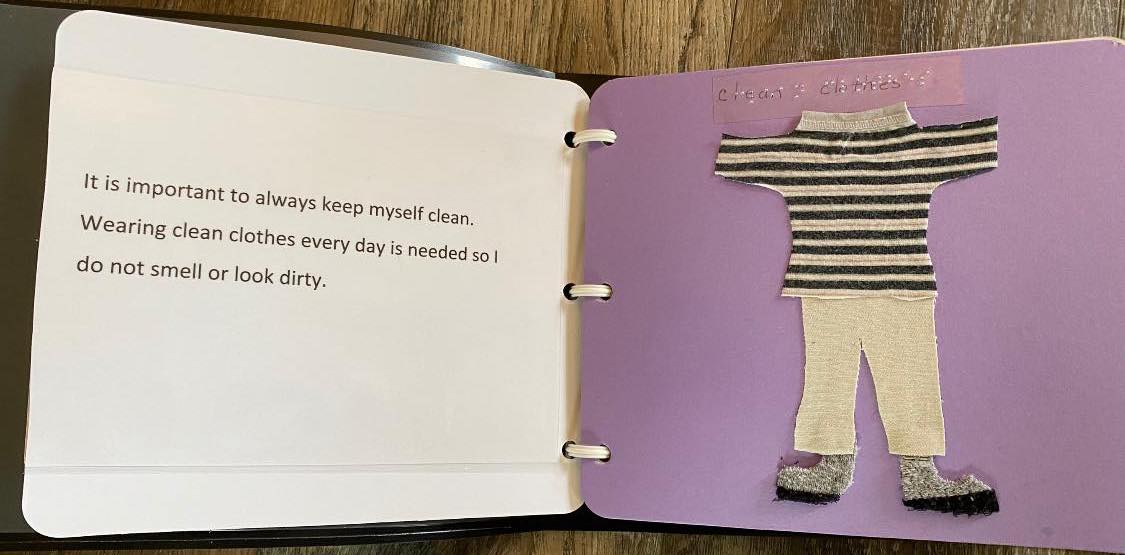
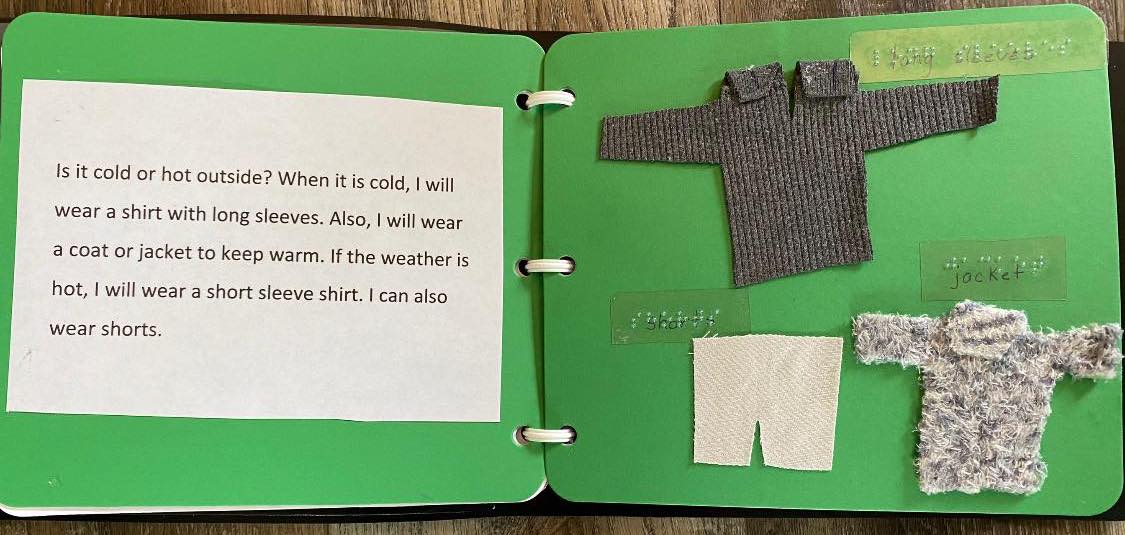
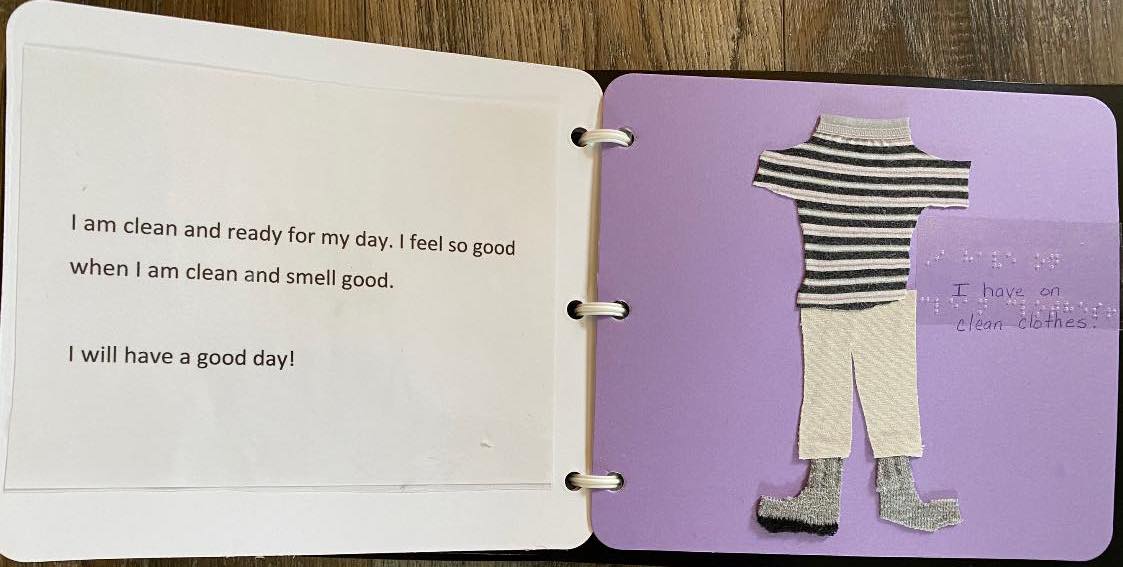
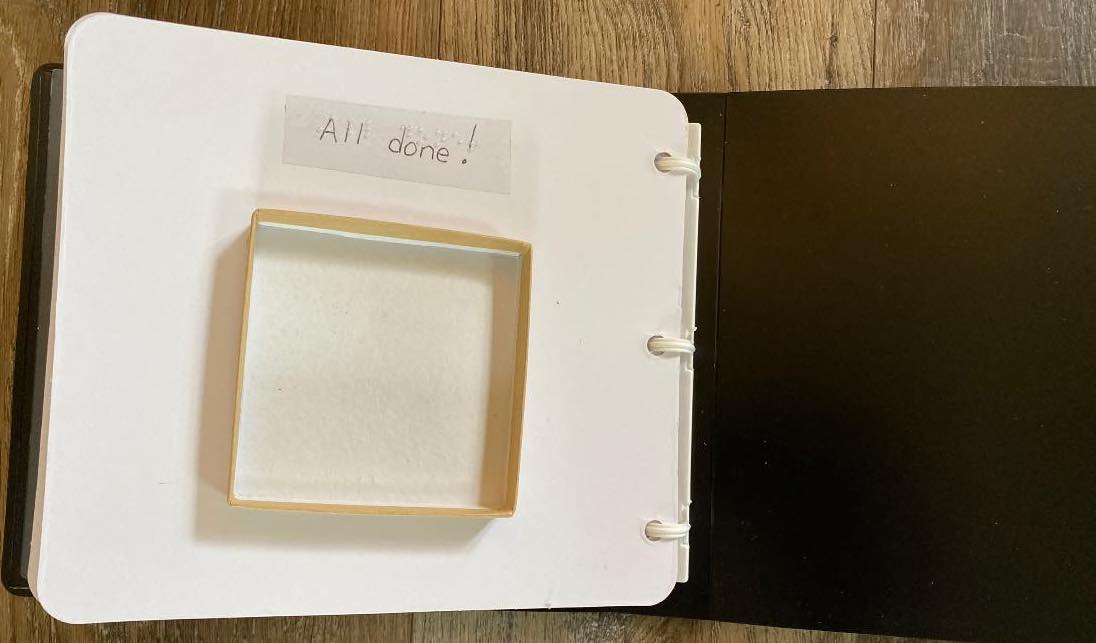
Tactile Book with Text in Print and Braille
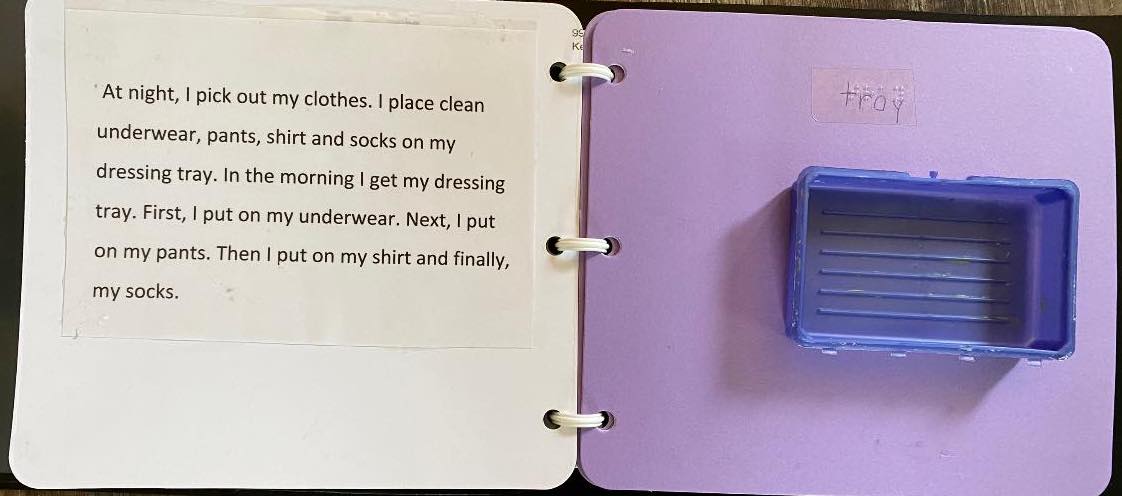
My student’s mother has been working with him to choose his clothing each day and to place it in a dressing tray. The tray helps him to keep things organized and to know exactly what he needs to do to complete the dressing process. He reads the book with his mother before getting dressed and usually reads it at other times of the day too. He is beginning to recognize some of the braille words in the book.
In the book I said “collared shirt” for school days because that is how his mother has always prepared him for school… even for Zoom! When he puts on a collared shirt he knows he is going to school (whether physically or remotely) and as soon as he is done with school, he puts on a t-shirt.
I used the Tactile Book Builder Kit from APH to create the book. And thank you to Sandy Bridges, my awesome braillist, who helped me get this together!