Deafblindness refers to a combined vision and hearing loss, but the effects vary extremely widely, depending on a number of factors. A child who is deafblind may be able to read print and use speech to communicate or she may be a braille reader who is profoundly deaf. Frequently children and youth who are deafblind have additional disabilities and may not use symbolic communication. Regardless of the particular situation for a given child, dual sensory impairment has a profound effect on learning, especially in relation to communication and concept development, which are the foundations of literacy.
Considerations Affecting the Impact of Deafblindness
Specific considerations which will help to determine the effect of the combined vision and hearing loss include the following:
- How much vision does the individual have?
- How much hearing does the individual have?
- Is either of those losses progressive?
- Are there medical considerations that affect learning?
- Are there additional disabilities?
- At what age did the individual lose vision and hearing?
- Are assistive devices being used consistently?
- How does the individual communicate?
Resources on Literacy for Students Who are Deafblind
Literacy for Children Who Are Deaf-Blind: Building a Foundation
National Center on Deaf-Blindness
This module is meant to be used in conjunction with the website Literacy for Children with Combined Vision and Hearing Loss. The website covers a full range of literacy skills, but this module focuses primarily on two topics: foundations for literacy and early emergent literacy.
Literacy for Persons Who Are Deaf-Blind
National Center on Deaf-Blindness
This article by Barbara Miles examines the importance of literacy for individuals who are deafblind, as well as the social functions of reading and writing. The article also explores the conditions necessary for the development of literacy, which include:
- Observation of significant people reading and writing for a variety of purposes
- Meaningful conversations during literacy experiences
- Accessibility of literacy materials
- Connection of literacy to experiences and interests
- Regular opportunities for independent use of reading and writing materials
Literacy for Children with Combined Vision and Hearing Loss
National Center on Deaf-Blindness
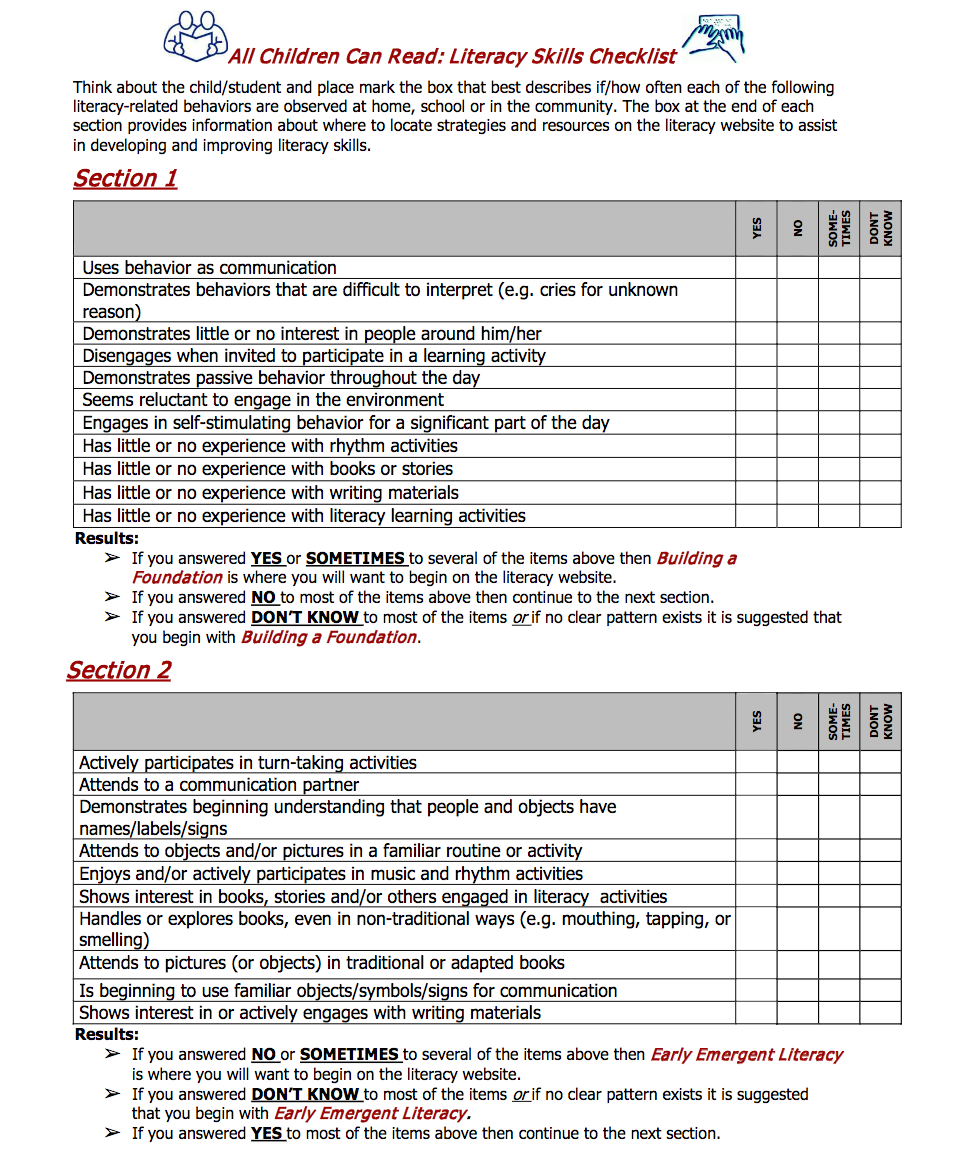 This website is entirely devoted to literacy and deafblindness. It includes a Literacy Skills Checklist, which can help direct users to the most relevant parts of the website.
Sections include:
- Building a Foundation
- Early Emergent Literacy
- Emergent Literacy
- Writing
- Vocabulary Development
- Comprehension
- Increasing Fluency
- Expanding Fluency
- Planning
Functions of Reading and Writing—the WHY
by Barbara Miles
When we consider our reasons for reading and writing today, it is obvious that all persons require some level of literacy skills in order to function in society. Given appropriate materials and expectations, many students who are deafblind are able to gain proficiency in some (if not all) of the following areas (containing some form of symbols or print):
| Function of Reading/Writing | Example for student who is Deafblind |
| Organizing and supporting memory | calendars, lists |
| Acquiring information | newspapers, phone books |
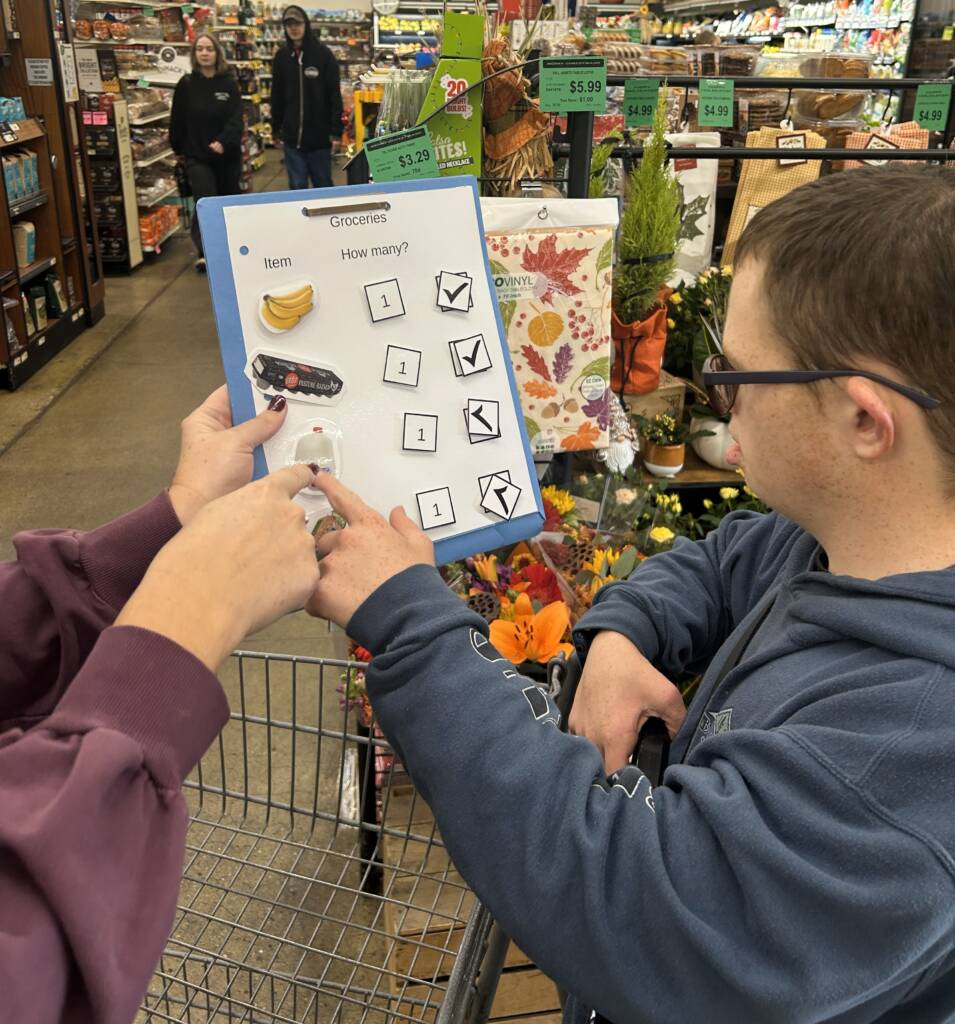
| Instructions | recipes, directions |
| Financial negotiations | checks, bank statements |
| Entertainment: comic books, magazines, internet | |
| Identifying things or places signs, labels, packages | |
| Self-expression, dealing with emotions | |
| creating/maintaining relationships | |
| letters, journals, emails |