As the summer wraps up and the weeks leading up to the new school year are trickling away, it’s the perfect time to get organized as an O&M. Though TVIs have their specific tasks for the start of the year (likely filled with ordering textbooks, adapting materials, etc.), an O&M has their own. My favorite reminders and reflections are listed below and in the general order completed. Everyone has their own style, pace, and ideas. Please feel free to adapt these and share your own tips and tricks with others!
Make sure car is maintained
We all have our list. Mine includes an oil change, yearly car inspection, and cleanliness. It is easier to do this during the summer (late June or July is preferred) or in the weeks leading up to before school starts. This is especially important for O&Ms because of the greater territory covered versus some of our TVI counterparts: for safety and peace of mind.
Review textbooks, articles, and instructional techniques
The week before work begins again, reviewing textbooks can help with getting mentally prepared for the school year. Some of my favorites re-reads include:
- Foundations of Orientation & Mobility, Volumes I and II (“the red books”)
- Orientation and Mobility Techniques: A Guide for the Practitioner (review of techniques)
- Itinerant Teaching: Tricks of the Trade for Teachers of Students with VisuaI Impairments (Chapter 7 is for Orientation & Mobility, but the entire book has wonderful suggestions- particularly Chapters 1 & 2 for organization)
- Perusing websites such as Paths to Literacy and The Journal of Visual Impairments and Blindness, you’ll find inspiration and new insights. This is a great time to practice using a new GPS device for a high school student, locating a public transportation schedule, or reviewing a new concept you’ll teach.
- YouTube is a wealth of knowledge and lesson ideas. My favorite channels lately include: APH, HumanWare, ATIA, Blind on the Move, and PaTTAN.
Acquire a current, updated and final caseload list
Once the school year begins, obtaining a final caseload list is crucial. This may be obvious, but mistakes happen! Sometimes students get accidentally left off when copying/pasting and it can happen to the best of us. Getting this list as soon as possible makes it so the O&M can reach out to parents, supervisors and teachers (sooner rather than later) in case any team members have questions and if an orientation to a building needs to occur before the student’s first day of school.
After the caseload list is shared, I check that each student appears in the IEP system in which I log for services. For O&Ms, logging is extra important for MA billing and to keep a delicate record of services and where those important documents await: IEPs, evaluations reports, etc. Once I have access to all students and the list is finalized, I create my own personal caseload excel sheet, which includes: student name, school, grade/placement, service amount, contacts of teacher/paraeducator, school building address, parents names/emails, nicknames others go by, preferred method of contact (call, text, email, etc.), if on federal quota list, signed up with state services and/or at transition age, due dates for next IEP and reevaluation, and if the student is transitioning to a new school building so I can plan for scheduling an orientation later that year in May/June.
I like to create a new tab for each school year and update this information at the beginning of each year. Having all the school years in one document with tabs can make finding information more quickly, such as if a teacher I worked with previously a couple years ago now has a new student of mine (happened last year!). Additionally, creating a list of evaluations, reevaluations, and/or record reviews due for the whole school year (in order of earliest to latest for the year) can be helpful to know what the year will entail. For example, if October happens to have many evaluations/reevaluations due, these can get started at the beginning of September for the O&M’s planning purposes.
Create a secure digital file folder for each student
Having a digital folder (Google Drive, OneDrive, etc.) can save lots of time “searching” and space in the car, home or office. Having switched to digital files, it has made locating paperwork quick and accessible when on the go (and fitting 40+ binders in my trunk just didn’t work anymore!). I still have hard copies of important documents, such as a permission to transport form signed by families, with me at all times. Consider going digital for convenience. Everyone has a different way of organizing. For me, I prefer the layout of Google Drive and I have a folder with the student’s name and then documents, which include: Lesson Plan/Notes document (I’ll copy the SDIs/accommodations, teacher name and room number, and pretty much any information that I reference often to help save time during the work day), copy of current IEP, latest evaluation/reevaluation team report that includes vision/O&M, latest eye report, progress report on goals, and a digital copy of signed permission to transport. At the end of each school year, I’ll move these files from the immediate folder to another tucked away, as a future reference.
Host an in-service for a school team for students
Collaborating with the TVI for this can be helpful (and hey, two related service providers are better than one!). This is something I’m slowly trying to do for more students- not just the ones I see as a TVI. An O&M can initiate this conversation too; don’t be afraid. Send an invitation for a virtual in-service (or could do an in-service in person, if possible) to the teacher, case manager, related staff, supervisor, principal, and service providers to attend. The beginning of the year can be the best time to host this type of meeting, but honestly, it can occur anytime of the year. And if I’m continuing my honestly, this is one of my least favorite things to do, but probably one of the most important. Sometimes you’ll only get a physical therapist that attends, as was once the case with me and a co-worker, but extending an invitation so others can participate is an important step towards collaboration across a team. This may lessen the blow of a question many O&Ms receive (myself included): “When are you taking [insert student’s name] on a walk with their stick?” Now, you can respond with: “The virtual in-service meeting is scheduled for Thursday at 9am, but if you can’t attend, we can schedule an individual meeting when you’re available so you can learn more about O&M services.”
Gather materials for lessons and create a “materials list” for any and all distributed materials given to students.
Once the digital folder is created, I determine if there are any materials needed for O&M. Does the student have an extra cane at school or do they prefer to bring their cane to and from school daily? What is listed in the IEP for accommodations/materials or SDIs? This information can be more clear once meeting a student and talking with the teacher or family. Try to not assume the student has a material with them a couple weeks into the start of the year. Investigate and ask!
Create a “Materials List” for any devices the student has for O&M to be redistributed at the beginning of the year and to be collected by the end. The Itinerant Teaching book has some well organized template ideas, in my opinion. Determine any materials needed for the school year to be ordered through APH or district funds. I also look at the list I created from last year. Did a student take an item home over the summer? In August, it’s easy to forget what occurred in June.
Schedule, confirm and complete last minute building orientation lessons
Usually, this occurs in May/June the school year prior, but I like to offer this the week before school starts too, while teachers are setting up their rooms and when the building is open. In the middle of summer, schools are likely being cleaned and furniture is moved into the hallways; a nightmare for our O&M students! Having an orientation lesson within the days leading up to the first day of school tends to be more successful and keeps orientation skills fresh in a student’s mind.
Update your digital calendar early. Places of employment may require this, but it’s a good idea to set up a digital calendar. I prefer to have a digital calendar (Outlook) on my computer, an Outlook app on my phone (I tend to keep notifications off), and also a paper calendar as a back up. As the school year is gearing up to start, attending in-services, meetings, more building orientations, and personal reminders can go onto a digital calendar right away to help with any scheduling conflicts. Keeping and maintaining a digital calendar and systems of organization helps an O&M know what to anticipate for the first couple weeks back, especially when unexpected events occur across various locations.
Visit students in person
In-services are over and the school year has begun! I make a point to not just email a teacher, but also visit each student on my caseload within the first couple weeks (at the latest). On the first day of school, for my O&M students, I tend to join students along their routes. The beauty about O&M (and the beginning of the school year in general) is time to do orientations with more flexibility. While there, meeting teachers, explaining the role of an O&M, and discussing a student’s vision can be helpful in person. Teachers typically have more availability to talk towards the end of the first week and the second week of school. O&Ms tend to do a lot of frontloading to make sure the beginning of the school year is off to a good start. Taking pictures of visual landmarks and creating a folder on my iPad is something I’ve found helpful. Doing this with the TVI can be helpful and informative too, if possible. During orientation lessons, I try to meet with the TVI at some point during the orientation.
Create a binder of maps of schools
I call this my “Bible of O&M.” Every school I go to (even if it is an evaluation), I will ask the office staff or principal for a map. Most schools will give a map, but some do not due to safety concerns; it’s not the end of the world if this is the case. Usually after explaining what O&M services are, I’m provided a map. This can be helpful when with a student initially, especially at the start of the school year. Having students “give a tour” is one of my favorite requests, however, having a map can be helpful if the tour does not go as planned, for future lessons on numbering systems, map making, and additional building concepts. I’ve found that it also allows for an opportunity in modeling how to use a map. I have discovered that students are curious and may request a large print version or digital copy to use (before we even get to instruction!)
Introduce yourself to families
I typically send an email at the beginning of the year for any new students. I will also email if there are any caseload changes and copy the new O&M on the email. Parents, family members or guardians may prefer to communicate through other methods, such as a phone call, text, virtual meeting, or through a communication log passed to and from home and school. Families may be preferred alternative methods of communication, but I usually start with an email.
Create a data collection method
Now that the caseload is finalized and students begun their orientation lessons (and maybe some last minute adjustments are made), I start to organize items and paperwork for their goals. Something new I’ve been doing is experimenting with developing more simple and clear data tables with my IEP SMART goals. Having a clear and straight forward data collection method (and clear goals) can help make not just this school year successful, but future ones even more so. TVIs have the benefit of likely using a computer during instruction to insert data directly. For O&Ms, since we are on the go, this can be more challenging. Lately, I prefer to carry a notebook and pen to tally prompting/attempts with a date or dictating into the Notes app on my iPhone. In between lessons, I’m working on logging right away in the IEP system or at the latest, doing it by the end of the day.
Create a consistent and reliable schedule
Working for public school districts and as an itinerant, O&Ms tend to have more students and service a greater region than TVIs. Be mindful of this while scheduling students! It’s tempting to sandwich students together and “make it work,” but it pays to leave additional time in between. If covering multiple districts, try to schedule one district each day of the week. Case managers can help if there are scheduling conflicts. For instance, it helps to schedule weekly students during a consistent day and time when there is not a monthly staff meeting. Scheduling a middle or high school student with limited availability, then scheduling other students around these students, can be the best place to start. I found that it’s helpful to rotate student’s O&M consult times during various parts throughout their school day, whenever possible.
Favorite times include: transition to and from the cafeteria, recess, physical education, physical therapy, bus or parent pick up at the beginning/end of the day, field trips, special events, fire drills, and emergency drills. Having a list of other related service providers times/dates for services are helpful to include within a digital folder for each student, especially with all the various types of scheduling that may exist (Day 1-6, A/B days, etc.). In my calendar, I mark that March/April will just be a challenge for scheduling due to state testing, evaluations for early intervention, spring break, and the last minute sicknesses that always seem to occur.
Organize trunk
Once late August and early September come around and things are settling in with scheduling, it is a good time to begin organizing the car trunk once more and begin filling it with those go-to materials. I prefer to use the hard file folder crates to store materials versus the thin fabric trunk organizers, which tend to get crushed throughout the year. In a hard shell plastic box, tactile maps and braille-labeled items are safe to store. As O&Ms, we tend to be bag ladies and gentlemen. Keeping bags for various items that are used often can be helpful. For example, once I get my list of students, I tend to have a bag for each type of item (i.e. Picture Makers, visual targets, cones, tape, etc.). Some students have their own separate bags filled with objects used consistently for each week that I’ll grab. Being hands free is helpful as an O&M. I recommend a sling bag or cross body bag that has an adjustable strap to place materials in for lessons, phone, keys, and a data collection notebook.
Develop a list of indoor/outdoor routes and intersections ahead of time
Create a list of indoor/outdoor routes and intersections ahead of time. This saves lots of time! I like to do this during the first couple of weeks of the new school year and once the final list of students is sent. Even if it’s just 1-2 intersections that will work with a street crossing goal, this is a good start for the school year and can usually work for initial lessons at the beginning of the school year as the O&M is getting organized. Additionally, it’s helpful to note any visual or tactile landmarks in buildings to begin indoor routes and walk them in your student’s shoes.
Establish rewards and communication with students
Something I learned lately is to be straightforward and ask what a student would like as a reward or during a short break time instead of assuming. Do this at the beginning of the year and during the rapport building times. Have students rate themselves before and after a task given, such as a new cane technique learned, a route accomplished, and a destination reached. Don’t assume you know what a student thinks or feels- check in whenever possible without nagging. Students (and people in general) don’t want to be told what to do or how they feel: they usually want to be part of the process, to the greatest extent possible. This can be established at the beginning of the year and those first lessons.
Expose students to materials, methods and the scope of O&M
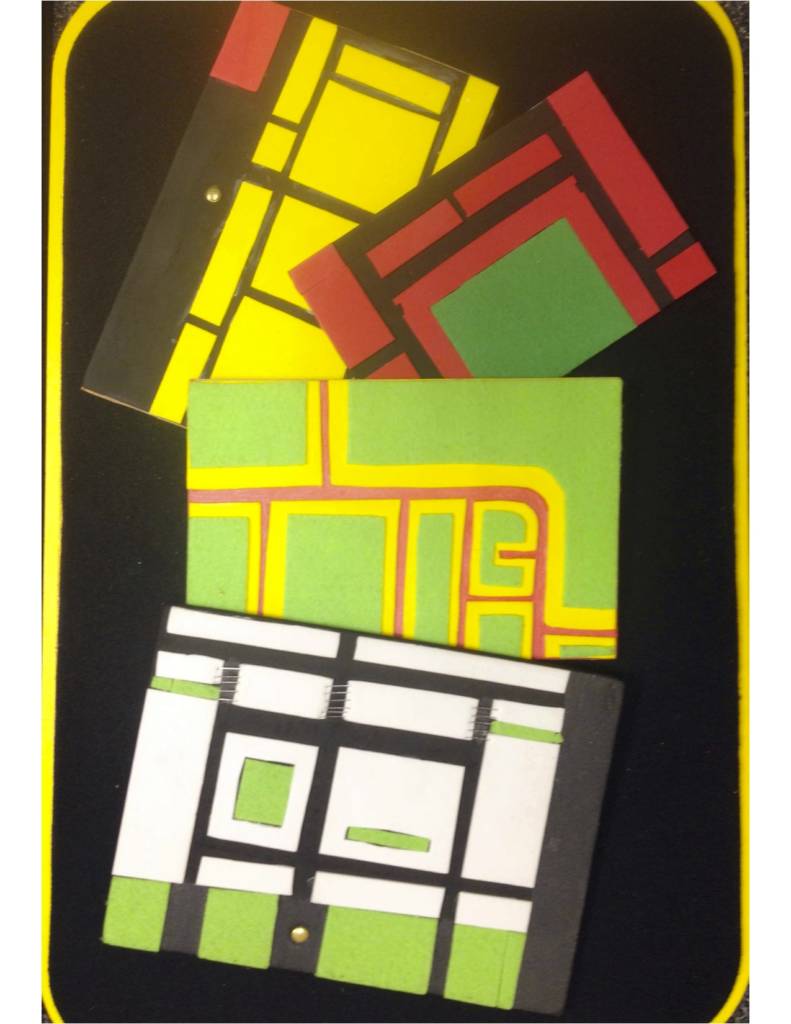
When I create something for a student, I think about what other students I can show this to. The beginning of the school year can be a fun time for exposure to other O&M concepts, especially while materials are gathered and distributed. A student who has a progressive eye condition who may have not started an advanced orientation technique yet, but can still explore a tactile map resembling a city with braille labels. A student with multiple disabilities can use a GPS device with assistance from the O&M instructor and participate in auditory feedback from the device during their transition to the school bus pick up area. Sharing materials for exposure can help spark ideas and helps us not limit students, to keep high expectations. As O&Ms, we have many opportunities to address the ECC (expanded core curriculum). The possibilities are there! Get creative.
Consider a collaboration at the beginning of the year with the TVI
Think about how to reinforce areas of instruction the TVI is doing with your student and if any tools (technology, methods of instruction) can be carried over into O&M lessons. For example, a new student I share with a co-worker started using a monocular in the classroom to spot check writing on the board. Though the student does not currently have a monocular goal or has started low vision devices in O&M yet, we are now working on monocular skills performed in class and incorporating its use for their mobility; perfect! Technology and note taking methods are crucial and can get overlooked. How are our students using technology to access information needed for their O&M skills? What do I need to learn as an O&M in order to help my students be the most independent and successful?
Create two lists: “lessons learned” and “wins”
At the beginning of each school year, I create what I call a “Lessons Learned” list. A student could have used more instruction on familiar routes. I should have seen the signs of frustration sooner. That goal could have been reworded for better clarity. The next list created is full of things that went right, labeled “Wins” which are those little things that tend to be forgotten or get shadowed by the negative. This will be a list that, I promise, you’ll reread on those weeks when things feel difficult. Did a student jump up in celebration when they reached their desired destination? (Mine sure did!) Did a student feel courageous and ask a clarifying question to a bus driver after months of modeling this for the student? (Heck, yes!) What are small wins that occurred for you? It’s easy to focus on what went wrong, but train yourself to look for what went right. Other ideas include re-reading cards from families, a kind note from your student’s paraeducator, an email addressed from a parent that says a simple “thank you,” or a teacher that noticed a student using their O&M skills outside of a lesson.
Treat each day as the beginning of the year.
Treat each day as the beginning of the year. Each day is a new start and beginning! It doesn’t have to be the beginning of the school year to try new technology, have a different lesson approach, or adjust teaching for a concept. We are in the business of educating, so keep this “beginning of the year perspective” throughout the year and I’m sure it’ll make your year the best yet.
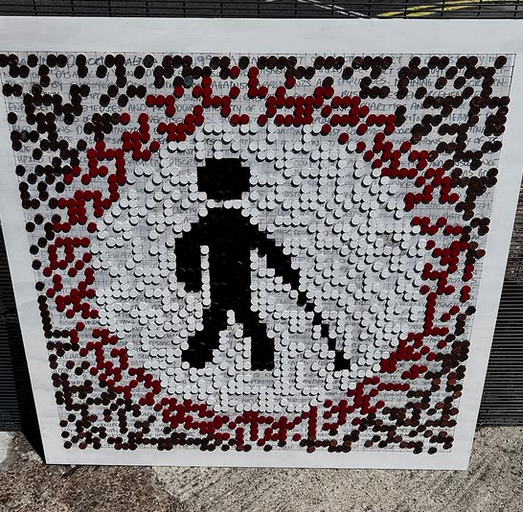
Tactile art created by Mr. Dot with a person and their cane.