Welcome to the Teacher Tips: Best Practices for Teaching Braille and STEM to the Visually Impaired section of the Braille Brain microsite. Our desire is that Pre-Service and In-Service Teachers of the Visually Impaired (TVIs) will find this website a great resource for working with students with visual impairments.
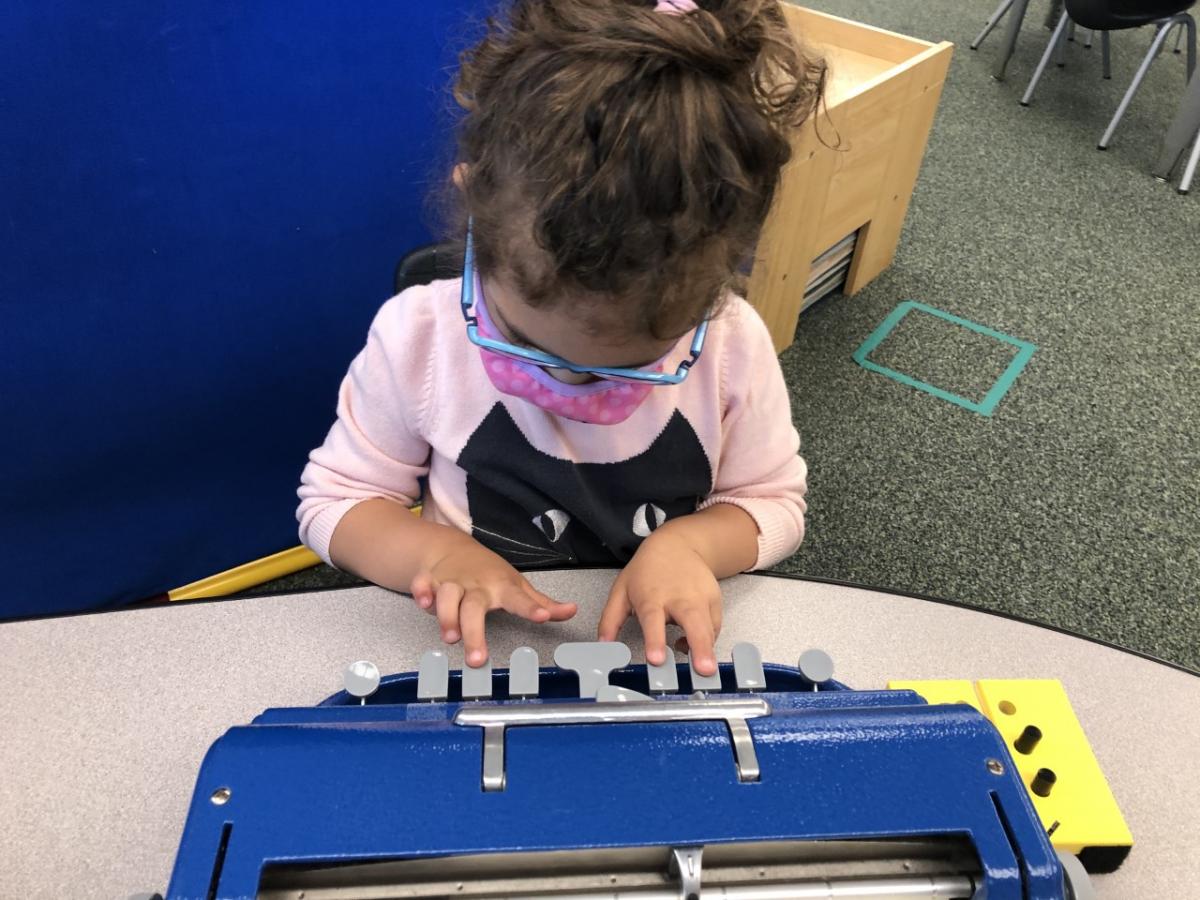
Many schools across the United States are implementing the Common Core State Standards (CCSS). The webpages on this website consist of a summary of the CCSS College and Career Readiness Anchor standards for reading (CCR), teacher tips, and resources that teachers can use to help their students who read and write braille build their literacy skills. The webpages also include videos of professionals in the field of visual impairment explaining the standards as they relate to students who use braille and videos of strategies that teachers can use to further develop their student’s braille literacy skills.
Science, Technology, Engineering and Math (STEM) education was introduced in 2001 by the National Science Foundation (NSF) after research concluded that students were not achieving in the STEM disciplines in the United States at the same progression as compared to students in other countries. It was predicted that STEM instruction would be an essential part of preparing students for the workforce. Being that curriculum in the STEM fields is highly visual, providing quality STEM education to students with visual impairments poses unique challenges. This website includes best practices to support your efforts to help students with visual impairments gain skills from STEM education. See the navigation below for the included sections.
- Assistive Technology to Support STEM Subjects for the Visually Impaired
- Compensatory Skills: A Focus on Organization
- Foundational Skills
- Math Instruction for Students with Visual Impairments
- Science Instruction for Students with Visual Impairments
- Tactile Graphics
This project was funded by the US Department of Education, Rehabilitation Services Administration (RSA), 84.235E Special Projects and Demonstrations for Providing Vocational Rehabilitation Services to Individuals with Severe Disabilities. The project is titled: Braille Brain: A Braille Training Program for pre/in-service Teachers of Students with Visual Impairments (TSVI), paraprofessionals, and other educational team members (H235E190002).
Braille Brain
Reading
- READING: Foundational Skills for Reading
- Integration of Knowledge and Ideas
- Vocabulary Acquisition and Use
- Braille Hand Movement and Refreshable Braille Displays
- Conventions of Standard English: Standard One
- Conventions of Standard English: Standard Two
- Writing and Language
- Craft and Structure
- Key Ideas and Details
- Best Practices for Teaching Braille and STEM to the Visually Impaired
- Assistive Technology to Support STEM Subjects for the Visually Impaired
- Compensatory Skills: A Focus on Organization
- Foundational Skills for STEM
- Math Instruction for Students with Visual Impairments
- Science Instruction for Students with Visual Impairments
- Tactile Graphics
STEM
- Best Practices for Teaching Braille and STEM to the Visually Impaired
- Assistive Technology to Support STEM Subjects for the Visually Impaired
- Compensatory Skills: A Focus on Organization
- Foundational Skills for STEM
- Math Instruction for Students with Visual Impairments
- Science Instruction for Students with Visual Impairments
- Tactile Graphics
- Braille Brain
- About Braille Brain
- Braille Training Program
- Foundational Skills for Reading
- Integration of Knowledge and Ideas
- Vocabulary Acquisition and Use
- Braille Hand Movement and Refreshable Braille Displays
- Conventions of Standard English: Standard One
- Conventions of Standard English: Standard Two
- Writing and Language
- Craft and Structure
- Key Ideas and Details
- Current: Best Practices for Teaching Braille and STEM to the Visually Impaired
- Assistive Technology to Support STEM Subjects for the Visually Impaired
- Compensatory Skills: A Focus on Organization
- Foundational Skills for STEM
- Math Instruction for Students with Visual Impairments
- Science Instruction for Students with Visual Impairments
- Tactile Graphics