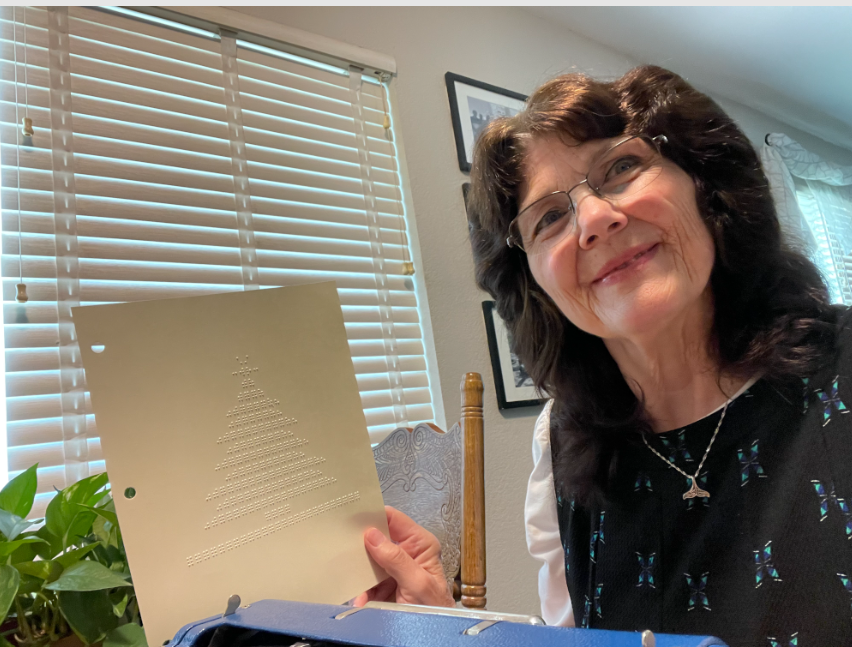
Standard 2: Demonstrate command of the conventions of standard English capitalization, punctuation, and spelling when writing.
Writing conventions includes demonstrating how to correctly use capitalization and punctuation, and knowing how to spell words accurately. Capitalization is used at the beginning of a sentence or to denote a proper noun. Punctuation symbols are used throughout sentences. These symbols have particular rules in braille that must be followed. Lastly, spelling is required to accurately use words in composition.
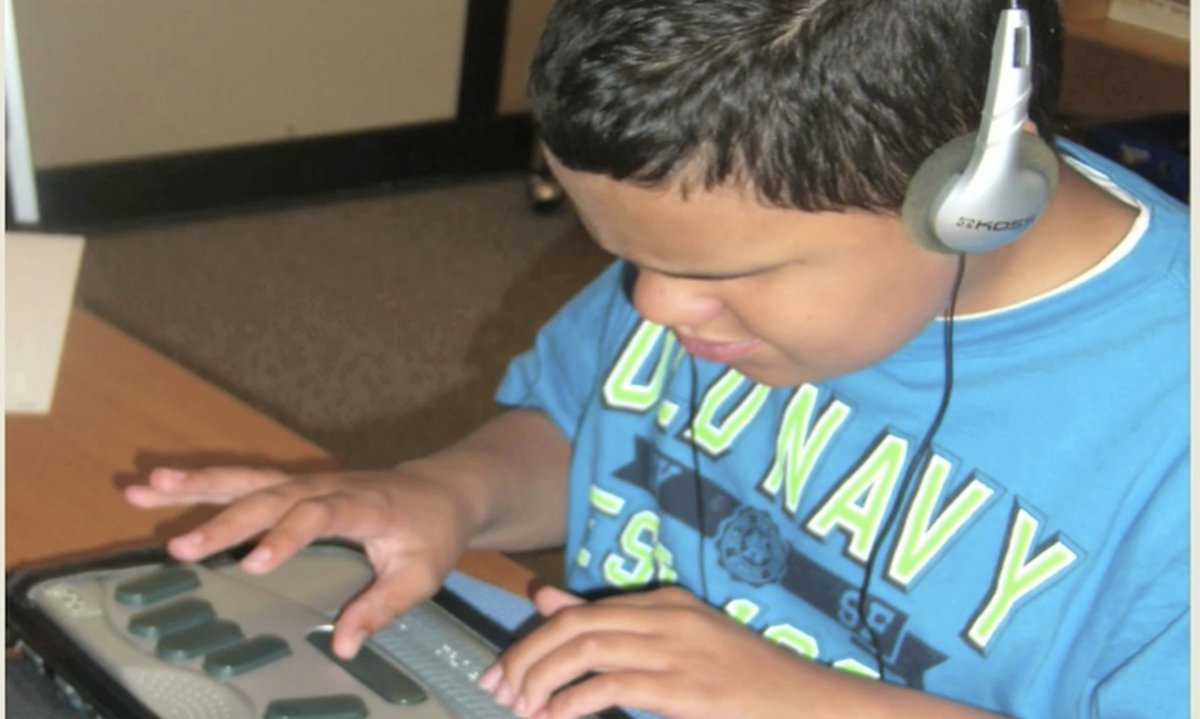
Conventions of Standard English: Impact for Students Who Use Braille
A visual impairment does not affect one’s command of the conventions of Standard English. However, as previously stated, if one learns primarily through auditory channels, then the ability to learn spelling patterns of homophones may be lost. Some students who use auditory means for reading may not pick up on differences in spelling patterns between commonly used words such as “to,” “too,” and “two.” Less common words with subtle pronunciation differences also may be challenging such as “seize” and “cease,” and “commendable” do not learn the differences between
Conventions of Standard English: How to Address Challenges in Writing
- Spelling tests
- Word dictionaries
- Word families
- Personal dictionaries
- Word studies
- Word wall
This project was funded by the US Department of Education, Rehabilitation Services Administration (RSA), 84.235E Special Projects and Demonstrations for Providing Vocational Rehabilitation Services to Individuals with Severe Disabilities. The project is titled: Braille Brain: A Braille Training Program for pre/in-service Teachers of Students with Visual Impairments (TSVI), paraprofessionals, and other educational team members (H235E190002).
Braille Brain
Reading
- READING: Foundational Skills for Reading
- Integration of Knowledge and Ideas
- Vocabulary Acquisition and Use
- Braille Hand Movement and Refreshable Braille Displays
- Conventions of Standard English: Standard One
- Conventions of Standard English: Standard Two
- Writing and Language
- Craft and Structure
- Key Ideas and Details
- Best Practices for Teaching Braille and STEM to the Visually Impaired
- Assistive Technology to Support STEM Subjects for the Visually Impaired
- Compensatory Skills: A Focus on Organization
- Foundational Skills for STEM
- Math Instruction for Students with Visual Impairments
- Science Instruction for Students with Visual Impairments
- Tactile Graphics
STEM
- Best Practices for Teaching Braille and STEM to the Visually Impaired
- Assistive Technology to Support STEM Subjects for the Visually Impaired
- Compensatory Skills: A Focus on Organization
- Foundational Skills for STEM
- Math Instruction for Students with Visual Impairments
- Science Instruction for Students with Visual Impairments
- Tactile Graphics
- Braille Brain
- About Braille Brain
- Braille Training Program
- Foundational Skills for Reading
- Integration of Knowledge and Ideas
- Vocabulary Acquisition and Use
- Braille Hand Movement and Refreshable Braille Displays
- Conventions of Standard English: Standard One
- Current: Conventions of Standard English: Standard Two
- Writing and Language
- Craft and Structure
- Key Ideas and Details
- Best Practices for Teaching Braille and STEM to the Visually Impaired
- Assistive Technology to Support STEM Subjects for the Visually Impaired
- Compensatory Skills: A Focus on Organization
- Foundational Skills for STEM
- Math Instruction for Students with Visual Impairments
- Science Instruction for Students with Visual Impairments
- Tactile Graphics