This summer our extended school year program used a dinosaur theme to transform the horticulture room into a multisensory learning environment. Students who are blind or visually impaired explored science through touch, hearing, smell, and discussion using four interactive stations.
Dinosaur egg comparison station
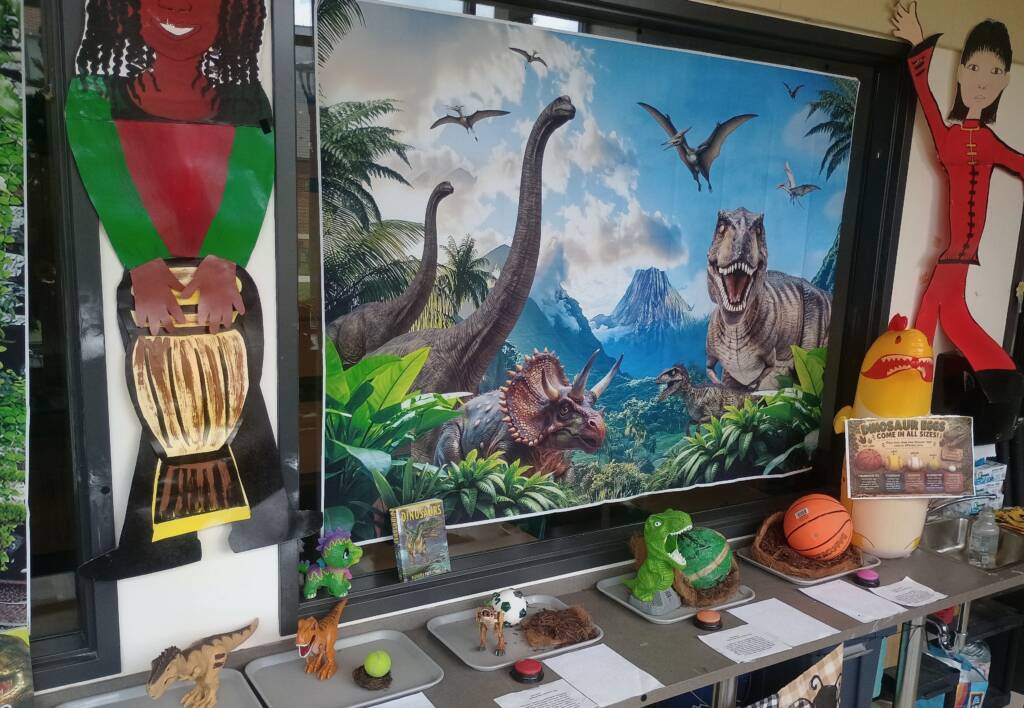
Students compared relative dinosaur egg sizes using familiar balls placed in textured nests. Each display included braille, print, a model dinosaur, and a recordable audio button.
Dinosaur nest learning station
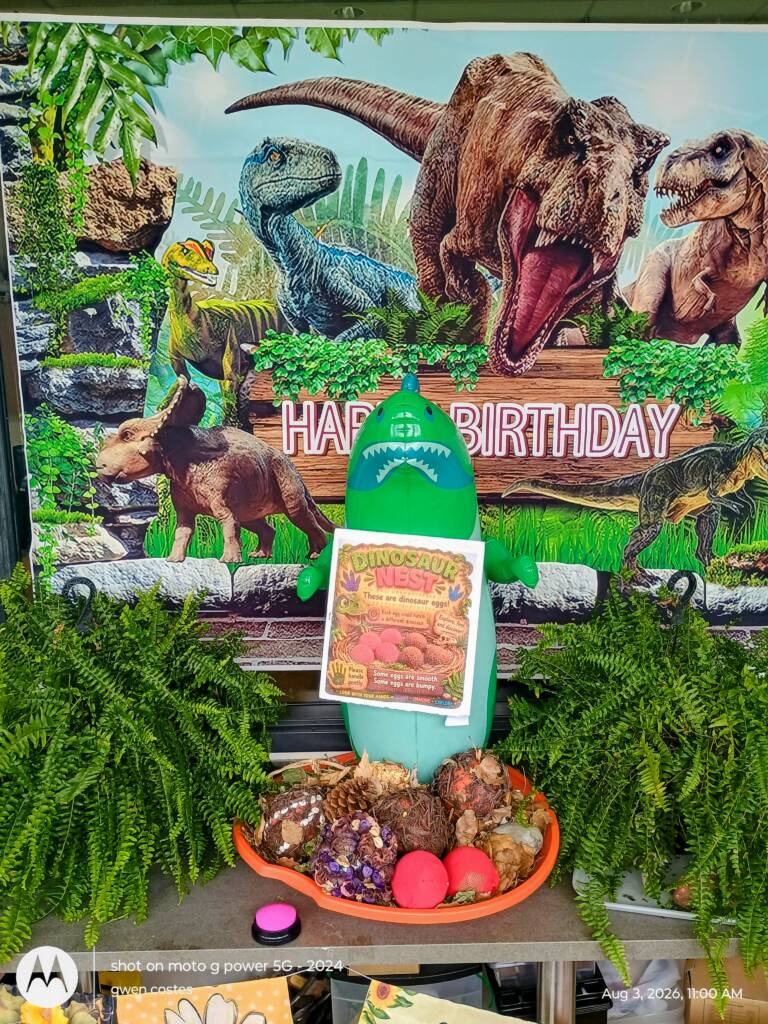
Students explored tactile eggs made with natural materials such as mulch, leaves, and pinecones while learning about nesting behaviors.
Dinosaur fossil learning station
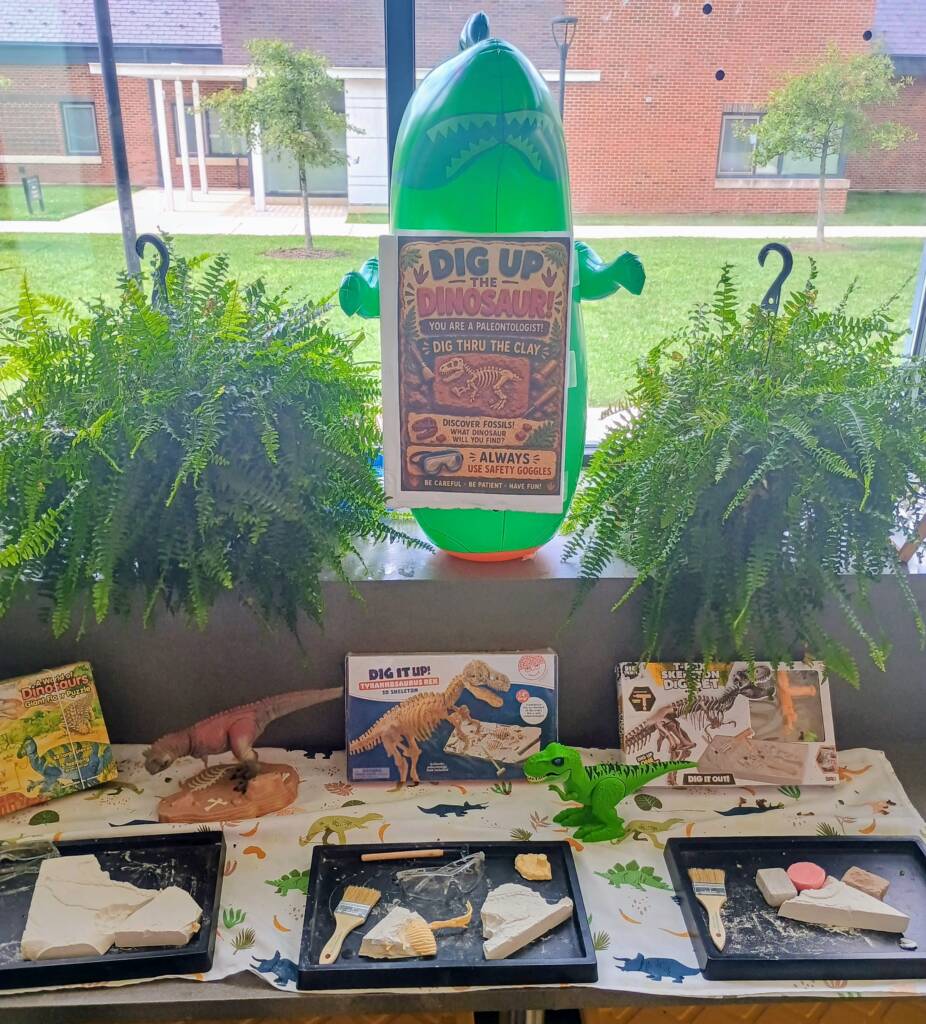
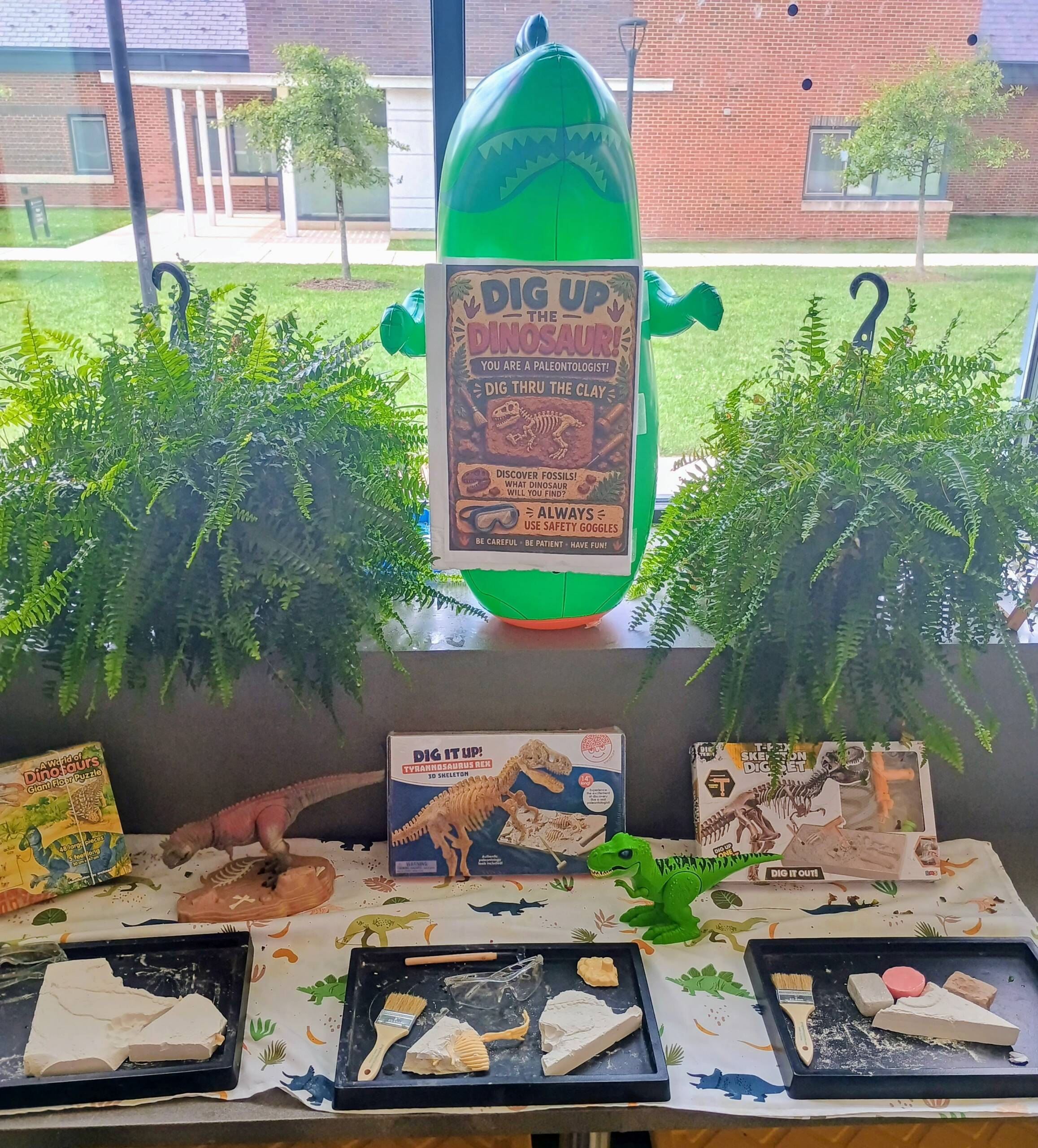
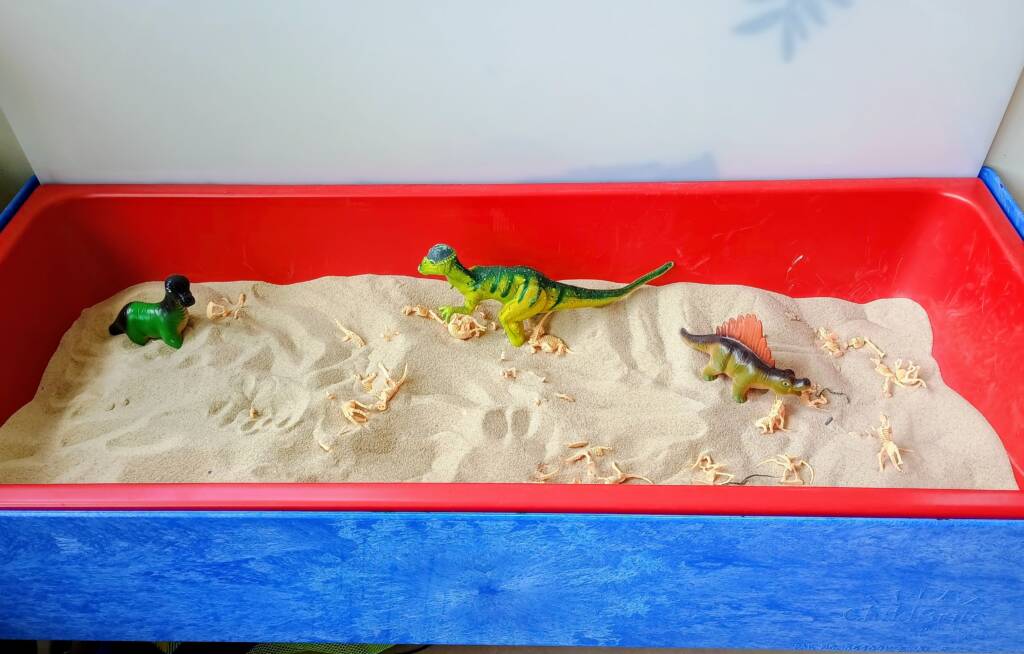
Students excavated fossils from clay blocks and assembled dinosaur skeletons. An additional sand digging station provided another sensory excavation experience.
Fern and spider plant station
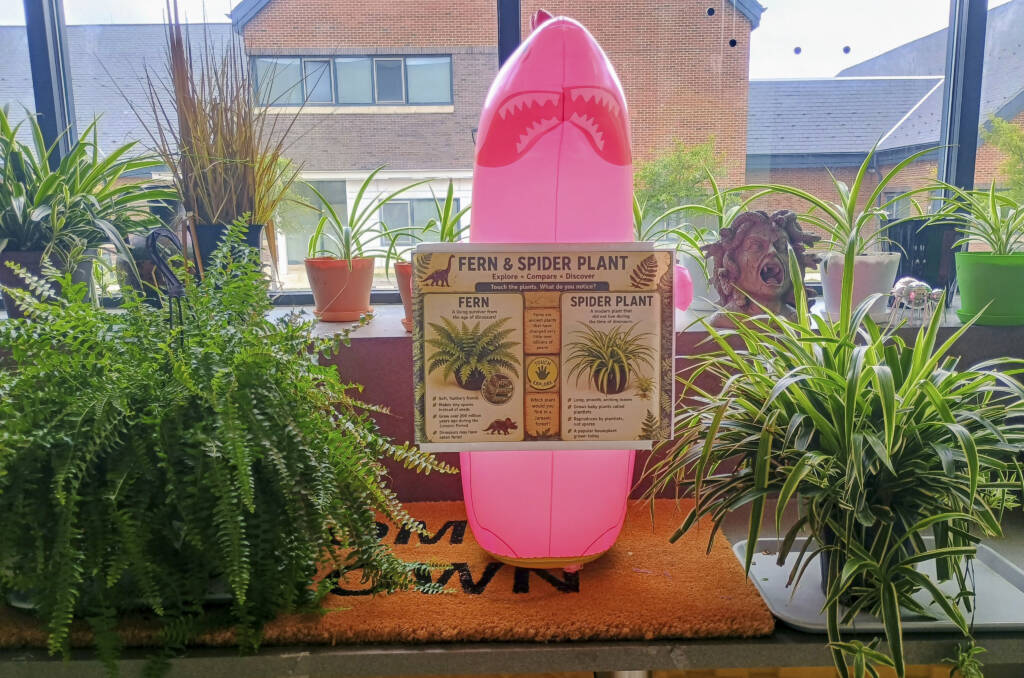
Students compared live ferns and spider plants while discovering that ferns lived during the age of dinosaurs, connecting horticulture to prehistoric life.
Audio enhancement
A laptop connected to a Bluetooth speaker continuously played an audio soundtrack featuring a variety of dinosaur sounds. The background sounds increased engagement, created an immersive atmosphere, and encouraged students to imagine what a prehistoric environment might have sounded like as they explored each station.
Conclusion
These accessible learning stations combined tactile exploration, braille, audio, real plants, and hands-on discovery to build science concepts, vocabulary, independence, and curiosity.