As a Teacher of the Visually Impaired (TVI), I am constantly looking for ways to bridge the gap between abstract concepts and meaningful, real-world learning. How many times have you worked with a student who could decode the braille or print word for “toothbrush” or “spatula,” but had no idea what the actual object felt like, how heavy it was, or what purpose it
served in daily life?
When budget season rolls around, or when money is tight, as it so often is in school districts, we don’t always need high-tech devices or expensive specialized kits to build solid foundational skills. Sometimes, the most powerful learning tools are items sitting right inside your kitchen drawers, bathroom cabinets, or closet racks.
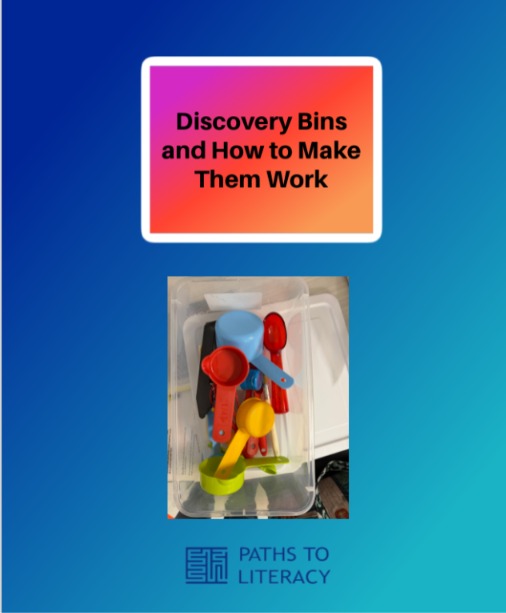
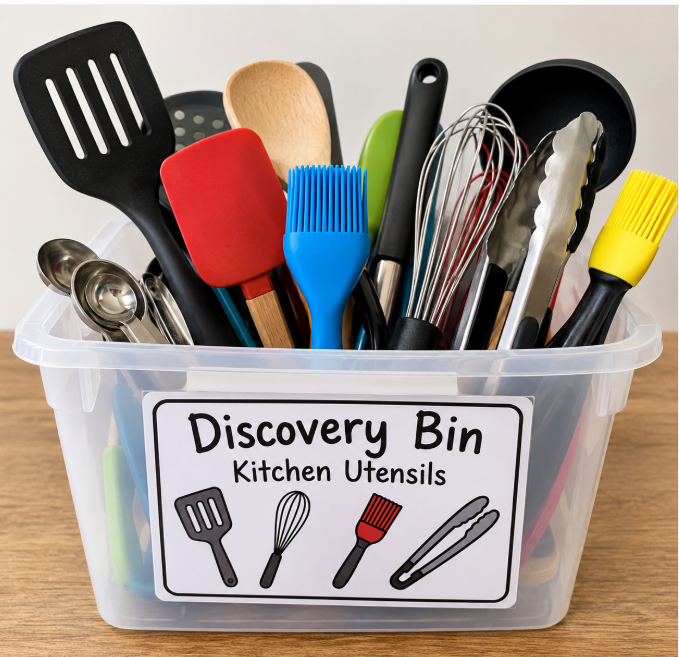
Enter discovery bins: focused, functional collections of real, everyday objects designed to build practical living skills, foster conceptual understanding, and support functional literacy. When I met with one of my life skills teachers that I was creating these bins for, she helped me create the name for them as they are NOT sensory bins.
Discovery Bin vs. Sensory Bin: What’s the Difference?
Before diving into discovery bins, I want to explain the differences the way I see it. In early childhood and special education classrooms, a “sensory bin” is a major buzzword. While sensory bins are fantastic for tactile exploration and processing, a discovery bin serves a very different primary purpose.
Here is how I break down the distinction for TVIs, occupational therapists, teachers, and paraprofessionals:
| Feature | Sensory Bin | Discovery Bin |
|---|---|---|
| Primary Goal | Tactile/sensory exploration, processing, and regulation. | Skill acquisition, functional independence, and conceptual literacy. |
| Typical Fillers/Contents | Unstructured fillers (rice, dry beans, water beads, shredded paper, kinetic sand) with small embedded toys. | Functional, real-life objects used in everyday routines (no loose filler needed). |
| Focus Skill | Tactile discrimination, tolerance of varied textures, motor play. | Independent living skills, motor planning, object identification, sequencing. |
| Context | Often abstract or open-ended (e.g., digging plastic dinosaurs out of dry rice). | Anchored directly to daily routines (e.g., setting a table, getting dressed). |
| Literacy Connection | Describing textures (rough, squishy, smooth). | Functional reading/labeling, vocabulary building. |
Three Practical Discovery Bin Ideas to Try Tomorrow
When building a discovery bin, I tend to stick to a single everyday routine. Ensure every item inside is authentic—skip the tiny plastic toy play sets! Our students need the real weight, texture, cold metal, and mechanical feedback of the tools they will encounter at home and in the community.
1. Kitchen Helpers Bin
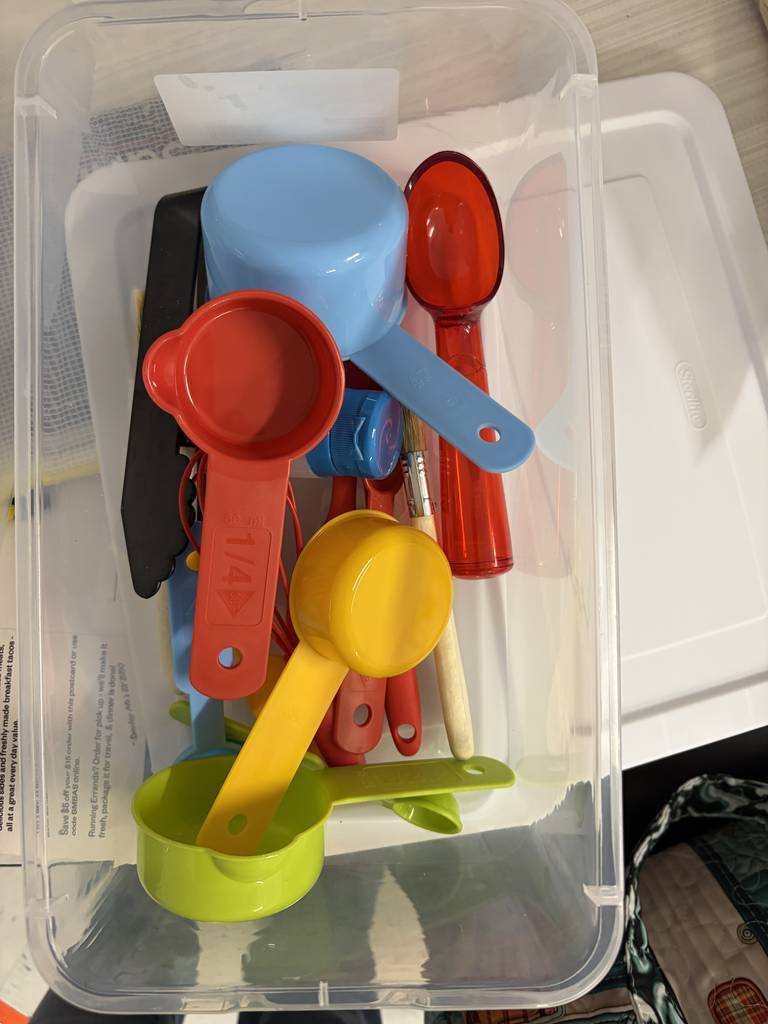
Cooking and meal prep are cornerstones of the Expanded Core Curriculum (ECC). A kitchen discovery bin lets students build hand strength, practice bilateral coordination, and learn tool function without the stress of an active, hot stove.
- Possible items to include: measuring cups and spoons, a wire whisk, rubber spatulas, a plastic rolling pin, a non-sharp hand rotary eggbeater, plastic food storage containers with matching lids, and small drying towels.
- Skills to target:
- Bilateral coordination: for example, holding a bowl with one hand while using a whisk or rotary beat with the other.
- Size concepts & matching: for example, nested measuring cups, matching lid sizes to containers.
- Literacy & braille: for example, add braille or large-print tactile labels to the handles of measuring spoons or containers. Have the student match the labeled measuring cup to a visual/tactile recipe card.
2. Personal Care Bin
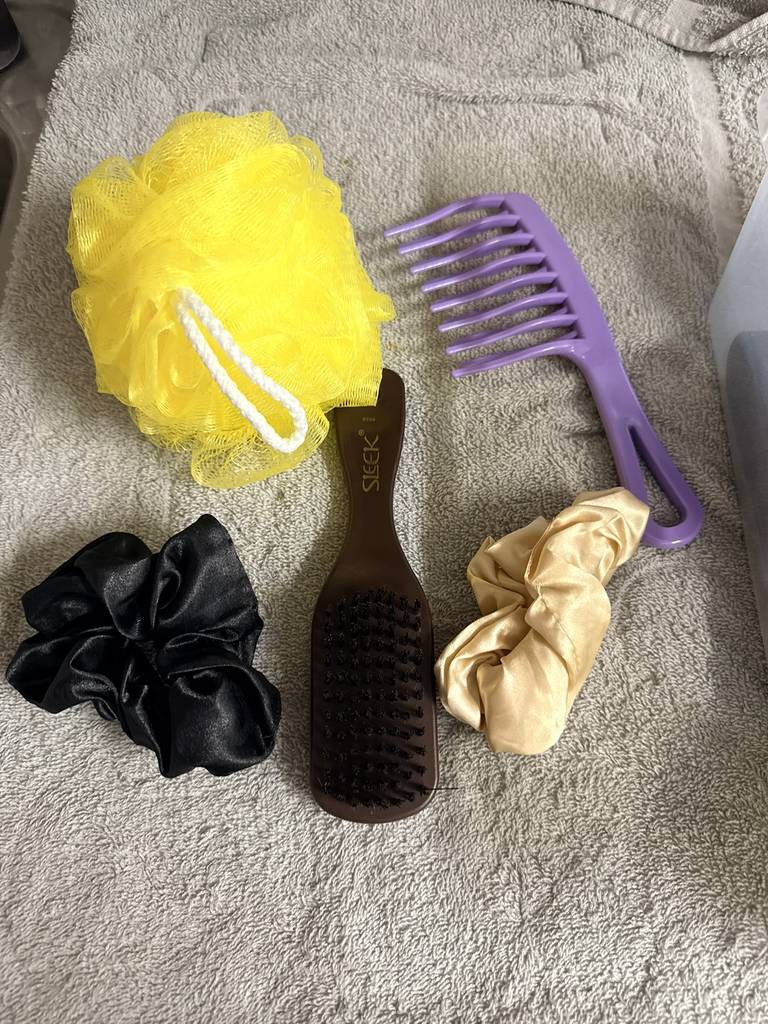
Hygiene routines can be challenging for students with visual impairments who cannot observe others performing them as well as physical limitations they may have. This bin allows for low-pressure exploration of items used during personal care routines.
- What to include: A soft hairbrush, a wide-tooth comb, an unused toothbrush, a tube of toothpaste (or empty tube for practice), a soap box, an empty travel-sized lotion bottle with a flip top or pump, and a washcloth.
- Skills to target:
- Fine motor control: squeezing a tube, opening flip-top caps, depressing a lotion pump.
- Tactile discrimination: differentiating between the bristle side and handle side of a brush or toothbrush.
- Sequencing: have the student order the objects from left to right in the exact sequence they would use them during a morning routine.
3. Getting Dressed Bin
Dressing skills require significant finger dexterity, palmar grasp, and motor planning. Practicing on clothing items placed flat on a lap or desk helps students master fasteners before trying to manage them on their own bodies.
- What to include: Heavy-duty coats/jackets with large plastic zippers, shirts with varied button sizes, trousers with snaps and belt loops, shoes with Velcro and lace options, and a clip-on or adjustable belt.
- Skills to target:
- Fastener mastery: pinching and buttoning, aligning zipper pins into slider boxes, pressing snaps together until they click.
- Spatial orientation: orientation of garments (finding the collar, locating sleeves, distinguishing front from back using tactile tags).
- Vocabulary: building words around clothing parts (cuff, hem, collar, buttonhole, eyelet).
Integrating Literacy into Discovery Bins
A discovery bin isn’t just a tub of objects—it’s a gateway to literacy and independence! Here are a few ways I plan to integrate print and braille practice into bin exploration:
- Object-to-label matching: place braille or large-print index cards in the bin. Have the student read the card and attach it to the corresponding item using a binder clip or Velcro dot. Or create tactile symbol cards to match to the real object.
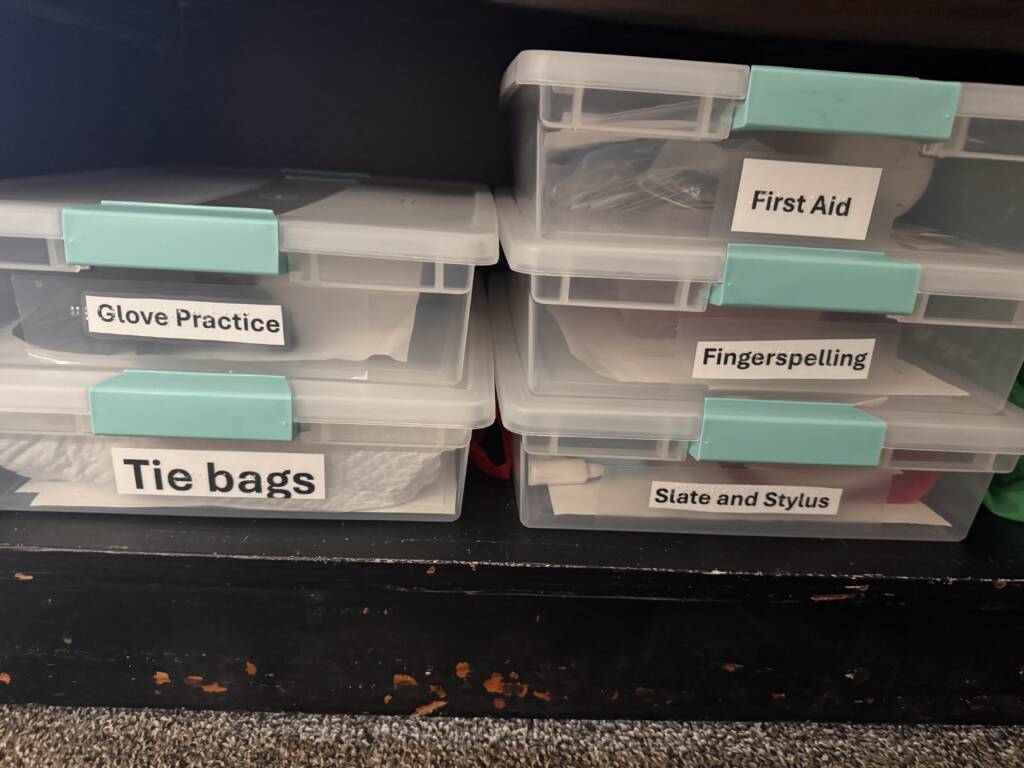
- Can-you-find inventory lists: create a print/tactile check-off list. As the student pulls each item out, they read the word and check off the item on their braillewriter or slate and stylus.
- Experience stories: after exploring the bin, have the student write a short sentence or story about what the tool is used for, or dictate a short story to you if they are an early reader. This story can then be used at school and a copy can be made for home use.
- Give Discovery Bins a try in your classroom or with your itinerant caseload! You’ll be amazed at how quickly real objects spark conversation, build confidence, and bring practical literacy to life.
As a final thought, always ground learning in real, concrete objects whenever possible. However, be mindful of physical limitations – a standard can of corn may be too heavy or wide for a student to grasp comfortably. In those moments, lightweight toy food items are a practical substitute. Be sure to pair the toy model alongside the real object so the student can explore, compare, and build meaningful concepts.
Resources
- Active Learning Space: Perkins School for the Blind, & Texas School for the Blind and Visually Impaired. (n.d.). Active learning space. Retrieved October 11, 2026, from
- Paths to Literacy: Perkins School for the Blind, & Texas School for the Blind and Visually Impaired. (n.d.). Paths to literacy: For students who are blind or visually impaired.
- TSBVI Independent Living Skills: Texas School for the Blind and Visually Impaired. (n.d.). Independent living skills. Retrieved October 13, 2026, from Occupational Therapy Resources
- The OT Toolbox: Beck, C. (n.d.). The OT toolbox: Tools for play, learning, and skill-building.
- OT Practice (AOTA): American Occupational Therapy Association. (n.d.). OT practice magazine.