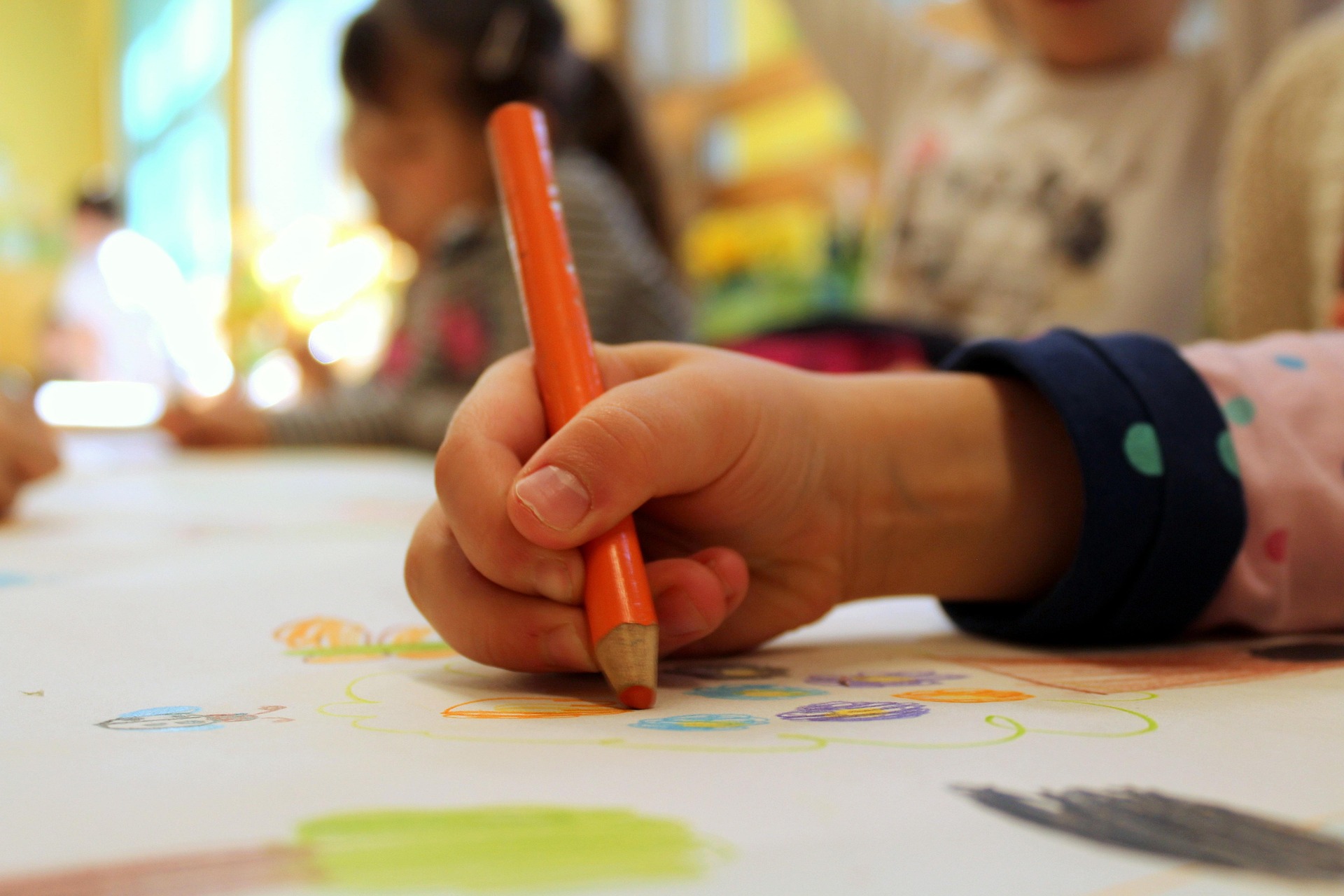
If you have ever spent a Tuesday morning taking data on pre-writing and pre-braille IEP goals, you know the drill: “Draw a line from left to right. Draw a line from top to bottom. Use your helper hand to hold the paper.” Rinse, repeat, and hope nobody tries to eat or throw the crayon/marker/pencil/stylus before you get three out of four trials recorded. It can be tedious for everyone in the lesson.
Foundational motor and tracking skills are critical for our students, especially as building blocks for tactile exploration, braille tracking, and early literacy. Still, after enough rounds of horizontal and vertical line practice, even the most enthusiastic learner starts looking at a blank worksheet like it personally offended them. Even adding stickers or tactile markers to draw the lines between can still feel boring. I wanted a way to make these essential IEP goals genuinely meaningful, funny, and memorable for the ten of my students working on this goal and to remind anyone watching just how much our kids can accomplish when we raise the bar.
My inspiration came from meeting the illustrator and the author of “Constance the Cowlet” this past summer at a conference. Her motivation to share her child’s ability to the world motivated me. Something about the whimsical storytelling and charming character perspective got me thinking about the untapped personality hiding in our own daily classroom routines.
What if the lines my students were practicing weren’t just static marks on a page for data collection? What if those lines were actually alive and absolutely refused to be erased?
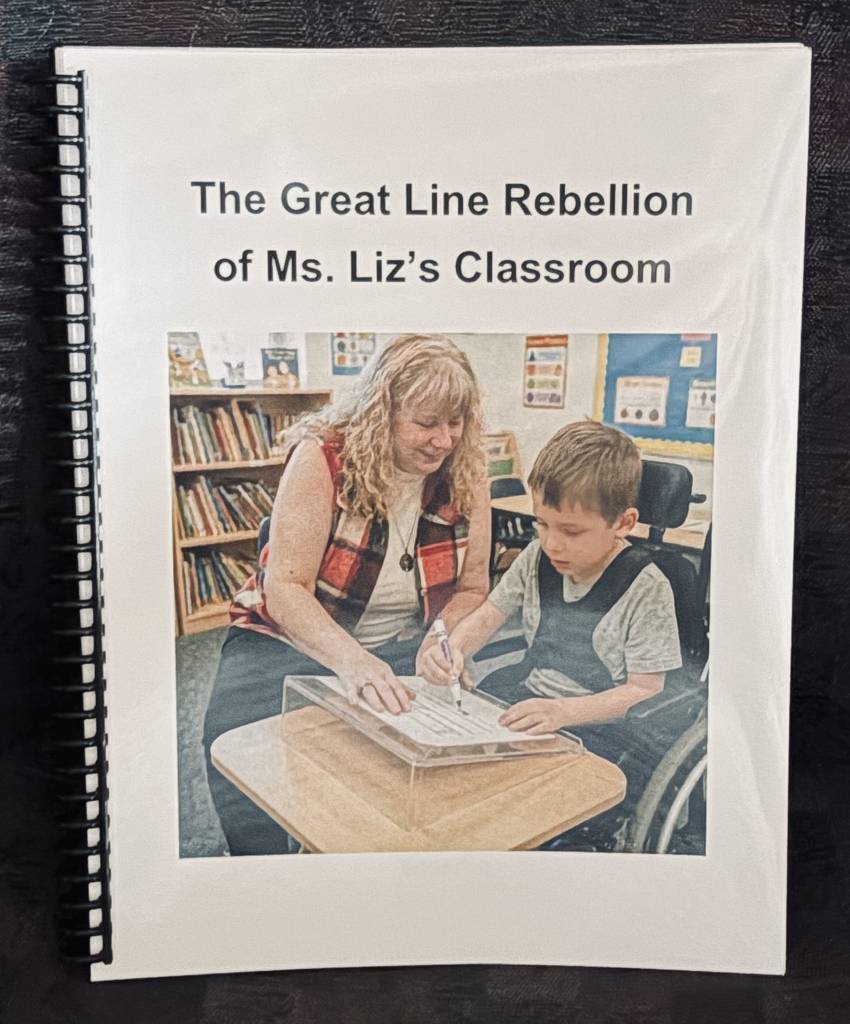
That simple and completely mischievous question became the premise for our very own book, The Great Line Rebellion of Ms. Liz’s Classroom.
In the story, I cheerfully announce a Tuesday line-drawing lesson, completely unaware that the crayon, marker, and paint lines on my students’ desks have minds of their own. Every time a student picks up an eraser or scraper to fix a stray mark, the lines panic, tiptoe across the page, pile on top of one another, and giggle in secret hideouts. Writing this story had me in stitches as I giggled away writing this story. Rather than an art project to focus on a prerequisite skill, this activity was our IEP instruction. When you teach students with visual impairments as well as with complex needs, it is easy to fall into the predictable rhythm of running trials, marking a data sheet, and tucking the paper into a folder.
Yawn! I wanted to think outside the box. What if those frequent line-drawing sheets/activities weren’t headed for a filing cabinet at all? What if they were the official illustrations for a real classroom book? Hmmmm…
Once I pitched the idea of using their artwork as book illustrations, the entire energy in my lessons shifted. Instead of treating their drawings as routine fine-motor drills, I asked each student to tell me about the lines they had made. Whether a student shared their thoughts through words, gestures, big expressions their unmistakable excitement to help drive the plot. I took notes while we worked. Suddenly, the lines weren’t just marks for a progress report – they were reflecting the humor, determination, and quirks of the ten young artists sitting in my lessons. My students had final say as to which of their work products would become the illustrations in the book.
The main focus on the lessons, based on their IEP goals/objectives were:
- Left-to-right progression: practicing horizontal movement across the page, which builds the directional tracking habits needed for both print and braille reading.
- Top-to-bottom directionality: developing vertical control and spatial awareness from the top of the workspace to the bottom.
- Bilateral coordination (using both hands together): Encouraging students to use their non-dominant “helper” hand to stabilize the paper or slant board while their dominant hand draws.
To make sure every student could access the activity, I adapted the tools and setup to match the individual visual and physical needs. I used slant boards, clipboards, high-contrast markers, chunky crayons, paint sticks, and bright visual targets (i.e., stickers, drawn dots). Consults with OTs occur throughout the school year to keep the student’s needs embedded in
all lessons. The best part of “The Great Line Rebellion” is that I did not need to hire nor find an outside artist. My ten students who were willing and interested illustrated every single page. By weaving their actual lesson drawings into the narrative, every student’s unique motor style and level of independence became an essential plot twist:
- Bella chose to use Easy Grip Crayons and the ReadWrite Stand to create her colorful artwork where her lines could snuggle together away from the eraser.
- Brianna used Tempra Paint Sticks and the ReadWrite Stand to paint an original design, before testing out a Paint Scraping/Texturizing Tool.
- Dominic chose to use Easy Grip Crayons and a clipboard to help him secure his work as he learned how to hold the crayon as well as make marks with it.
- Genevieve chose to use Crayon Extra Jumbo So Big and the ReadWrite Stand using her favorite color to do her work as she worked from left to right, top to bottom using both hands.
- Joziah chose to use Crayola Broad Line Markers over his usual color pencils. He indicated he wanted his picture to “POP” as he worked on creating a bold rainbow of horizontal stripes snuggled together tightly laughing that “no eraser could move them”. Because of this comment, the eraser became a character.
- Laylah was given several options to try as this activity was new to her. Her small hands found success with using the Easy Grip Crayons and a clipboard to help her secure her work. The initial blue line was a collaborative effort where I am guiding her hand across the page to feel the motion. But the pink lines that followed belonged entirely to her.
- Nathan chose to use Crayon Extra Jumbo So Big and a clipboard as he worked on making swirls and big loops to make it harder to erase.
- Nathaniel also chose to use Crayon Extra Jumbo So Big and a clipboard as he practiced drawing straight lines and zig-zags that crossed over each other.
- Peyton used Easy Grip Crayons and the ReadWrite Stand as she worked on left-to right tracking by drawing lines connecting Happy Smile Face Stickers.
- Yesenia used Crayola Colored Pencils and the ReadWrite Stand as she filled her entire page with repeating circles, loops, and bubble shapes that she informed me “rolled away like little balls of fun playdoh.”
There is a quote I heard somewhere that sums up my teaching philosophy: “Same Students, Different Pathways, Same Potential.” I don’t know the author as I’ve never found whom to credit for this quote, but I find it so very true. Especially as I work with my students. Too often, students with visual impairments and complex learning needs are met with lowered expectations. People look at a checklist of foundational goals such as holding a paper steady with two hands or drawing a straight line and frequently mistake the starting line for the finish line. When we reduce learning to repetitive drills without joy, imagination, or purpose, we underestimate what our students are truly capable of understanding and creating.
When I sat down to read the final version The Great Line Rebellion aloud to my students, they erupted with laughter. My students enjoyed seeing their own hard work on the pages. They weren’t just “working on fine motor goals” anymore…they were now published illustrators sharing an inside joke about giggling crayons. There are no words to describe how their faces it up when turning the page to see the image they created or hearing the story I created featuring them on the page.
The Great Line Rebellion of Ms. Liz’s Classroom book
Ideas for trying this in your classroom
If you want to turn your students’ IEP skill practice into a collaborative story, a few simple strategies make all the difference based on what I learned from this first attempt.
- Anchor the endpoints: use high-contrast or tactile stickers (like smiley faces) on the left and right or top and bottom of the page so students have a clear, concrete visual or tactile target to connect.
- Validate every attempt: whether a student works hand-under-hand, uses a slant board, or draws independently, celebrate their contribution equally in the story as well as in every lesson.
- Lean into humor: giving everyday classroom tools a little personality, especially that dreaded eraser, it keeps students engaged far longer than a standard worksheet ever could. I started off making voices for the tools and soon my students were doing it. Laughter definitely made our lessons!
- Read it together: I displayed the finished book in an accessible format so students could experience the pride of seeing their work come alive.
- Tailor the reading level last: I edited the story several times until I was happy with the overall flow, then I sent my draft to a friend to edit and give me honest feedback on.
- I used Google Gemini to adjust the text to a 2nd-grade reading level so it was accessible for my students.
- I also used Google Gemini to create the images for the few pages without my students illustrations. That was also funny as I played around with the wording for my facial expressions!
Just jump in and try it, don’t be afraid to take the leap and explore the possibilities of bringing a story to life with your students’ help. You can even include them in the writing and editing process, brainstorming together naturally weaves in communication, turn-taking, and cause- and-effect concepts while giving them real ownership over their work. That sense of pride makes the whole experience as well as adding to their IEP practice so much more meaningful!