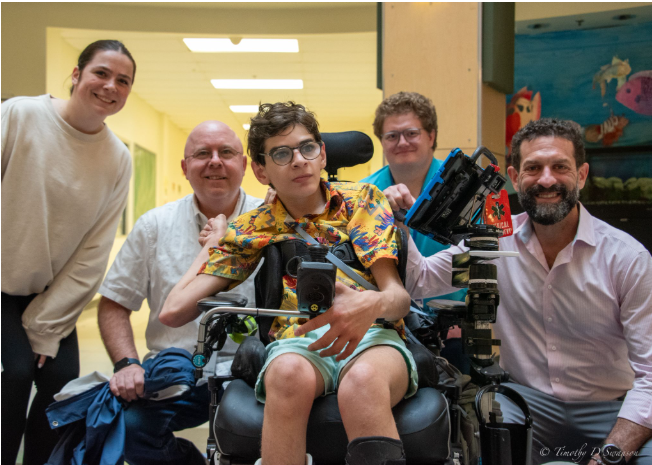
The in-service day included a session called “Modifying Materials for Students who are Braille Readers.” Many of these paraprofessionals are also learning braille along with their students. They are supported by their TVIs (Teacher of Students with Visual Impairments) to create accessible materials in the classroom setting.
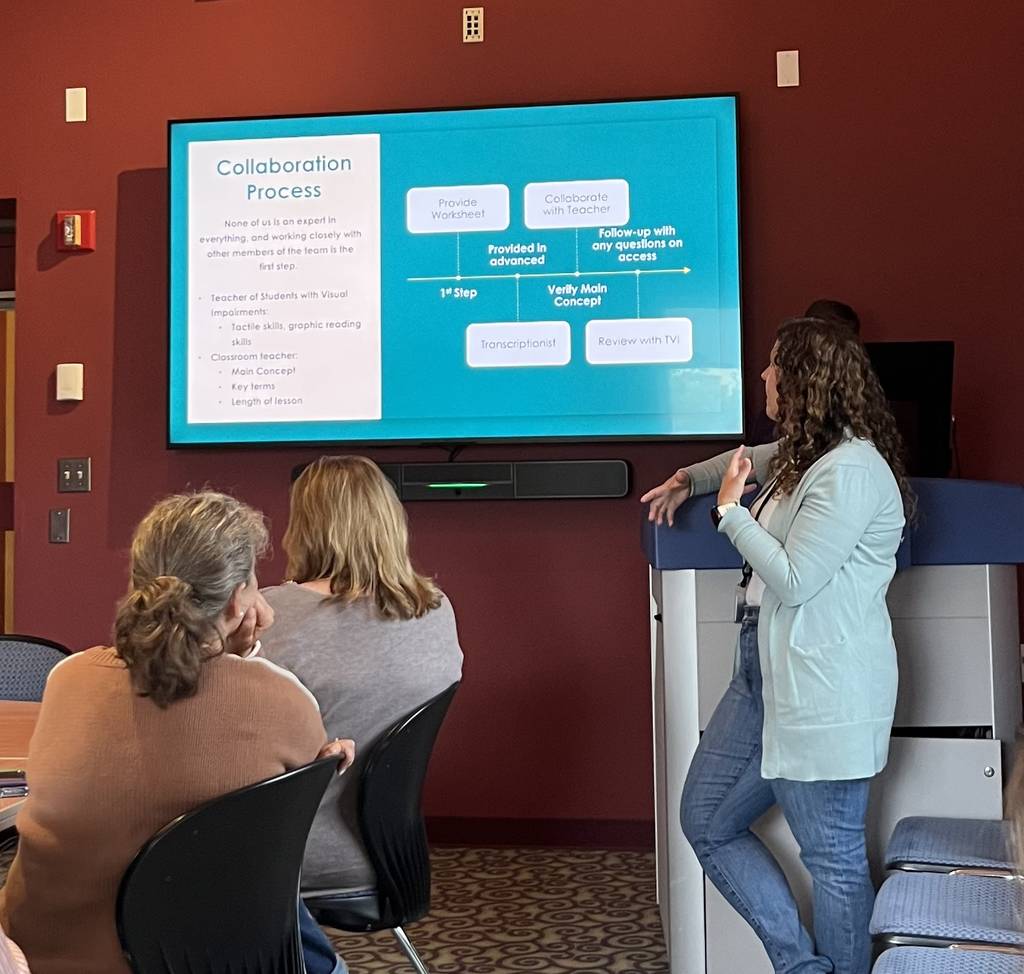
The BESB TVI team provided strategies, inspiration, and specific examples of materials and tools used with their students who read braille. It was a time to consult, collaborate, and talk with others who have similar roles.
Important questions to ask when modifying materials
- What is the student expected to know? Focus on actual content.
- How does your student use their tactile skills? Meet them where they are at with a baseline of learning.
- What special considerations are needed? Know your student’s accommodations, strengths, and needs
Developing skills in reading tactual graphics
A summary developed from Tactile Graphics Instruction by Carmen Willings the website Teaching the Visually Impaired.
Tactile Graphics Activities for Students who are Blind or Visually Impaired
1. Sequence of Instruction (Concrete to Abstract)
- Start with real objects: Hands-on exploration of size, shape, and texture before introducing representations.
- Early braille exposure: Daily exploration of labeled items to build sensitivity and symbol recognition.
- Scaffold to graphics: Move step-by-step from real items to models to simple 2D shapes to full tactile graphics.
- Build complexity: Progress from simple, uncluttered graphics to detailed maps and graphs.
2. Fundamental tactile and spatial skills
- Positional concepts: Teach spatial language (above/below, inside/outside, left/right).
- Perceptual skills: Practice line tracking, texture discrimination, and shape comparison.
- Multiple perspectives: Introduce top-down (aerial), frontal, and cross-section views using physical models first.
- Systematic scanning: Practice consistent exploration patterns (top-to-bottom, clockwise) anchored by a reference point.
- Orientation skills: Help students locate edges, corners, and starting points efficiently.
3. Advanced graphic interpretation
- Explicit instruction: Explain graphic purposes and narrate exploration strategies directly.
- Labels and keys: Teach decoding of Braille labels, legends, and keys.
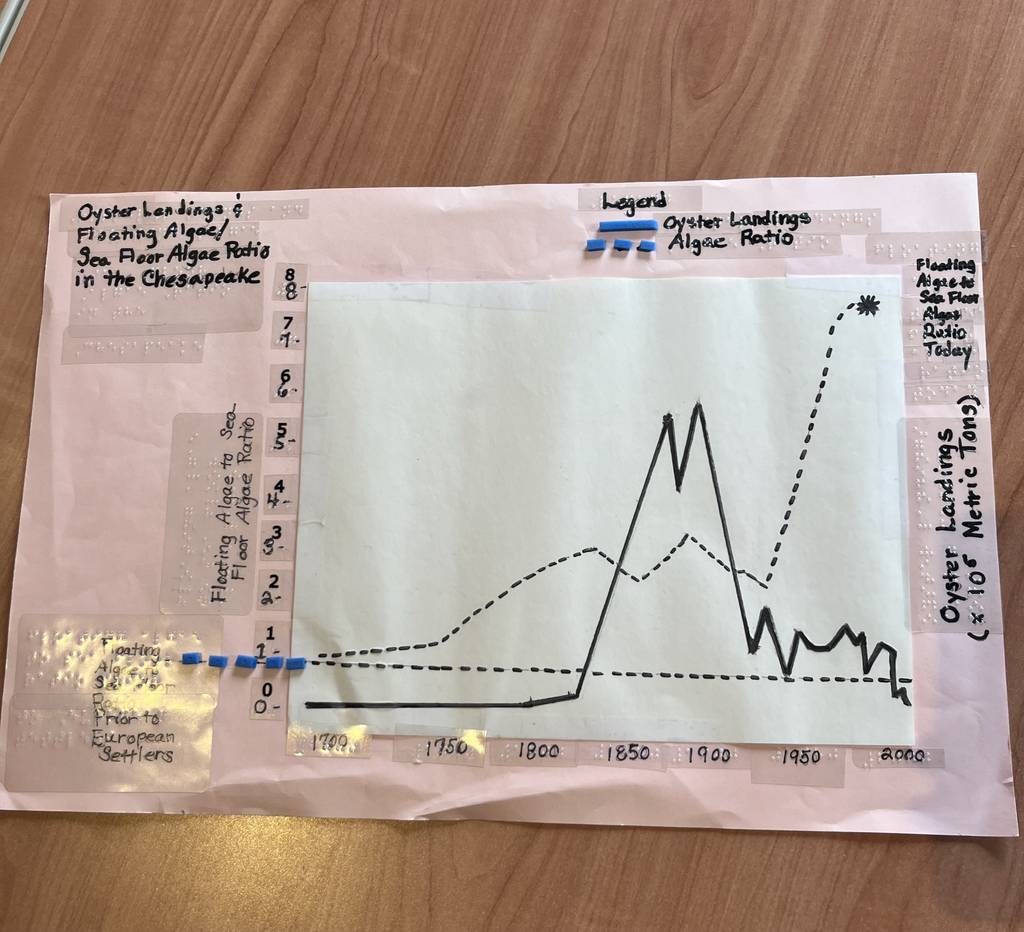
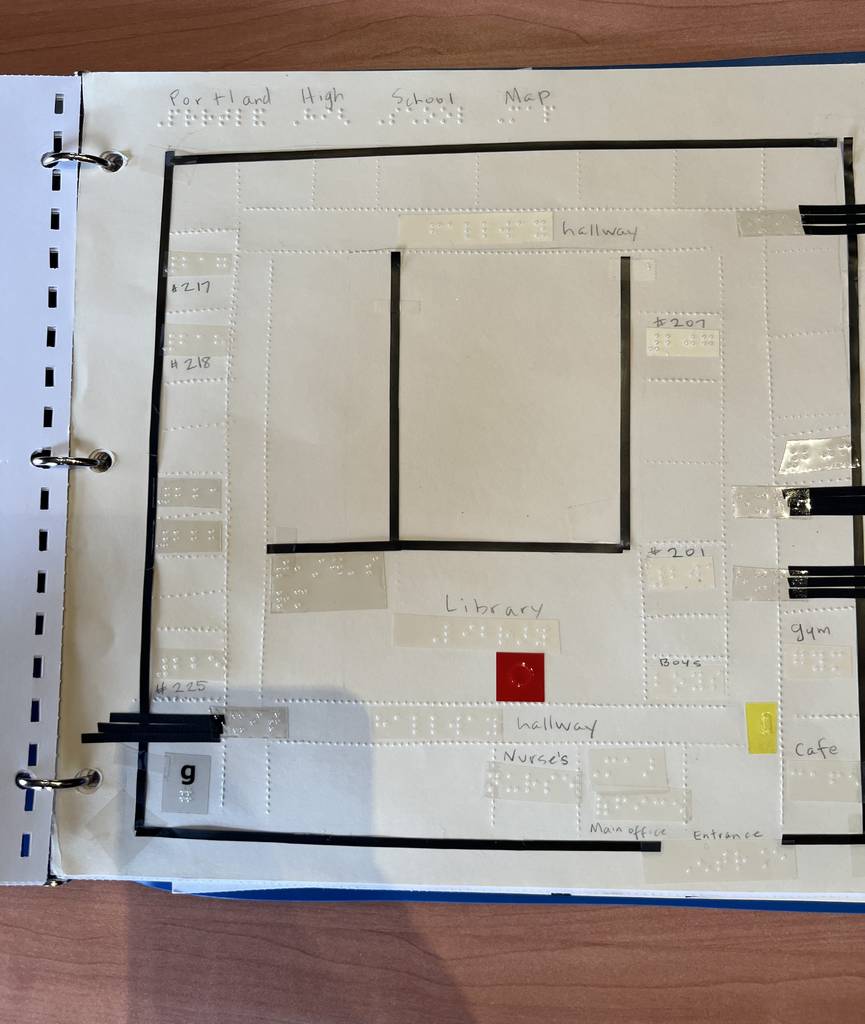
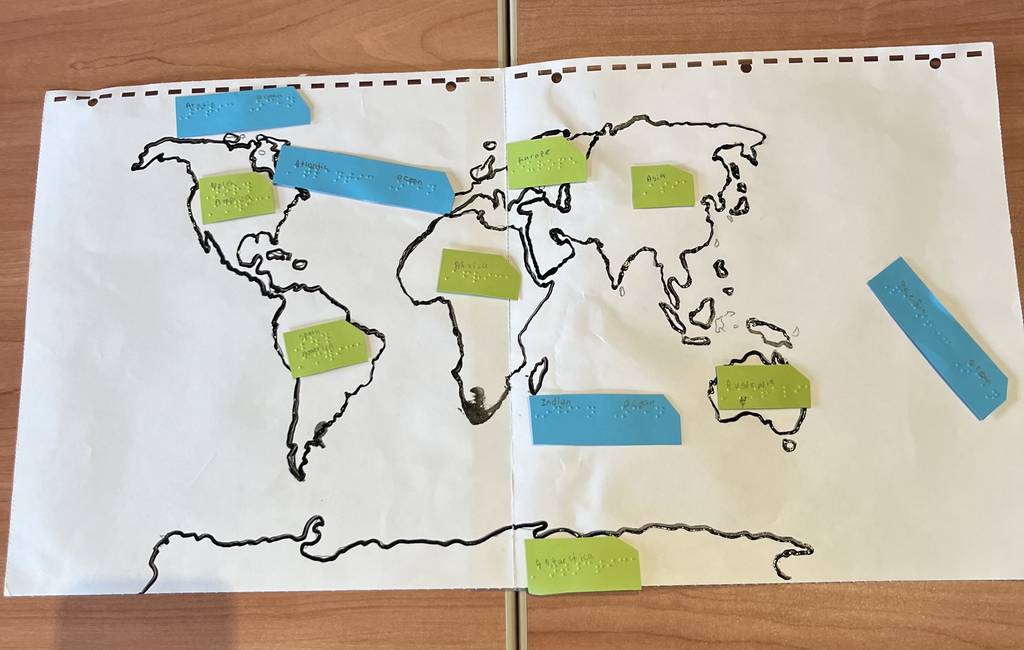
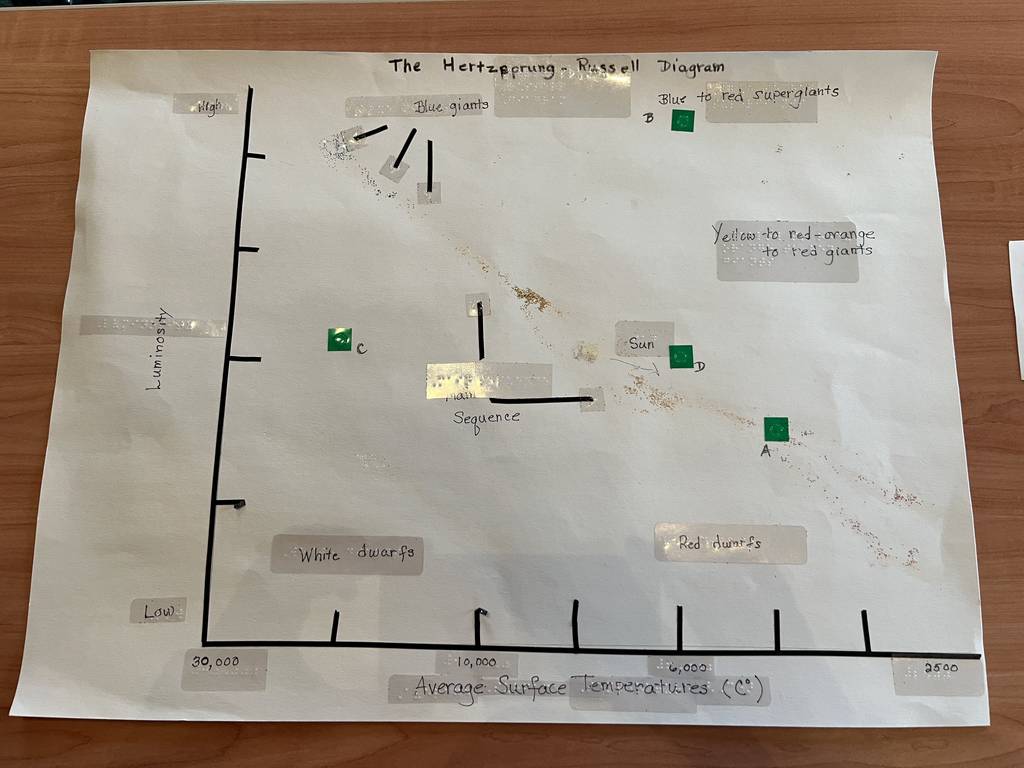
- Specific graphic formats: Provide step-by-step guidance for bar graphs, pie charts, line graphs, and maps.
- Real-world application: Use practical materials like transit maps, weather charts, and recipe diagrams.
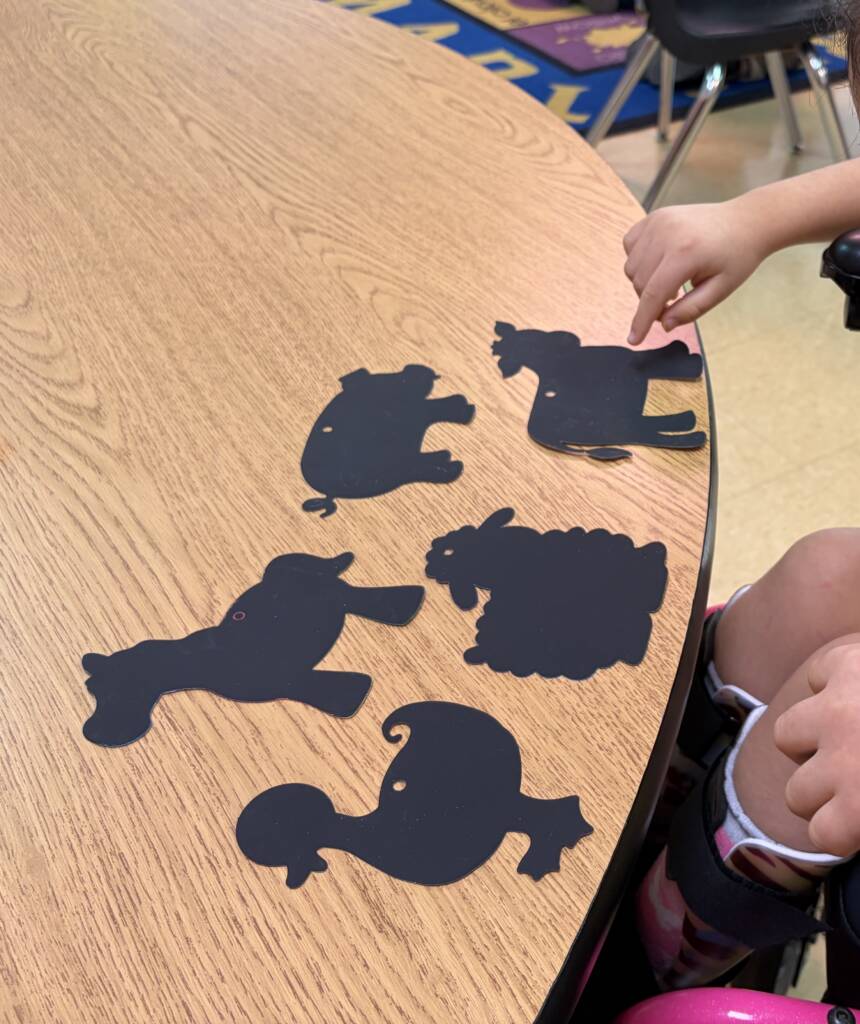
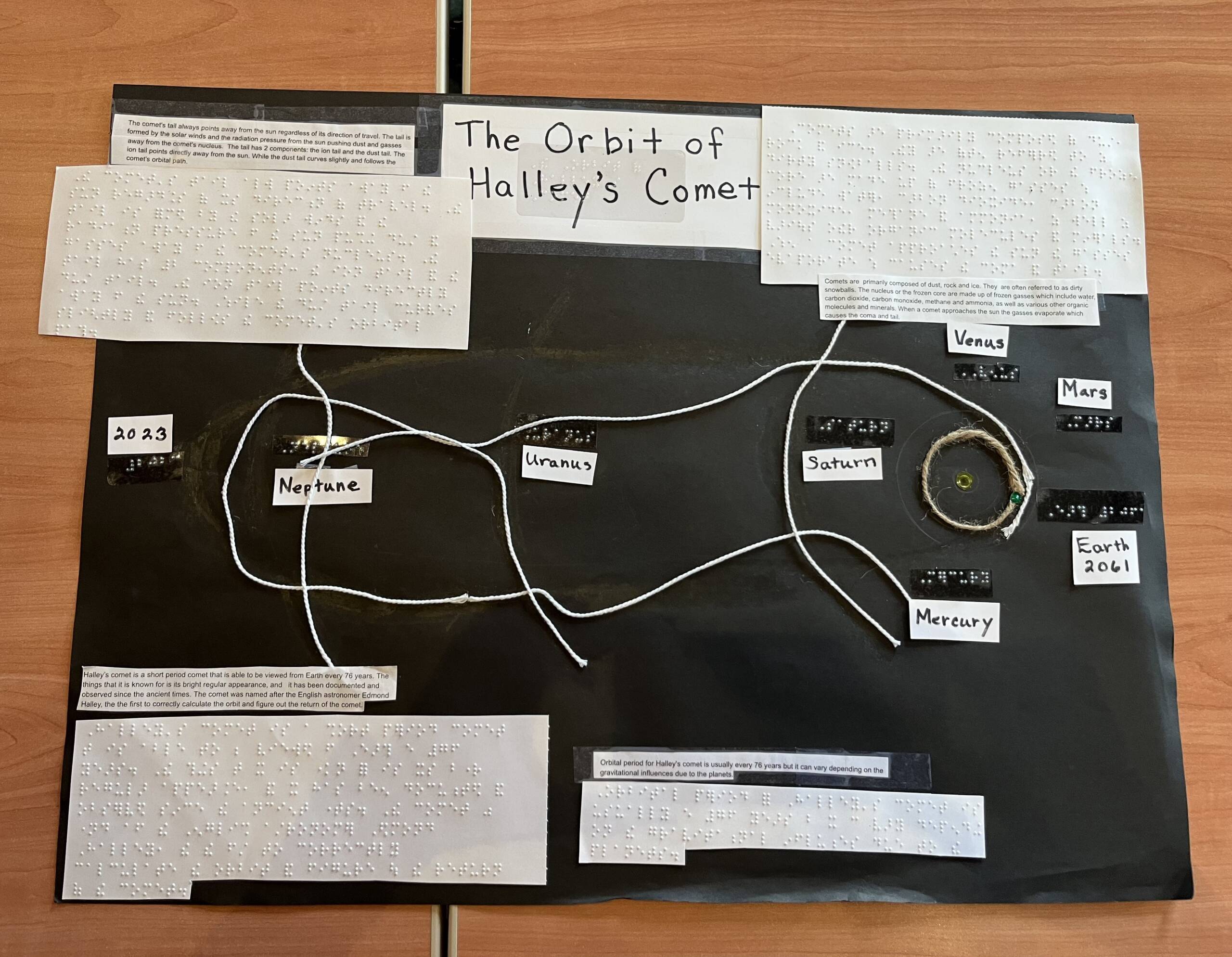
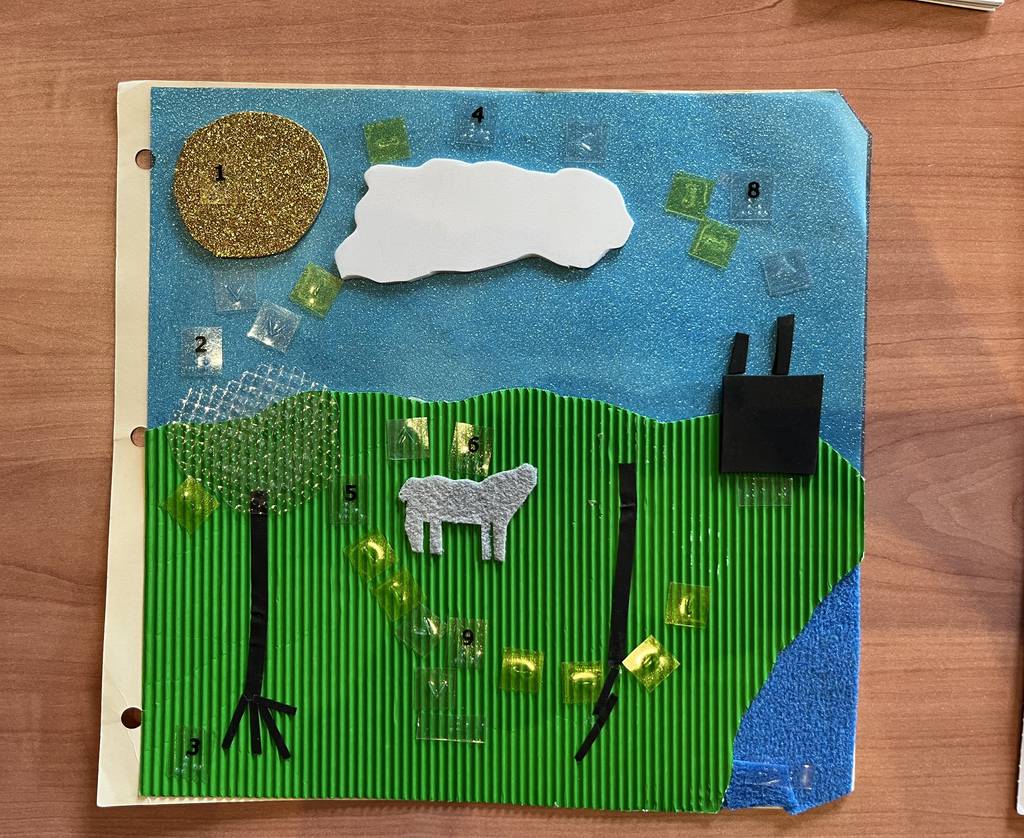
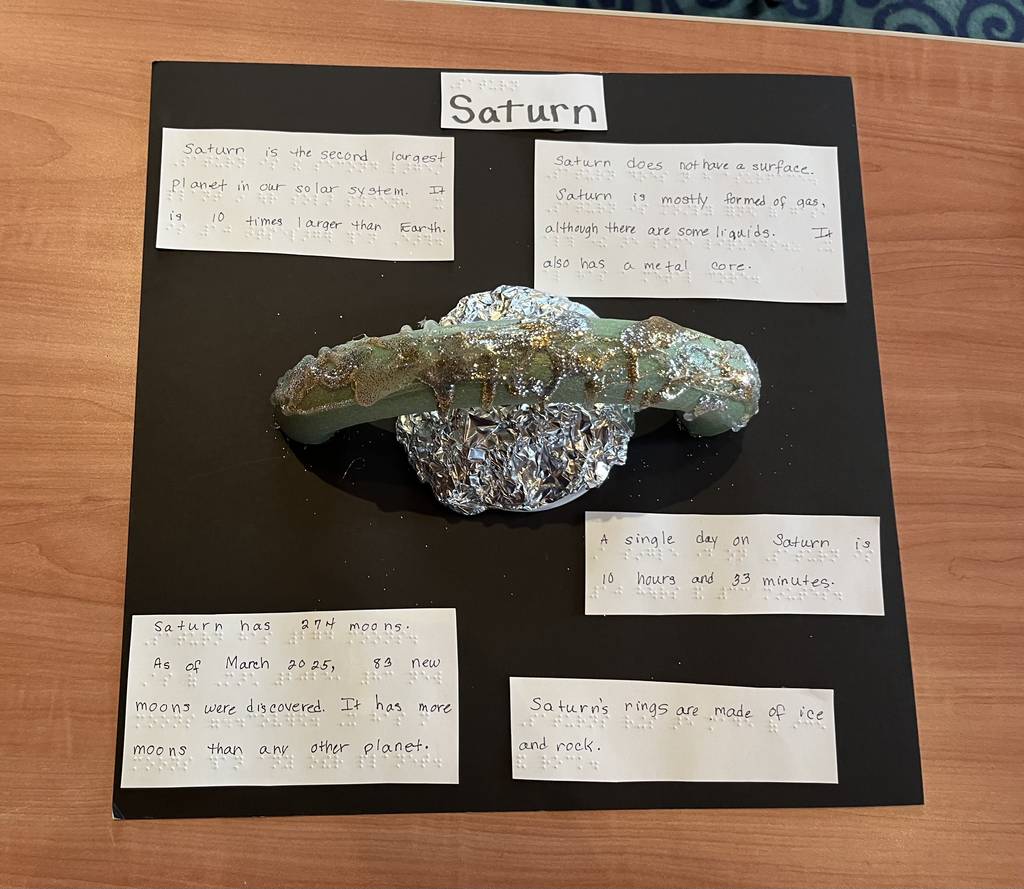
Examples displayed at the session
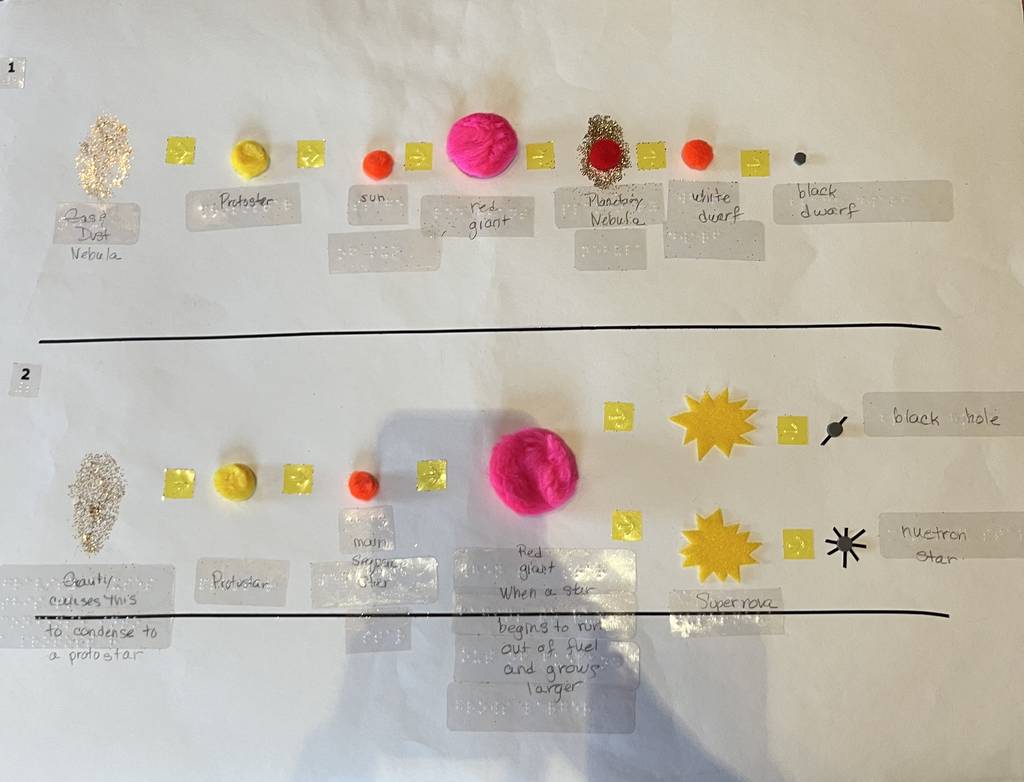
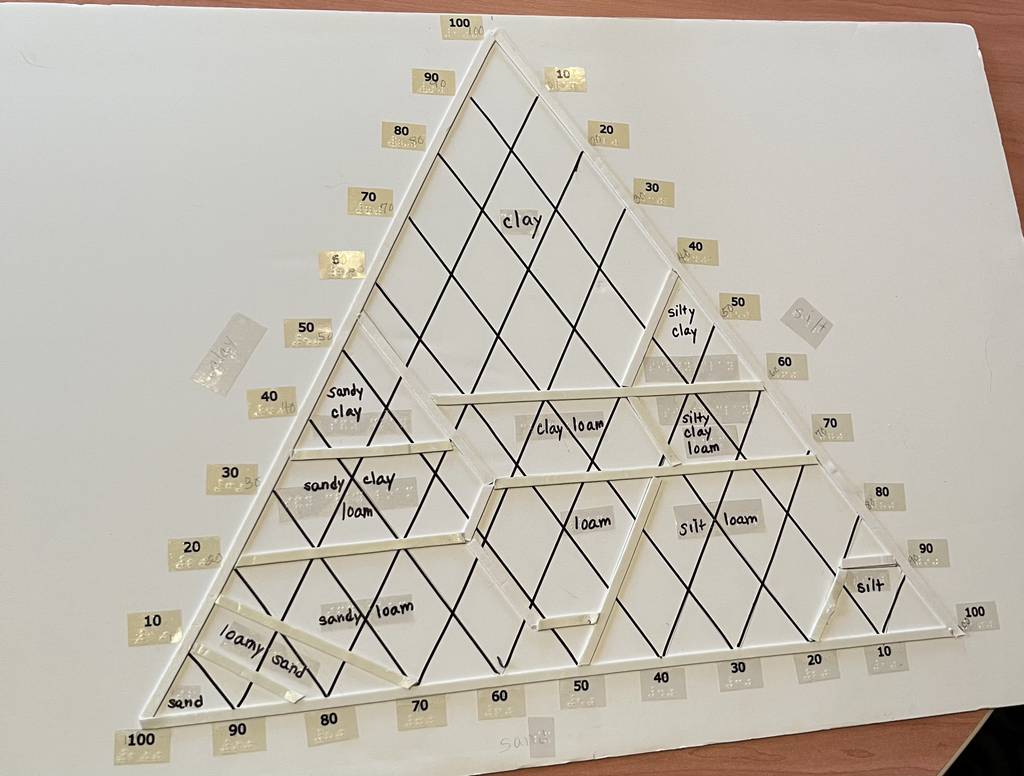
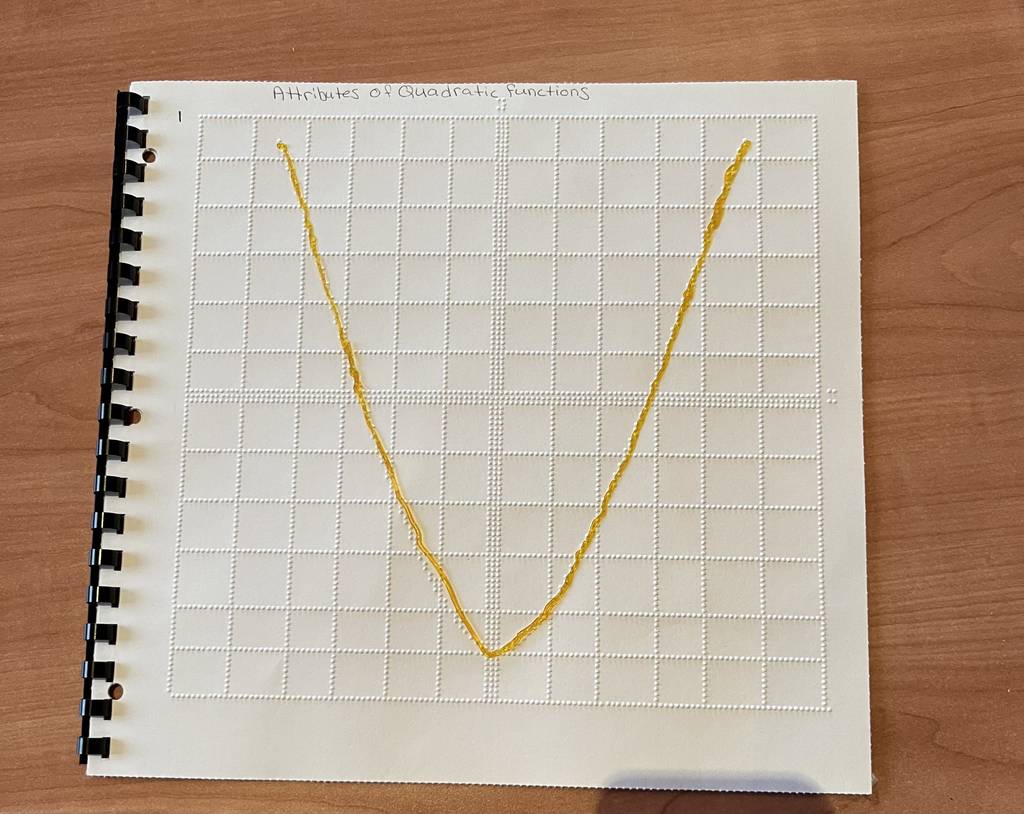
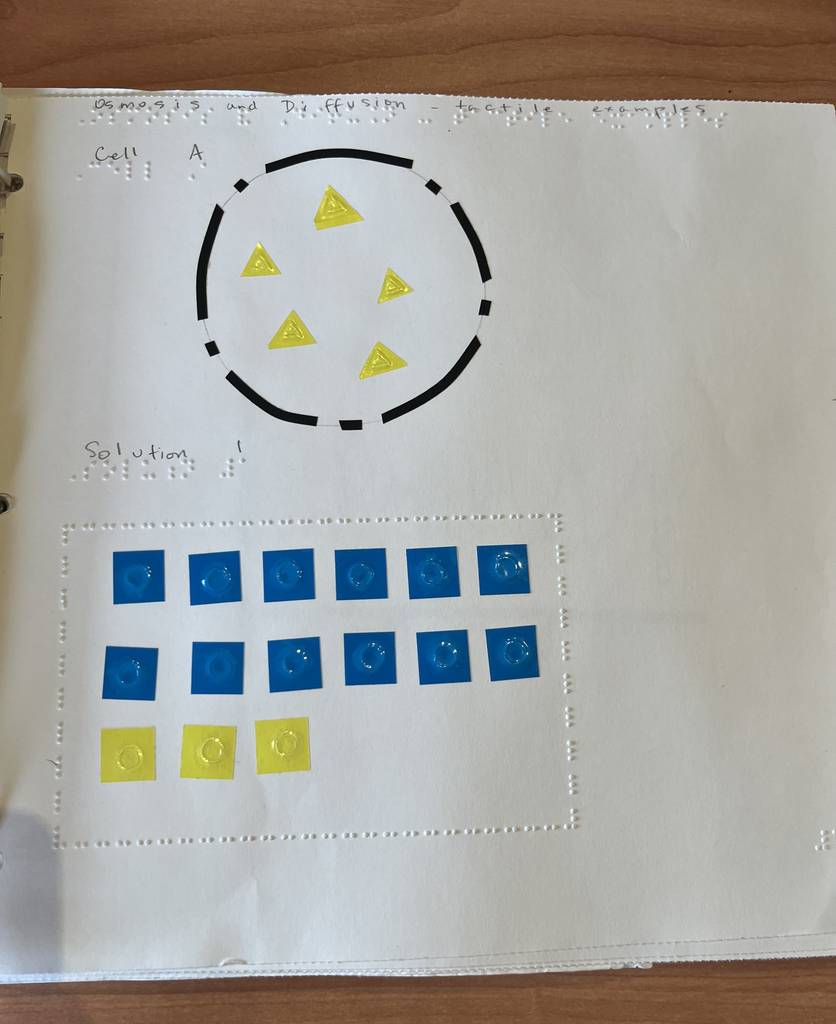




Additional resources
- Design Principles for Tactile Graphics – Keys to Readability
- Design Principles for Tactile Graphics – Planning and Editing

The day was filled with providing staff who attended a network community and ideas for a successful year.
Read more about tactile graphing in our Paths to Literacy micro-site.