We cannot predict what a child with CVI can or cannot do, but we can thoughtfully design instruction that is accessible and meaningful, so they have every opportunity to show us their skills and abilities.” -Marguerite Tibaudo
While wanting to incorporate CVI Awareness Month and learning about the eye, I researched activities online that would meet my needs for my elementary students to learn about their eyes. I found this fun activity from Chalk Academy Parts of the Human Eye DIY Puzzle – Human Anatomy Activity for Kids. The book is called All Children Have Different Eyes: Learn to Play and Make Friends by Edie A. Glaser and Maria Burgio, Ph.D. A sweet story where the reader spends the day with Tommy and Wendy learning about making friends with kids who see differently.
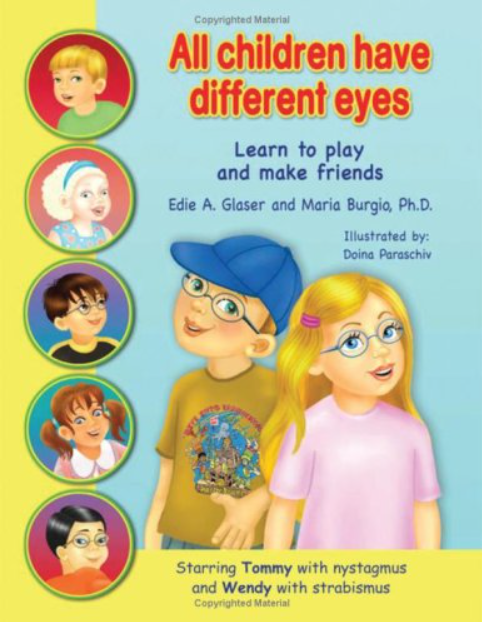
The book description: “All Children Have Different Eyes” empowers children who have visual impairment to deal with their daily social challenges, such as how to respond to bullies, how to explain their condition confidently and how to handle mistakes responsibly. Activities in the back of the book give parents and teachers tools to develop these social competencies every day. After reading this beautifully illustrated story, all children ages 4-8 and beyond will learn how to become better playmates with kids who have physical limitations like Tommy with wobbly eyes and Wendy with crossed eyes, our stars.”
There isn’t a YouTube reading for this book. I read a few pages during each lesson. I especially loved the activities in the back of the book. The activities are paired with pages in the book.
The skills worked on this month are many. Here’s but a few:
- Book knowledge (i.e., title, author, page turning, image walking)
- Use of low vision tools while reading the book
- Develop hand and eye coordination
- Turning pages
- Soliciting assistance appropriately
- Fine motor
- Communication
- Positional concepts
- Choice making
- Careers mentioned in story (including author, illustrator)
For this craft, I needed the following for the students:
- Chipboard sheets
- White foam sticker paper
- Blue, green, and/or brown felt sticker paper
- High dots
- Brown faux fur or light brown faux fur
- Elmer’s glue
- Marker/pencil or name stamp
Activity 1
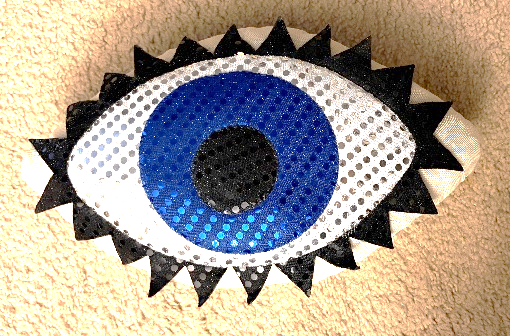
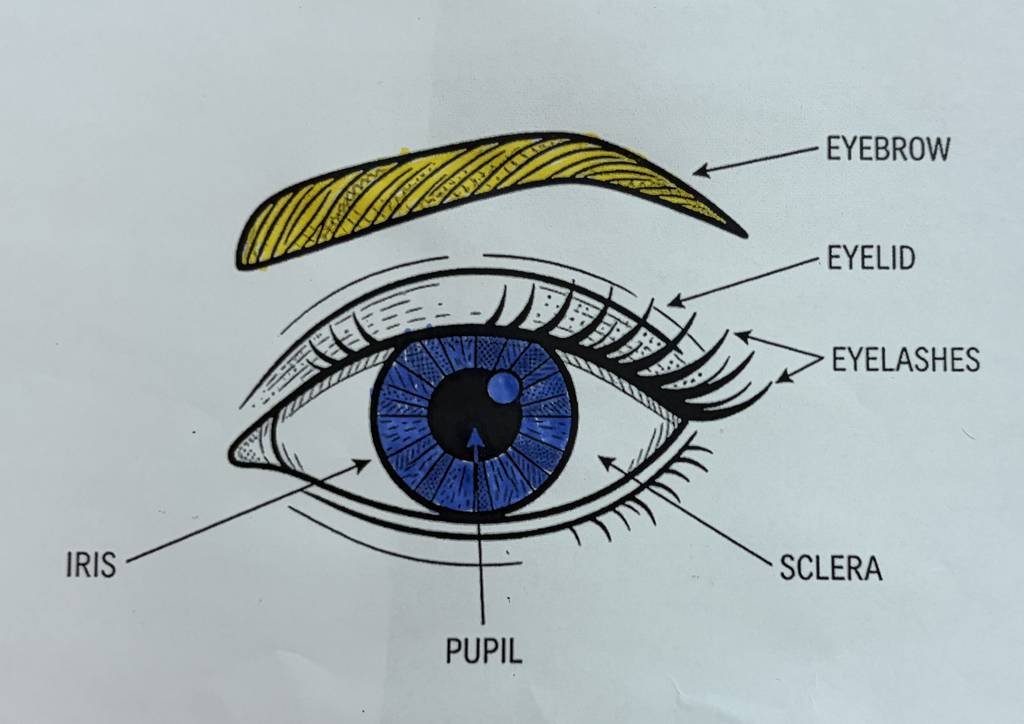
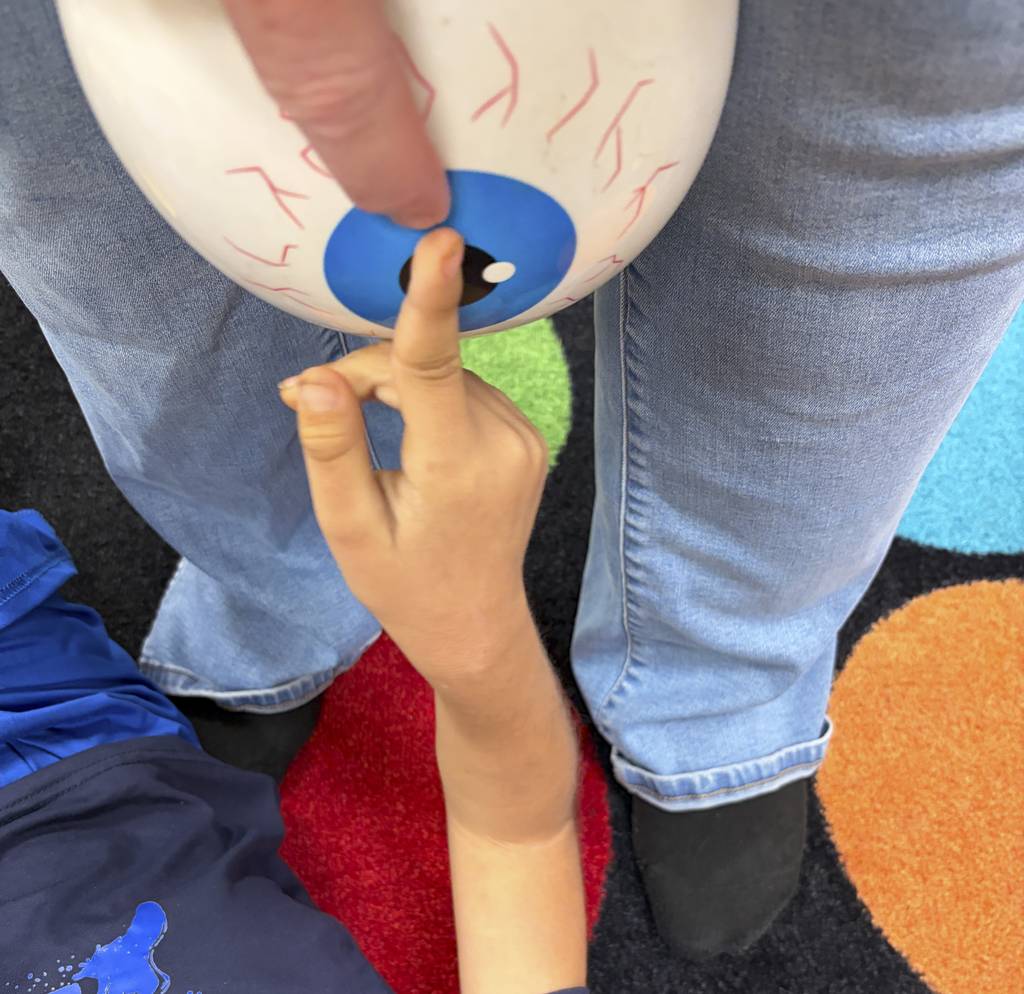
We started off our September crafting with learning about the parts of the eye. We explored an eyeball ball and an eye pillow. The focus was learning eyebrow, eyelid, eyelashes, sclera, iris, and pupil.
I found a black and white version of the eye in my files. No credit given as I don’t know where I obtained it or how long I’ve had it. For a couple of students, I used hot glue to make the image more tactile for them to color.
Activity 2
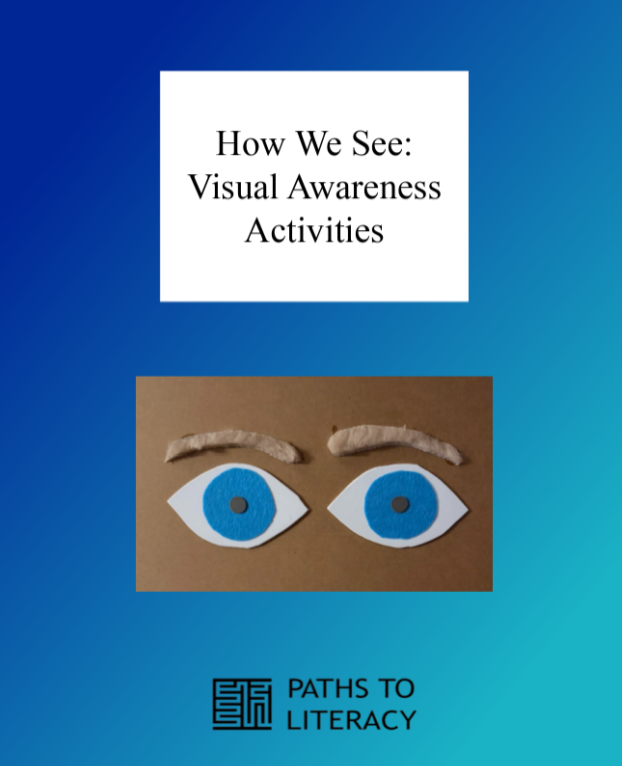
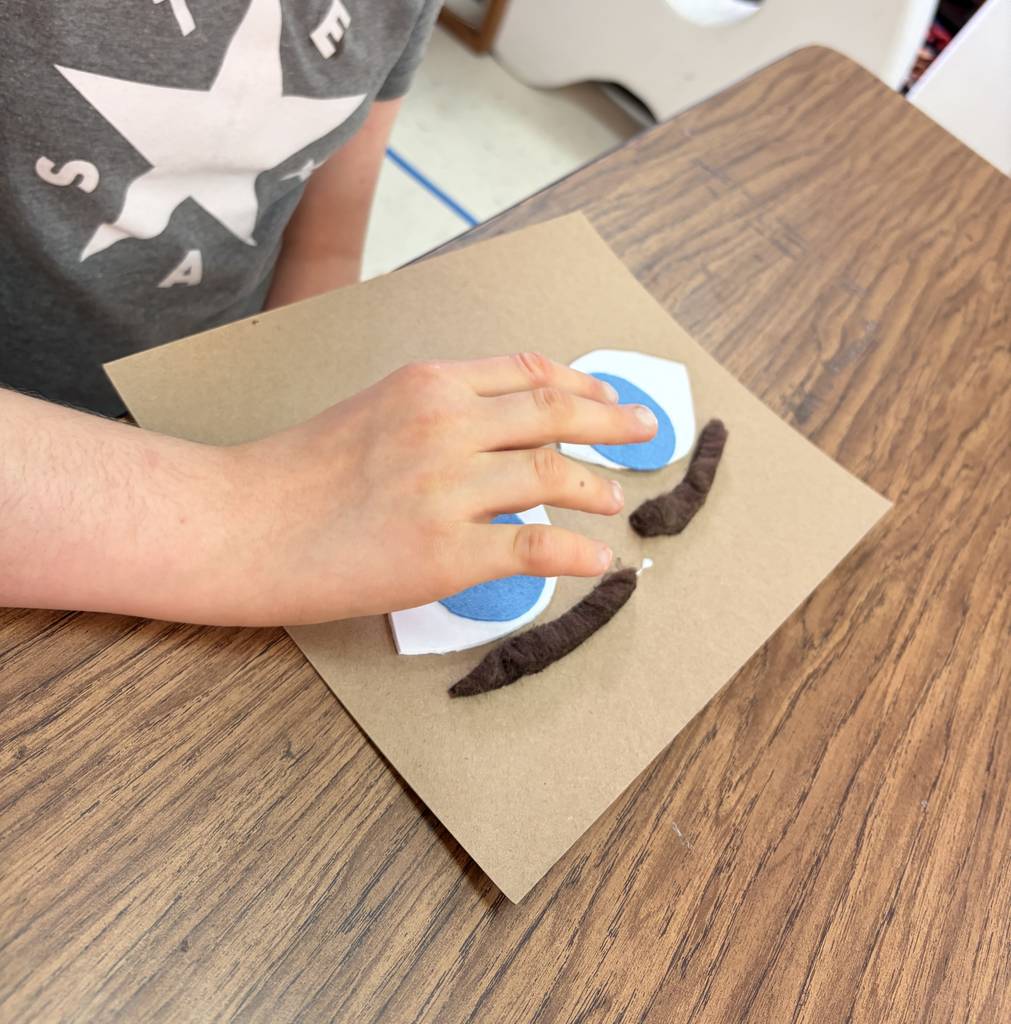
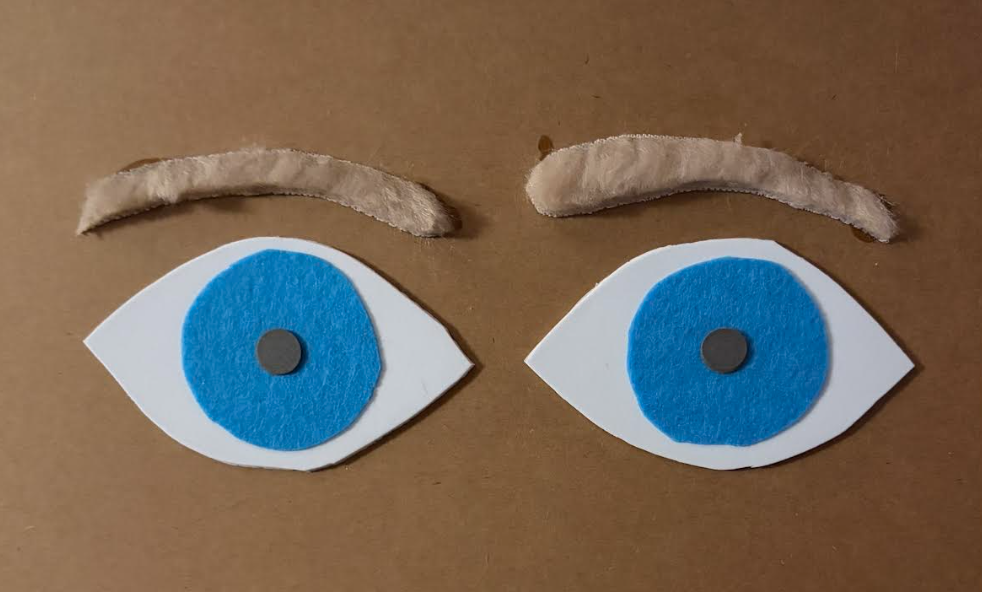
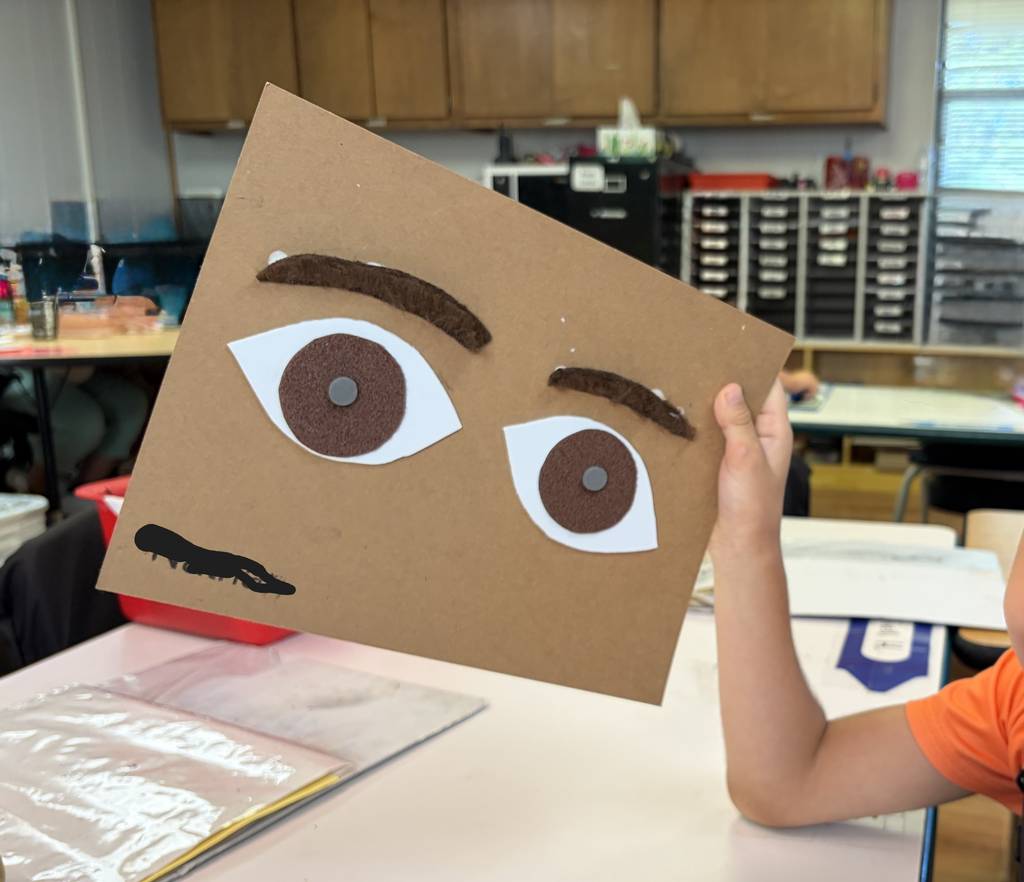
Parts of the human eye activity required a bit of prep. Cutting out the pieces for the sclera, iris, and eyebrows. The pupils were ready to go as I used premade dots. The actual making of the eye was fun for the students and I. As we put the pieces down, they were asked to name the part of the eye. We used the pillow to help as a visual where the eye parts go.
Comprehension Questions:
Here are the comprehension questions I used for this story:
- Who are some of the main children introduced in the book, and how do their eyes see differently?
- What are some of the eye conditions described in the book (e.g., strabismus/crossed eyes, nystagmus/wobbly eyes, color deficiency)?
- How do the characters explain their eye conditions to their classmates when asked? (refer to pages 8-11, 32,41, and 18-22 if needed)
- What are some games or activities that the children in the book like to play together?
- What happens when one of the characters makes a mistake while playing a game?
- How do the kids handle bullies or unfair treatment when someone makes fun of their eyes or how they play?
- Why might a game need to be adapted or played slightly differently?
- If you see a student struggling to join in on the playground, what are specific things you can do to help them feel included?
- Why is it important to celebrate differences instead of expecting everyone to be or look the exact same?
- What is a “unique talent” or strength you have that you can share with your friends?
Tips
- Share the article CVI Awareness: Every person with CVI has a right to life-changing access with the entire educational team (including parents)
- Use textures from Feel ‘n Peel Sheets: Carousel of Textures available on quota funds
- The time before Halloween is an excellent time to find “eyes”
- Read the story to the student’s class and ask the comprehension questions to the group. Provide vision simulators to help the students understand vision differences.
Extension Activities:
- Look for other books on the topic of vision and add them to the classroom library.
- The Human Eye for Kids | Learn why and how eyes allow us to see video lasts 7 minutes 45 seconds
- Human Eye – The Dr. Binocs Show | Best Learning Videos For Kids video lasts 4 minutes 16 seconds; my students liked this one the best
- Eye Model Activity
- Create an extra set of the eye puzzle and include information on CVI to give to administrators as well as send the information home to parents.