
By: Dr. Nicole Johnson, Kaitlyn Musgrove, Akiyah Stevenson
As technology continues to advance, students who are blind or visually impaired have more access to information than ever before. Screen readers, audio books, and digital tools provide valuable opportunities for independence and learning. However, the increased reliance on technology has also contributed to a decline in braille literacy. While technology should remain an important tool, it cannot replace the unique literacy skills that braille provides, including spelling, grammar, written communication, and independent reading.
Across the United States and Europe, one of the largest barriers to braille learning is the shift toward auditory access. The European Blind Union (EBU, 2023) noted concerns that the increased availability of auditory information may contribute to decreased emphasis on braille instruction. In addition, many countries outside of the United States face challenges related to limited research, insufficient training, and a lack of educators with specialized knowledge in visual impairments. As a result, students may not always receive consistent, evidence-based braille instruction.
The decline in braille instruction has contributed to what many describe as a braille literacy crisis. Current estimates suggest that only approximately 10–25% of individuals who are visually impaired in the United States know braille, with rates even lower in other countries, including approximately 7% in the United Kingdom. These statistics highlight the decline in braille instruction, literacy development, and educating society on the importance of providing students with early, intentional, and consistent braille instruction.
It has been recently found that:
- “Adults with congenital visual impairments who learned braille as children had a higher rate of employment than those who learned braille later in life or relied on print.” (McDonnall, 2025)
- Students who are introduced to contracted braille early have higher literacy performance. Croake, K., Gentle, F., & Duncan, J. (2025)
Braille also gives individuals with visual impairments independence as well as access to the world around them. Kin Piff from Dolphin Computer Access (Piff, 2024) stated that “braille helps break down some of the barriers people who are blind or partially sighted might face when securing a job.” Braille literacy is a lifelong skill that opens doors to endless opportunities in the world, which includes the workplace.
Research in the United States has identified several effective strategies for teaching beginning braille readers. Something as simple as identifying matching of braille characters helps students connect tactile symbols with their corresponding letters and builds foundational recognition skills (Toussaint, Scheithauer, Tiger, & Saunders, 2017). The Natural Order of Contractions approach focuses on teaching contractions as they naturally appear in a student’s everyday vocabulary, allowing learners to immediately apply braille skills to meaningful reading experiences (Robertson, 2026). The I-M-ABLE approach emphasizes teaching meaningful whole words rather than isolated letters, recognizing that words often have greater significance for beginning readers (Ivy, Guerra, & Hatton, 2017). Additionally, Constant Time Delay provides structured prompting and practice to help students, including those with multiple disabilities, quickly recognize important words independently (Ivy, Guerra, & Hatton, 2017).
European countries have also developed innovative approaches to increase braille engagement among young learners. Many of these strategies could be beneficial in the United States for braille learners that are struggling to learn through traditional methods.
These approaches include:
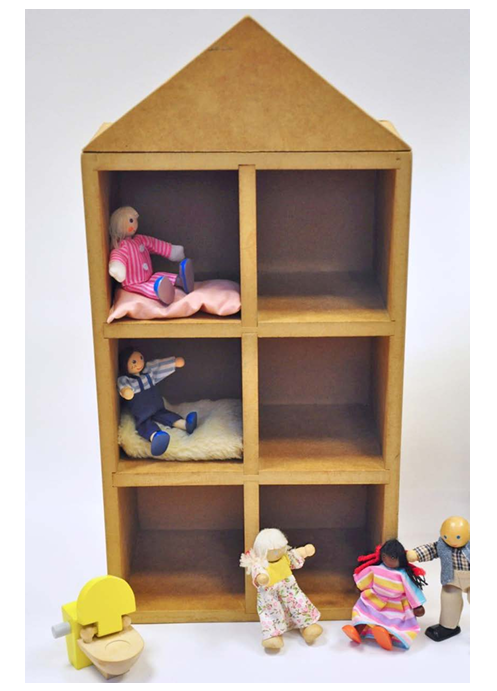
- The “Braille House” uses a play-based dollhouse model where the six rooms represent the six-dot braille cell, allowing children to explore braille concepts through hands-on activities (Boekhorst et al., 2023).
- The “Braillík” teddy bear encourages children to learn braille letters and contractions through interactive play and motivation (Dvorecky, 2021). Developed by Bartiméus, “BrailleStudio” uses computer-based activities and games to braille through engaging practice.

- Spain’s “Braitico” program provides a structured, four-module curriculum beginning in infancy that builds pre-braille skills and prepares students.
These ideas can be adapted and utilized in the United States to help excite our students for braille literacy.
A common theme across countries is the importance of starting braille instruction early. Developing pre-braille skills during infancy and early childhood helps students build tactile awareness and makes braille a natural part of their daily routines. Programs that provide consistent instruction over multiple years, such as Braitico, demonstrate the value of a long-term approach to braille literacy.
For TVIs (teachers of students with visual impairments), the goal is not to choose between technology and braille, but to create a balance where both tools support student success. Technology can provide access and independence, while braille provides the foundation for literacy. By implementing evidence-based instructional strategies, making learning meaningful, and introducing braille early, educators can help ensure that students who are blind or visually impaired develop the literacy skills needed for lifelong independence.
References
Boekhorst, C. T., et al. (2023). Teaching braille: A manual for teachers, parents and decision makers. Royal Visio, Huizen, Netherlands. https://www.visio.org/media/zampuwzd/teaching-braille-a-manual-for-teachers-parents-and-decision-makers.pdf
Braitico. Educación Inclusiva ONCE, educacion.once.es/braitico. Accessed 17 June 2026.
Croake, K., Gentle, F., & Duncan, J. (2025). Evidence-based pedagogy used to teach beginning readers braille in a mainstream setting: A scoping review. British Journal of Visual Impairment, 43(2), 407–422. https://doi.org/10.1177/02646196241250200
Dvorecky, Martin. Braillík, 2021, www.braillik.com/.
Ivy, S. E., Guerra, J. A., & Hatton, D. D. (2017). Procedural Adaptations for Use of Constant Time Delay to Teach Highly Motivating Words to Beginning Braille Readers. Journal of Visual Impairment & Blindness, 111(1), 33–48. https://files.eric.ed.gov/fulltext/EJ1127228.pdf
Lunenborg, Dick. “BrailleStudio.” eduVIP, 17 Dec. 2024, www.eduvip.nl/braillestudio/.
McDonnall, M. C., Steverson, A., Boydstun, J., & D’Andrea, F. M. (2025). Factors Associated With Proficient Braille Skills in Adults. Journal of Visual Impairment & Blindness, 119(2), 97–108. https://doi.org/10.1177/0145482X251328240
Piff, Kim. “Advantages of Braille Literacy.” Blog.Yourdolphin.Com, Dolphin Computer Access Ltd, 4 Jan. 2024, blog.yourdolphin.com/blog/advantages-of-braille-literacy.
Robertson, C. L. (2026). Beyond the Code: Teaching Braille as Literacy. Future Reflections, 45(2), 10–12. https://research.ebsco.com/c/5kku4g/viewer/pdf/ufiojug57b
Toussaint, K. A., Scheithauer, M. C., Tiger, J. H., & Saunders, K. J. (2017). Teaching identity matching of braille characters to beginning braille readers. Journal of Applied Behavior Analysis (John Wiley & Sons, Inc.), 50(2), 278–289. https://doi.org/10.1002/jaba.382
Woodin, S., et al. (2018). Braille Teaching and Literacy: A Report for the European Blind Union and European Commission. Danish Association of the Blind and the International Council for Education of People with Visual Impairment. https://www.pathstoliteracy.org/wp-content/uploads/2022/06/Braille_teaching_and_literacy_report_Europe_Jan_2018.pdf