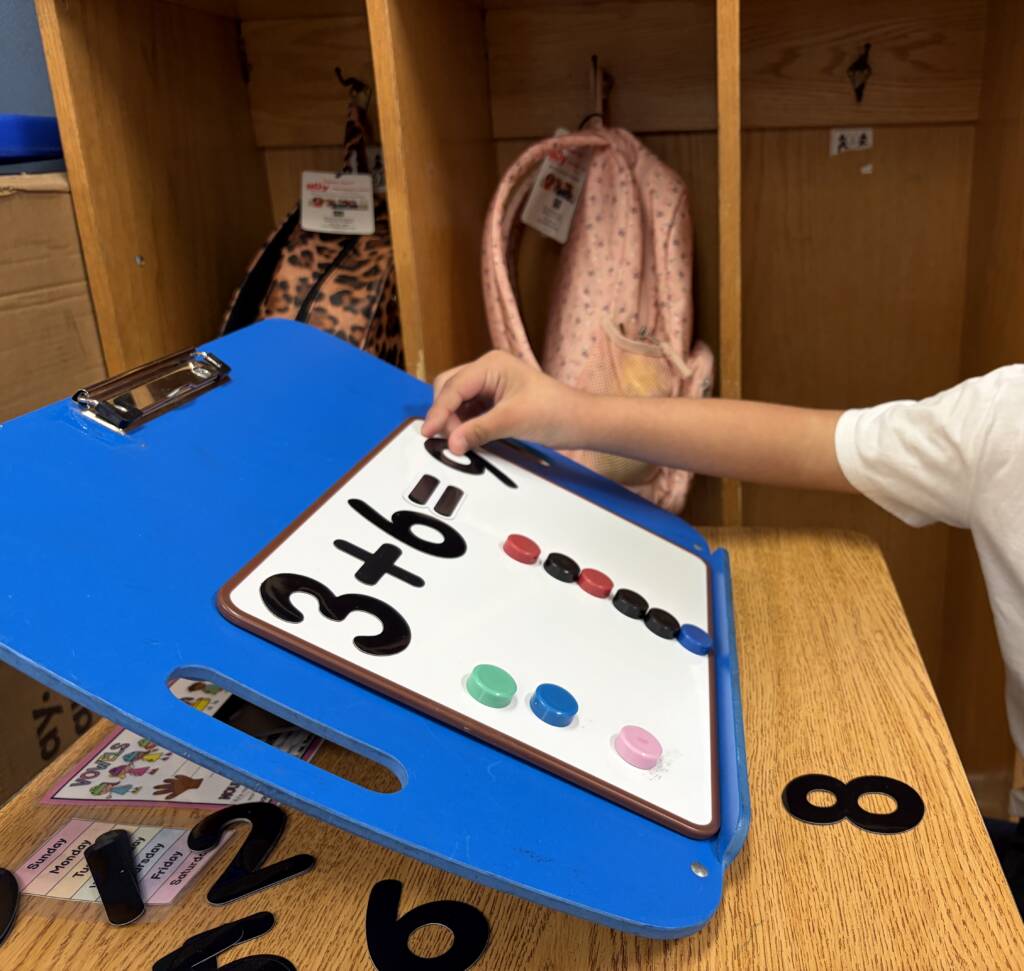
When Louis Braille invented his braille code in the 1800s he used a version of a slate and stylus to write it.
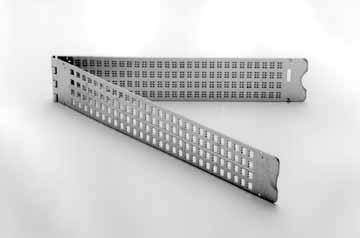
This 4 line, 27 cell slate is a common tool used by individuals who are braille readers.
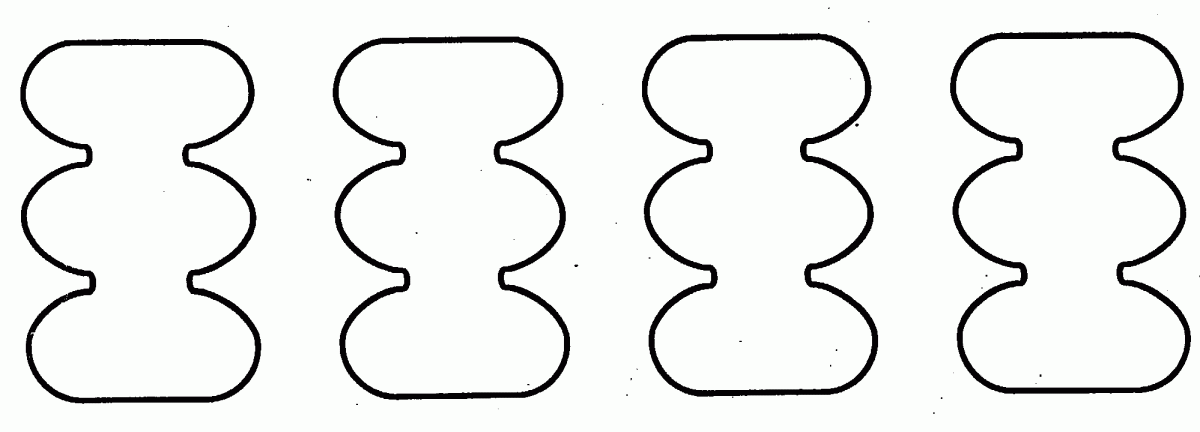
A stylus is a pointed tool that is used to press on the slate and make the indentations for the braille. On the slate above, each hole is actually a cell with 6 indentations. Below is an enlarged view of 4 cells.
When using the slate and stylus an individual writes from right to left. People often think this is hard because one has to write “backwards.” In reality, this is not the case, and children and adults who use the braille code do not find using a slate and stylus any more challenging than you find using a pen and paper.
Children need to have well developed motor skills to be efficient with the slate and stylus. Generally, this tool is introduced for formal writing in 3rd or 4th grade. However, young children benefit from the opportunity to use a slate and stylus. Think of this in the same way we let children use crayons and markers, well before they draw legible pictures or write letters and numbers.
Another tool for writing braille is a portable note taking device.
- Dots for Families
- What I Shared with a Parent who Didn’t Know Where to Start
- Making Books Meaningful and Motivational
- Introduction to Braille Writing
- Portable Note Taking Devices
- Current: Slate and Stylus
- Braille Embossers
- Braille Lessons in UEB
- How to Download and Use Perky Duck
- Families Learning Braille
- Technology for Children who are Visually Impaired
- Categories of Assistive Technology
- Selecting Computer Software
- Who’s Who in Braille
- The Story of Louis Braille
- Stories of Braille Users
- Anna’s Story
- Haylee’s Story
- An Update on Dots for Families and Stories of Braille Users
- Developing Children’s Braille and Literacy Skills
- Organizations and Companies